UC Riverside has been awarded a $350,000 grant through the University of California Hispanic-Serving Institutions Doctoral Diversity Initiative (UC-HSI DDI) to establish “Bridge2PhD: Experimental and AI Research Pathways for HSI Scholars,” a collaborative initiative with Cal State San Bernardino (CSUSB) aimed at increasing the number of Hispanic-Serving Institution students who pursue STEM doctoral degrees.
The three-year project will create a structured pathway for STEM master’s students at CSUSB to transition into UCR doctoral programs through research experiences, mentorship, AI-integrated training, and professional development activities.
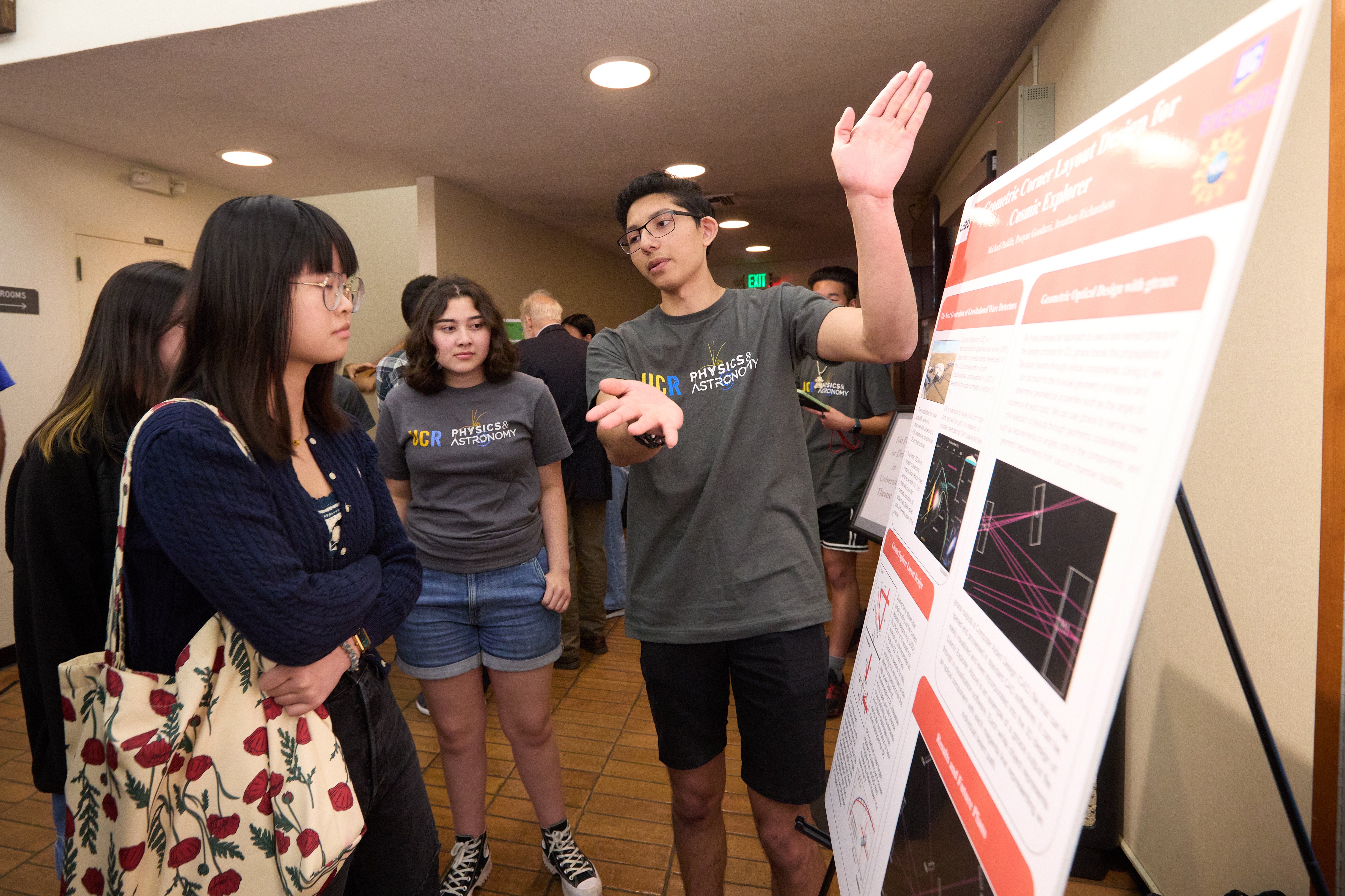
The grant is awarded to and administered by physicist Roya Zandi and the Department of Physics and Astronomy, with program coordination carried out by an interdisciplinary organizing committee and UCR Graduate Division partners.
Bridge2PhD focuses on preparing students by combining hands-on experimental research with training in quantitative methods and AI. The program is designed primarily for STEM master’s students from Hispanic-Serving Institutions, many of whom are first-generation college students or come from historically underrepresented backgrounds in higher education.
The program will support two cohorts of students over three years and includes summer and academic-year research stipends, conference travel support, graduate application fee waivers, faculty mentoring partnerships, peer mentoring, and a range of seminars, workshops, orientations, and symposia. The Graduate Division has also committed to providing first-year fellowships for students admitted to UCR doctoral programs through the pathway.
Zandi, a professor of physics and astronomy whose research focuses on theoretical and computational biophysics, developed the scientific vision for the initiative, led proposal development, and coordinated support from faculty across multiple STEM disciplines.
“This program is about creating sustained pathways into doctoral education for talented students who may not always have access to these opportunities,” Zandi said. “By integrating AI literacy, experimental research, and strong mentoring networks, we hope to prepare students not only for doctoral programs, but for leadership in the future scientific workforce.”
The grant’s organizing committee includes UCR faculty members Seán O’Leary (biochemistry), Andrew Joe (physics and astronomy), Huinan Hannah Liu (bioengineering), Evangelos Papalexakis (computer science and engineering), and Zhenyu Jia (botany and plant sciences). CSUSB partners include Caroline Vickers, dean of graduate studies, and Carol Hood, professor of physics.
To develop the broader administrative, graduate training, and mentoring framework of the program, Zandi worked closely with Associate Dean Emma Wilson and Laura McGeehan from the Graduate Division, with support from Dean Lidia Kos and others in the Graduate Division.
The UC Office of the President’s Hispanic-Serving Institutions Doctoral Diversity Initiative seeks to expand pathways to doctoral education and diversify the future STEM professoriate and scientific workforce. UCR’s proposal was selected through a highly competitive review process in which only the highest-ranked proposals were recommended for funding.
“Your success demonstrates the caliber of your application and the potential of your project to best support the goals of the UC-HSI DDI,” the award notification stated.