Bruce Link, a distinguished professor of public policy and sociology, is the recipient of the 2026-27 Faculty Research Lecturer Award, the highest honor bestowed to faculty by the UC Riverside Academic Senate.
As the winner of the annual award, announced last month, Link will deliver a lecture next year.
"I am tremendously honored to receive this award, especially when I look at the distinguished list of past recipients and think about the many outstanding scholars at UCR whose work I admire,” Link said.
A member of the faculty since 2015, Link's interests center on topics in psychiatric and social epidemiology as they bear on policy issues. He has written on the connection between socioeconomic status and health, homelessness, violence, stigma, and discrimination.
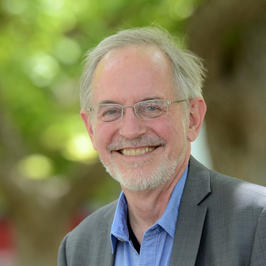
With Columbia University Professor Jo Phelan, he has advanced the theory of social conditions as causes of disease. Link is currently conducting research on race, ethnicity, socioeconomic status, and social stigma and their impact on health inequalities.
An international leader on issues related to health inequities, Link helps lead UCR’s School of Medicine Center for Health Disparities Research, a National Institutes of Health center established in 2019.
Link has published three books and over 275 referred journal articles. He has been on Claravite “Most Highly Cited” authors list every year since 2016.
In selecting Link, the Academic Senate committee noted that his area of research is highly relevant to the School of Medicine’s mission to serve the Inland Empire. Nomination support letters described Link’s four decades of scholarship as highly influential.
“Bruce’s work in this area still influences how many scholars think about the systemic forces that are associated with perduring health inequities and other conditions of life,” one letter stated.
He was also commended for his warm and effective mentorship of the next generation of researchers.
Link said his lecture will focus on two questions that have occupied much of his career: Why do health inequalities persist across time and place and why do societies create distinctions that stigmatize some groups over others.
“I hope to conclude with a simple but important idea: that extending dignity and respect across the boundaries that divide us is not only a moral aspiration but also an important foundation for a healthier society," he said.