On Oct. 22–23, California’s statewide effort to strengthen its quantum technology industry brought together researchers, companies, investors, and government representatives at the Quantum California Convening at UCLA.
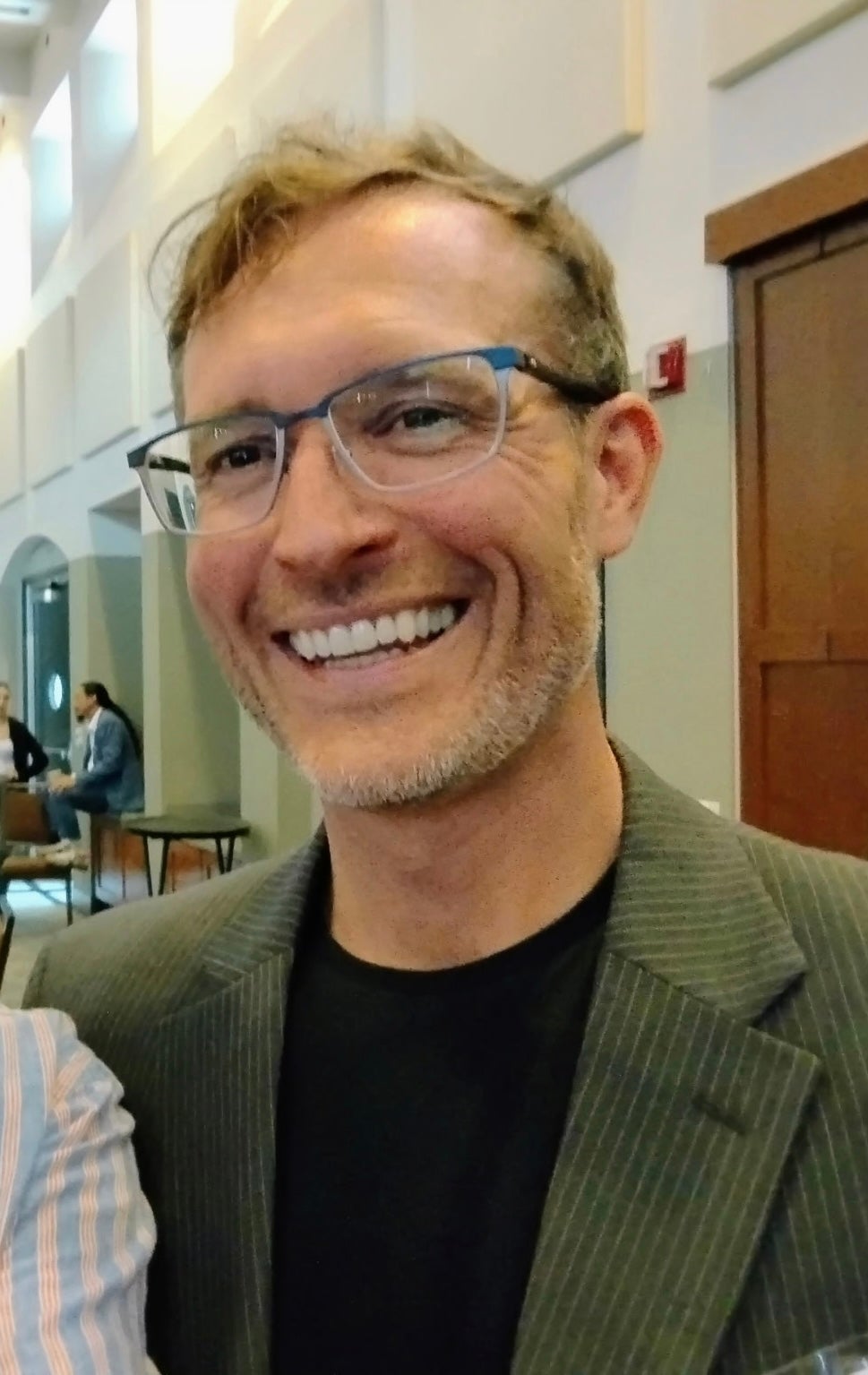
Nathaniel Gabor, a professor of physics and astronomy at UC Riverside, participated in the Oct. 23 “Building the California Ecosystem” panel, discussing how university research, industry partnerships, and education can help advance California’s quantum sciences ecosystem.
The initiative, launched in November 2025 by the Governor’s Office, the Governor’s Office of Business and Economic Development (GO-Biz), and the University of California, aims to connect research and industry and support quantum innovation and job creation.
Gabor joined fellow panelists Rosa Di Felice of the University of Southern California, Hirosi Ooguri of Caltech, and Michael Sailor of UC San Diego. He shared his perspective on California’s quantum sciences ecosystem.
“I highlighted my experiences from the small laboratory-scale science to the scale of UCR’s efforts in quantum tech,” Gabor said.
He also discussed his interactions with Riverside and Southern California technology companies, UCR’s Center for Quantum Vibronics in Energy and Time (QuVET), and the university’s broader quantum sciences initiatives.
His presentation featured quantum vibronics, which explores how vibrations and electronic behavior interact at the nanoscale.
“Quantum technologies are poised to change reality,” Gabor said. “From computing and microchip fabrication to communication and encryption, quantum mechanics will forever alter society. In quantum sensors and energy technologies, vibronic processes at the nanometer scale — where the quantum aspects of vibrations and electronics mix — promise radical advancements.”
Gabor, who is the director of QuVET, also emphasized the importance of preparing the next generation of quantum scientists to meet growing industry demand.
“While many of the tech companies and government labs expressed the absolute need for more highly trained quantum scientists, I was able to highlight our training program within the QuVET center, as well as some of the efforts on campus,” he said.
QuVET is funded by the Multidisciplinary University Research Initiative (MURI) program within the U.S. Army Research Office and supports research at the intersection of quantum science, energy, and time.