UC Riverside and Cal State San Bernardino have received $1 million in federal funding to jointly launch interdisciplinary AI undergraduate education programs and community outreach initiatives across the Inland Empire.
The five-year effort, funded by the National Science Foundation, will develop undergraduate AI minor and certificate programs that give students both theoretical foundations and hands-on training tailored to real-world careers. These new credentials are designed to be accessible to students across disciplines and institutions in the Inland Empire.
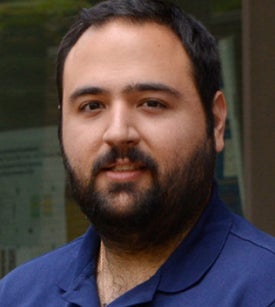
“We at UCR are very proud and delighted to partner with CSUSB on this grant and provide students in the Inland Empire a world-class education in AI,” said Dr. Evangelos Papalexakis, Professor and Ross Family Chair at the Computer Science and Engineering Department UCR's Marlan and Rosemary Bourns College of Engineering. “This grant aligns with our ongoing efforts on interdisciplinary AI education and research and the campus-wide RAISE@UCR AI institute, which encompasses around 100 faculty from different departments and colleges, and where AI serves as the connective tissue across disciplines.”
In addition to curriculum development, the Bourns team, including co-principal investigators Yue Dong, assistant professor of computer science and engineering, and Jia Chen, an associate professor of teaching in electrical and computer engineering, will work closely with partners at Cal State San Bernardino in developing joint research projects where UCR doctoral students will mentor undergraduate students on cutting-edge AI research.

The initiative also will help the region’s economy in ways that go beyond providing skilled graduates. Students also will gain valuable experience while running an AI Help Desk that will offer free or low-cost consultations to nonprofits, government agencies, and small businesses. The desk will serve as a problem-solving hub where students apply their AI skills to help local organizations develop data-informed strategies, tools, or systems.
The planned curriculum will integrate project-based coursework, faculty-mentored research, and outreach efforts such as public workshops and mentoring sessions, and will engage with a range of disciplines where AI is already having a considerable impact.
To evaluate the program’s effectiveness, researchers will conduct surveys, interviews, and focus groups, tracking how participation influences student outcomes, motivation, and career readiness. Through integrating and analyzing this feedback, the teams at both UCR and Cal State San Bernardino envision building a blueprint for a scalable model that other institutions can replicate.
The project is funded by the NSF’s Hispanic-Serving Institutions (HSI) Program, which will provide $400,000 for UCR and $600,000 for Cal State San Bernardino.