In a dark-colored room with blackened window shades, a team of digital archivists is unearthing hidden treasures in old documents, photographs, and other historical media.
Those pieces of history can now be shared with scholars and researchers all over the world, thanks to a new digitization lab at UC Riverside’s Tomás Rivera Library.
The new lab is equipped with high-tech scanners, cameras, and other audio and video capture machines that allow the digitization team to convert files with more accuracy and at a faster pace, said Mark Buchholz, who oversees the lab as digitization services specialist for the UCR Library.
He and his team of four student assistants moved into the new lab in October from their former space at Orbach Library, which was smaller and didn’t have controlled lighting.
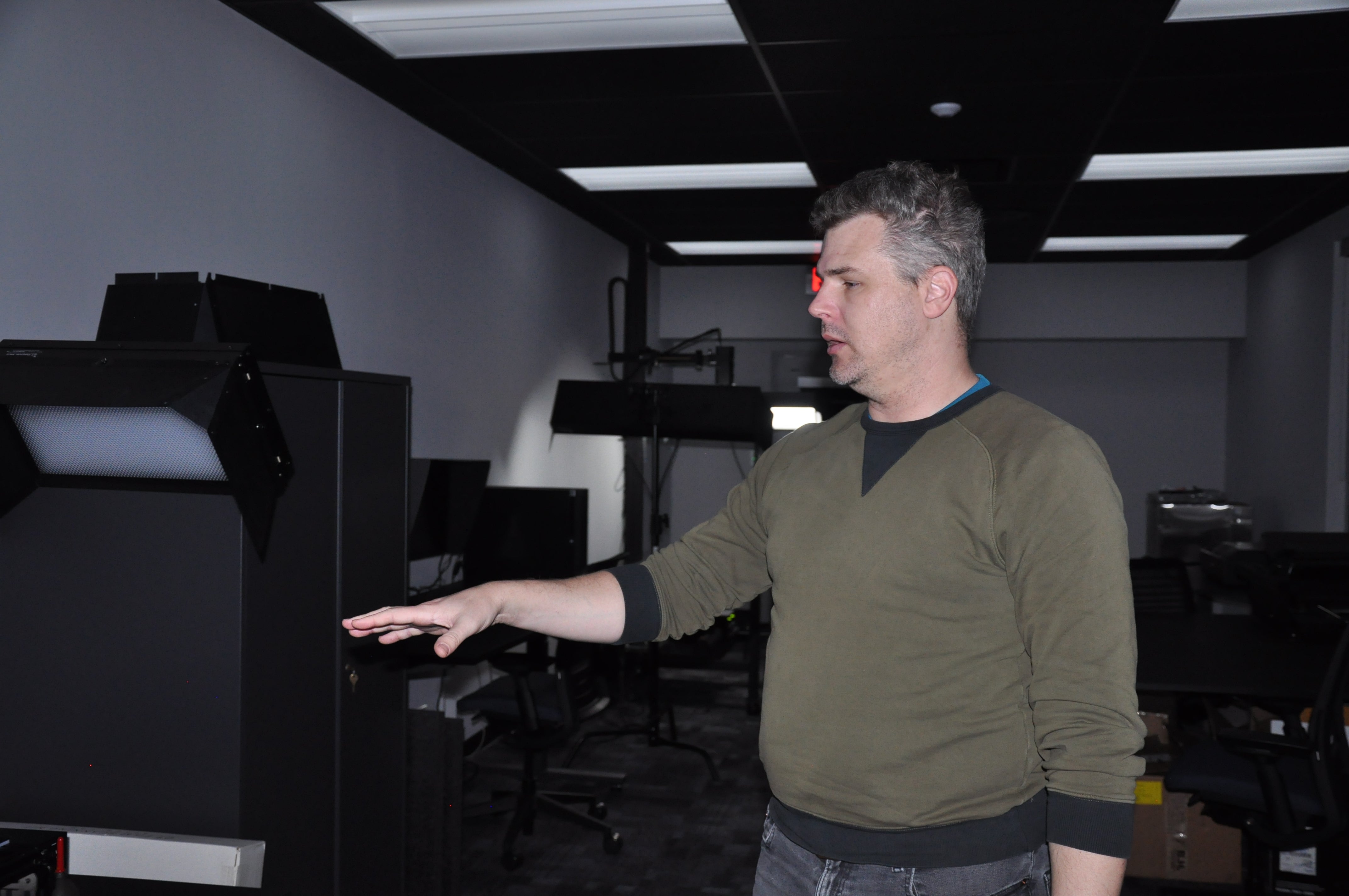
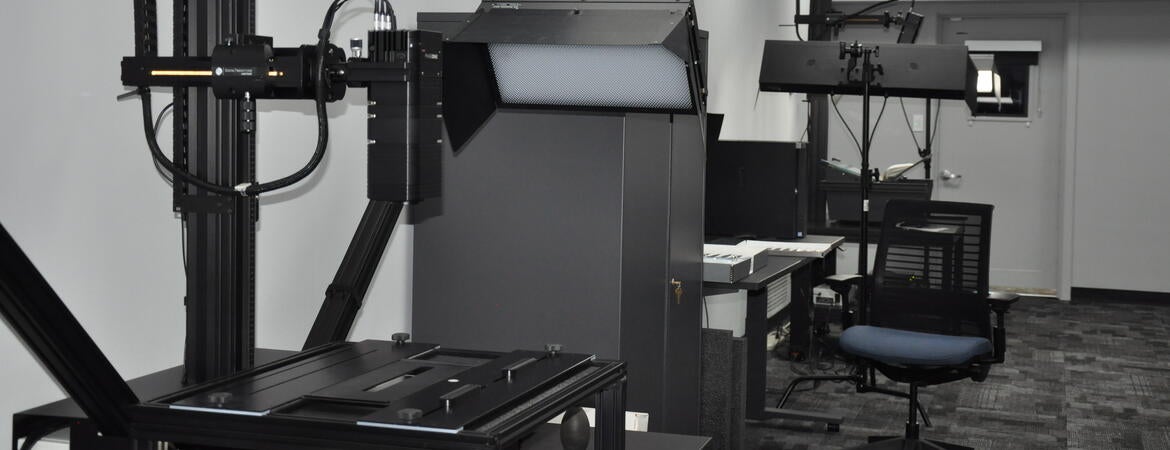
The new lab, which was renovated with spectrally neutral paint and dark carpeting and furniture, is designed for its needs with grey and black colors that minimize color reflection and blackout curtains to create a controlled environment. The overhead lighting uses specialized dimmable LEDs to achieve a high Color Rendering Index (CRI > 90) and a 6500K color temperature to optimize both capture and quality assurance of preservation-grade images.
“What we’re trying to achieve here is the digital file of record for a given physical object,” Buchholz said. “So we try to give it the highest quality possible so it can be repurposed as needed. That’s why it’s important for us to have things be accurate in terms of color.”
That goes also for how they dress for work with Buchholz and his students donning muted or neutral colors. He joked that after spending hours in the lab, stepping outside sometimes feels like the moment in “The Wizard of Oz” when the film enters Oz in full technicolor.
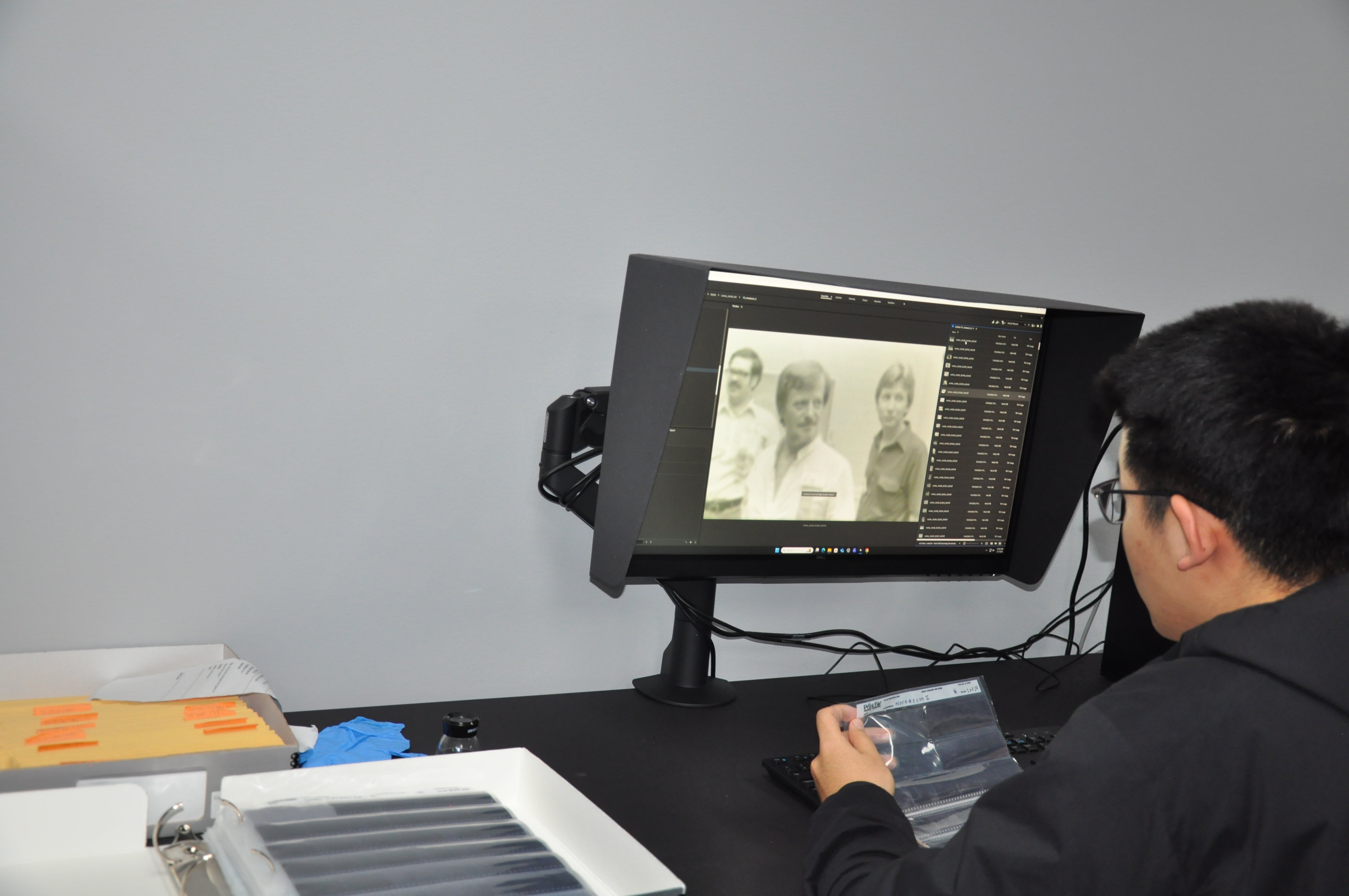
The lab includes copy stands and workstations with cutting-edge scanners and cameras along with vintage equipment like video cassette players and floppy drives from which old files are copied.
Another reason for the move to Rivera was that at Orbach the staff often had to transport fragile materials across campus exposing them to the elements and a bumpy cart ride. Since most of the materials being digitized are from Special Collections and University Archives, housed at Rivera, it made sense to have the lab in the same building and reduce risk, Buchholz said.
The UCR Library has made a broad effort to strengthen its preservation work and create more digital collections in recent years. It plans to open a conservation lab and hire a digital collections project manager this year.
“The digitization lab represents a strategic investment in digital access infrastructure, transforming historically constrained, on-site materials into discoverable and usable digital collections that expand research opportunities beyond the physical reading room,” said Tiffany Moxham, associate university librarian for content and discovery and deputy university librarian.
The lab has several projects in the works including digitizing the Jay Kay and Doris Klein Collection, a vast collection of science fiction and fantasy photographs, papers, and fanzines donated to the Eaton Collection of Science Fiction and Fantasy.
The Klein collection includes about 63,000 images in 35 mm negatives from early science fiction conventions.
“We are often the first people to go through these collections on a page-by-page or minute-by-minute basis for video and audio in sometimes decades,” Buchholz said.
As an example, he came across an interesting discovery in the photos from a 1976 science fiction convention that included a photo of actor Mark Hamill six months before the release of the first “Star Wars” film; a rare early appearance before the movie became a phenomenon.
Other current digitization projects include scanning historical course catalogs from UCR’s start in 1954 and on, reformatting old VHS videos in the Tomás Rivera collection, and scanning aerial photographs from the early to mid-1900s.