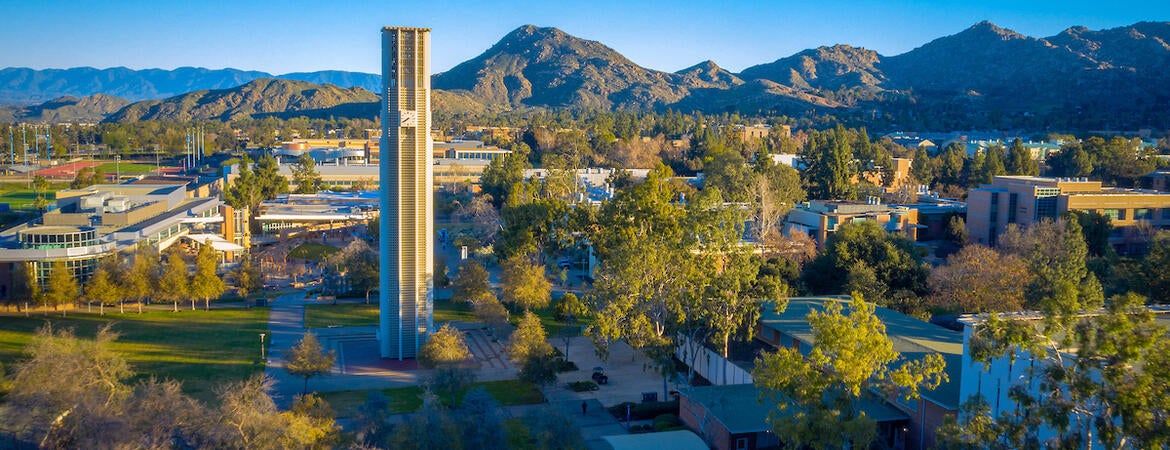
UC Riverside has received an $800,000 grant from the W. M. Keck Foundation to bolster essential scientific research in agricultural science, quantum mechanics, and regenerative medicine.
The award from the foundation’s Bridge Funding Initiative will support four research teams with $200,000 each. The initiative supports the career paths of early- to mid-career faculty (designated as Keck Scholars) who are particularly vulnerable to sudden changes in traditional funding sources, along with their graduate students (designated as Keck Trainees). By providing this critical support, the foundation aims to prevent disruptions that could impact research accomplishments and career trajectories for decades to come.
“We are grateful to the W.M. Keck Foundation for their generosity,” said UCR Chancellor S. Jack Hu. “This investment strengthens our research enterprise by supporting faculty whose work exemplifies the excellence and innovation that define UC Riverside, along with their graduate students, the next generation of research leaders. By investing in these teams, Keck is accelerating discovery.”
Based in Los Angeles, the W. M. Keck Foundation was established in 1954 by the late W. M. Keck, founder of the Superior Oil Company. The foundation’s assistance is focused on supporting pioneering discoveries and the development of new technologies to solve the world's most complex scientific and engineering challenges.
Read more about the funded projects:
-
In a project titled “Elucidating the Genetic Basis of the Plant 20-Hydroxyecdysone Biosynthesis Pathway,” Keck Scholar Adam Jozwiak, an assistant professor of molecular biochemistry in the Department of Botany and Plant Sciences, and Keck Trainee Sarah Lam are studying the biosynthesis of 20E, a mysterious plant hormone that is abundant in quinoa. Their work could lead to the development of eco-friendly pesticides and new human therapeutics.
-
In a project titled “Redesign of Extremophile Proteins in Human Cell Stress Tolerance,” Keck Scholar Joshua Morgan, an associate professor of bioengineering, and Keck Trainee Sara Nafar are engineering humanized versions of stress tolerance proteins found in tardigrades (water bears) to grant human cells the ability to survive extreme stress. The work could transform regenerative medicine and cell-based therapies.
-
In a project titled “Quantum Electronic Transport Through the Smallest Forms of Silicon Semiconductors,” Keck Scholar Timothy Su, an assistant professor of chemistry, and Keck Trainee Holly Lusk are utilizing an atom-by-atom approach to build ultrasmall silicon semiconductors, exploring how electricity flows through single molecules to overcome the physical limits of traditional microchip manufacturing.
-
In a project titled “Defect Engineering of Boron Arsenide Crystals for High-Performance Microelectronics,” Keck Scholar Xi Chen, an associate professor of electrical and computer engineering, and Keck Trainee Thomas Hoke are studying how atomic-scale defects govern heat and electricity transport in boron arsenide, a promising alternative to silicon that could significantly increase the efficiency and performance of future electronics.