UC Riverside’s School of Public Policy has received a $4 million grant from the U.S. Department of Education to fund a four-year initiative aimed at improving civic engagement and public policy discourse.
Known as the Civic Openness, Reasoning, and Engagement (CORE) Incubator, the initiative will bring together universities, policy organizations, and community partners to strengthen public participation in democratic processes, particularly around science-informed issues.
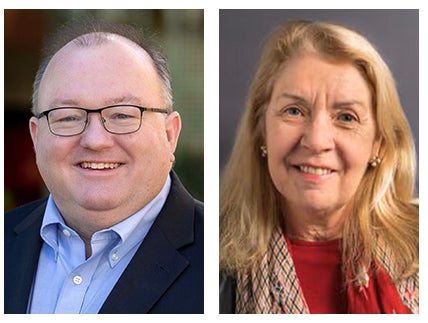
In collaboration with K. L. Akerlof of George Mason University and Tepring Piquado of the National Science Policy Network (NSPN), the CORE Incubator will foster civil discourse, sharpen evidence-based reasoning, and help prepare the next generation of policy-savvy leaders. The NSPN works to engage STEM professionals with policy discourse, and the grant project will enable the organization to expand its nationwide efforts.
“Through the CORE Incubator, we hope to improve the efficacy and comity of conversations on conflicted public issues,” said Mark Long, dean of the School of Public Policy.
The CORE Incubator will be led by Susan Hackwood, a professor emerita in the Department of Electrical and Computer Engineering in the Bourns College of Engineering and director of UCR’s Science to Policy program, known as S2P, which prepares graduate students to bridge science and policymaking.
The grant program will provide training that equips students with communication, facilitation, and broadly applicable leadership skills. It will also support research to advance and evaluate innovative deliberative tools developed at UCR, and host workshops and public forums that bring together students, community members, and policymakers to address pressing regional challenges.
These forums will use Prytaneum, an AI-powered meeting platform developed by UCR political science professor Kevin Esterling.
The platform uses artificial intelligence to synthesize input from large audiences in real time, making it easier for policymakers to understand diverse community perspectives.
The grant will also support graduate student engagement. Each year, five public policy master’s students will take on leadership roles, helping to facilitate forums, analyze data, and build relationships with community organizations.
Project activities will be broadly interdisciplinary. The student training sequence will be developed through a collaboration among Richard Edwards, executive director of UCR’s XCITE Center for Teaching and Learning; Annika Speer, associate professor in the Department of Theatre, Film, and Digital Production; and Tepring Piquado of NSPN. Continued development of Prytaneum will be led by Michalis Faloutsos, professor of in the Department of Computer Science and Engineering, through the UC Riverside Artificial Intelligence Research and Education Institute (RAISE@UCR).
This funding is part of a broader $169 million initiative by the U.S. Department of Education through its Fund for the Improvement of Postsecondary Education, designed to strengthen postsecondary education’s role in supporting civic readiness and democratic participation.