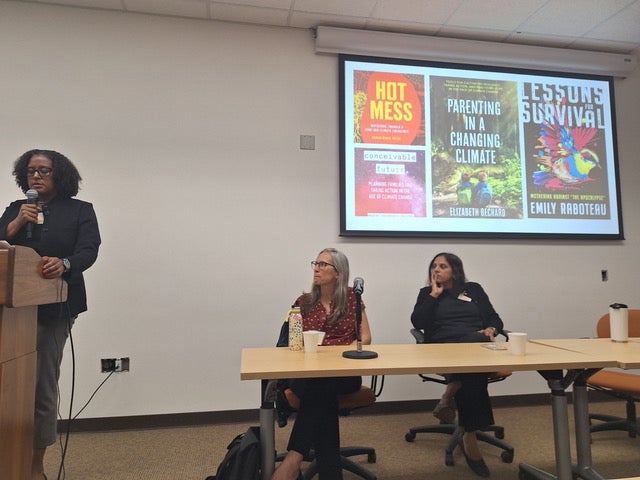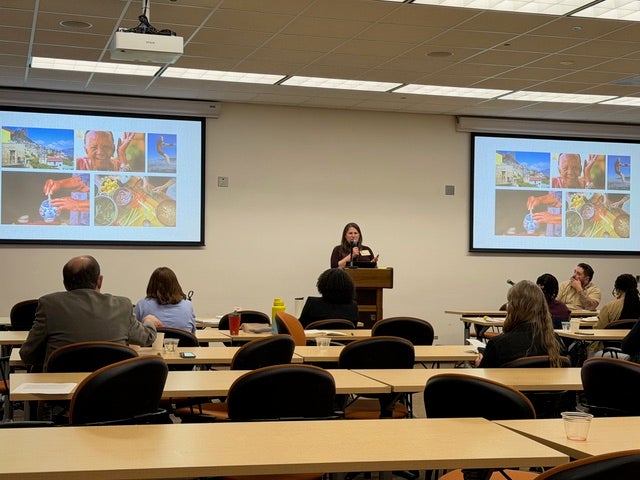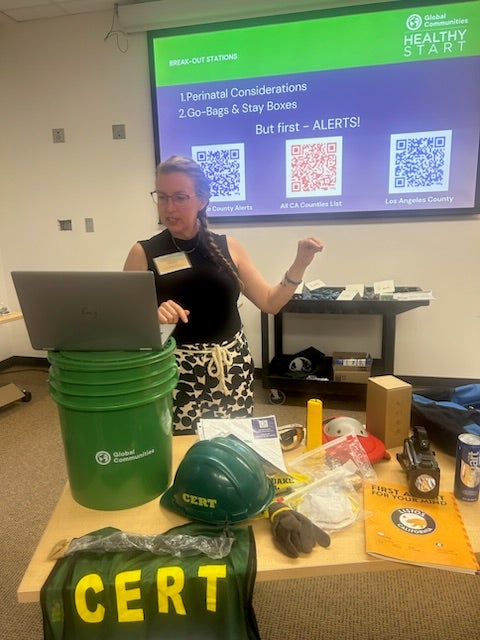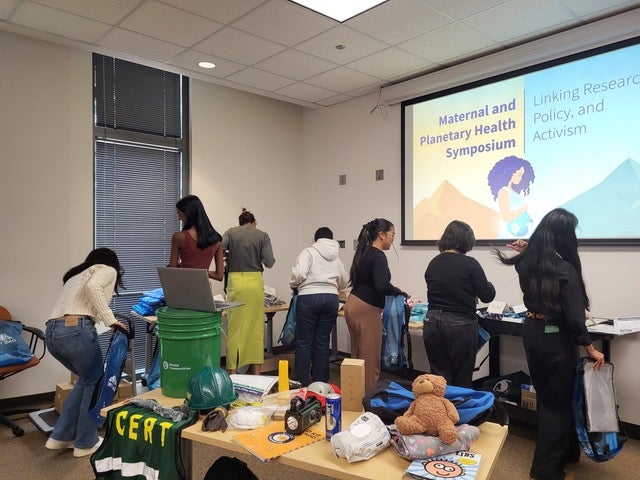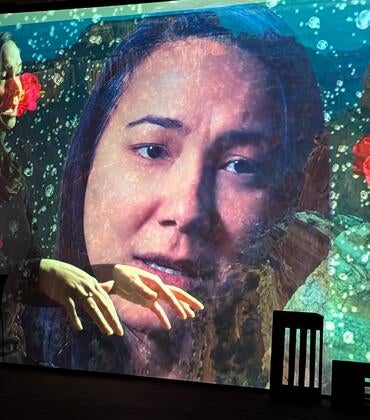
A two-day symposium earlier this month at UC Riverside convened academic researchers, activists, government officials and leaders from nonprofit organizations to explore the effects of climate change on maternal and reproductive health as well as strategies for mitigating the risks.
The Maternal and Planetary Health Symposium: Linking Research, Policy, and Activism was held April 2-3 and drew some 130 attendees. The event was organized by Jade Sasser, an associate professor of gender and sexuality studies and of society, environment, and health equity at UCR, with support from the Center for Ideas and Society.
It was the first campus symposium to bring together researchers, elected officials, and leaders of community organizations to address challenges at the intersection of maternal health and climate change, Sasser said.
She said the idea grew out of conversations with colleagues who work on maternal health, climate justice, and human rights. “Pregnant and newly postpartum people have biological vulnerabilities — blood pressure, poor mental health, low infant birth weight, pre-term birth, still birth — that are exacerbated by extreme heat and poor air quality, yet they are often excluded from health programs and policies addressing these environmental factors,” she said.
One of the main takeaways from the symposium is that policy change is essential “to protect vulnerable communities from the health impacts of climate change.”
“To achieve policy change, policymakers have to be in conversation with researchers and community-based organizations,” Sasser added.
Community members who appeared on panels were:
- Fortino Morales, Sustainability Manager, City of Riverside
- Clarissa Cervantes, Councilwoman, City of Riverside
- Juan Landeros, Climate Justice Program Director, Riverside University Health System
- Erin Edwards, Executive Director, Blue Zones Project Riverside
- Lisa Bain, Senior Director of U.S. and Border Programs, Global Communities
- Yuli Smith, Consortium Manager of Healthy Start San Diego-Riverside, Global Communities
- Tianna Shaw-Wakeman, Environmental Justice Coordinator for Built Environment, Black Women for Wellness
Due to the extreme heat and air pollution, the climate of the Inland Empire poses a particular risk to pregnant women, new mothers, and young children of color, according to Sasser. “These environmental challenges are experienced most acutely by the most vulnerable people in our region,” she said.
In the wake of the symposium, Sasser is leading a working group on the public health impacts of climate change with faculty members from across campus. The Climate Health and Justice Working Group plans to organize a one-day symposium, host a podcast, produce one-page information sheets on climate-health issues, and apply for extramural grants that will allow it to increase attention to these issues in the region.
(Header image: Katharine Henshaw/UCR Center for Ideas and Society)