UC Riverside has adopted a Climate Action & Adaptation Plan that will put the campus on a path to reducing its greenhouse gas emissions and advancing sustainability.
The document, which Chancellor S. Jack Hu approved and signed in December, is the first of its kind under a new University of California systemwide requirement. It was released on the Office of Sustainability website last month.
All 10 UC campuses must reduce total greenhouse gas emissions by at least 90% from 2019 levels by 2045 and set interim emission reduction targets. The plans will lay out each campus’s approach for meeting those targets.
In an introductory letter in the plan, Hu states that investing in those strategies is not just about meeting state and UC climate goals but creating long-term value for the university.
“Climate action will reduce costs, protect critical assets, open new funding opportunities, and make UC Riverside an even stronger destination for students, faculty, and staff who want to lead in sustainability and climate action,” Hu said.
UCR was one of the first campuses to complete its plan, launching the process a year ago and involving about 100 campus participants in an extensive engagement process, said Francis Mitalo, sustainability program specialist with the Office of Sustainability.
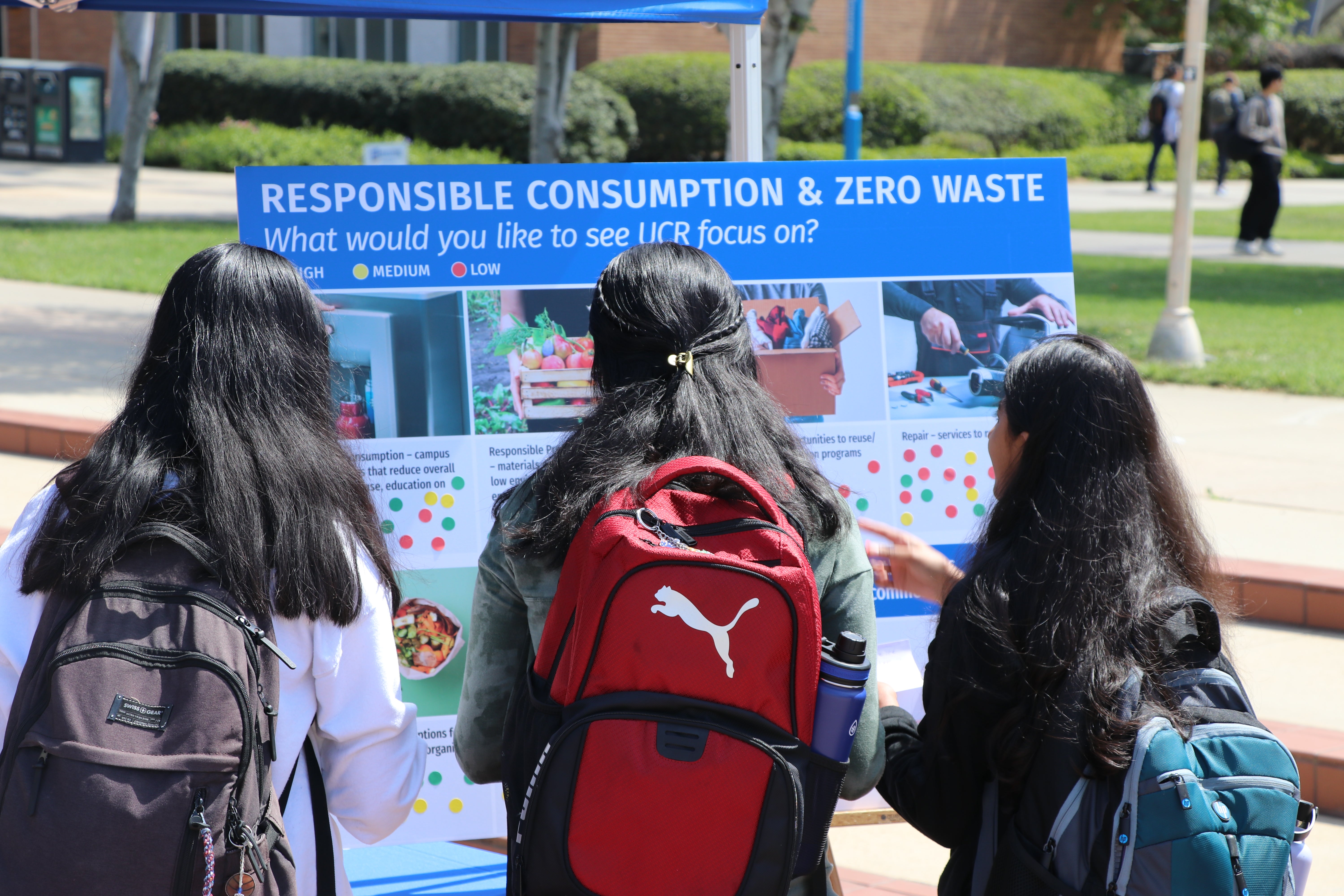
Campus stakeholders were invited to take a survey on sustainability goals and join in workshops and prioritization exercises as the plan was developed.
An assessment of campus operations found that most of UCR’s greenhouse gas emissions are from energy use.
The plan outlines 15 key actions with five of them immediate priorities over the next three years. They include developing all-electric building guidelines for new construction; increasing compost options; expanding the R’Garden program; improving energy monitoring systems; and evaluating campus infrastructure for potential improvements to accommodate alternative transportation options such as bicycles, scooters, and skateboards.
Mitalo said some of the strategies are already underway, such as with recently constructed campus buildings that are all-electric and incorporate sustainable operations. Facilities Services and Dining Services have already begun adding more compost bins on campus.
A major project proposed in a 2024 decarbonization study calls for converting the Central Utility Plant from natural gas to electricity, a $400 million project that is expected to be completed by 2045.
The next step with the climate action plan is to start working with the respective departments and the sustainability committee on determining how to fund and implement the strategies, Mitalo said.
He said the proposed actions go beyond reducing greenhouse gas emissions but also create savings, improve public health, and advocate for climate justice.
“This comprehensive approach ensures that our climate strategies deliver meaningful, equitable, and long-term benefits for the entire campus community,” he said.
The plan was developed as a collaboration between the Office of Sustainability, Facilities Services, and the Office of Planning, Design, and Construction with consultant AECOM, a Dallas-based international contractor, drafting the document.