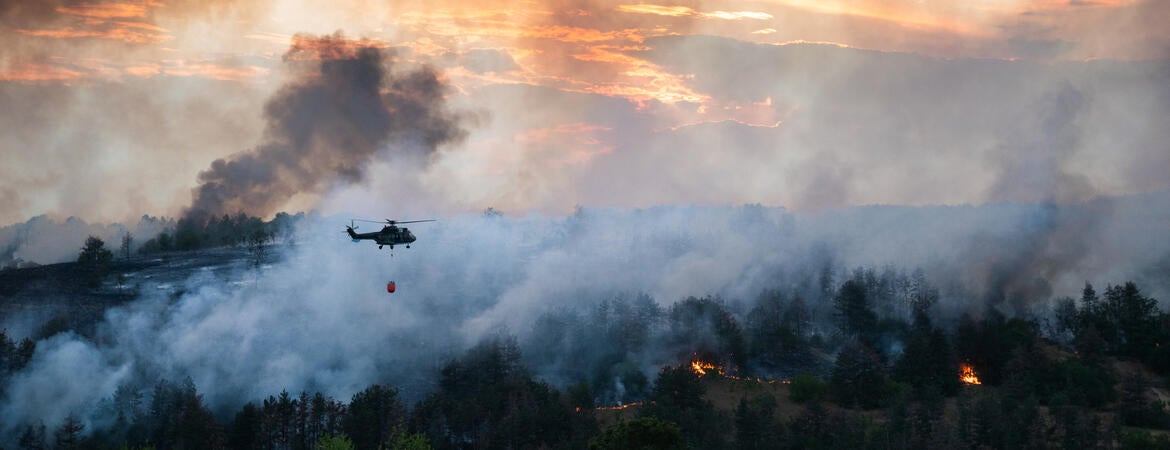
As wildfires increase in frequency and intensity across regions like the western United States, smoke exposure is becoming more widespread and prolonged. Yet current knowledge gaps make it harder to develop targeted interventions or guidelines. Despite this growing exposure, scientists say the underlying health risks remain poorly understood.
A review paper published in Frontiers in Public Health argues that the health risks of wildfire smoke, while widely acknowledged, remain poorly understood at a biological level, and calls for a major shift in research priorities.
Synthesizing existing studies on wildfire smoke, the paper by Veronica L. Penuelas and David D. Lo of the University of California, Riverside highlights that most research relies on population-level correlations rather than direct biomedical evidence of harm.
“The paper is essentially a call to action,” said Lo, a distinguished professor of biomedical sciences in the School of Medicine and director of the BREATHE (Bridging Regional Ecology, Aerosolized Toxins, and Health Effects) Lab at UCR. “Very little research on wildfire smoke effects examines the medical or biological harms. Most studies are based on statistical correlations between assumed exposures and health outcomes in communities.”
The review also emphasizes that wildfire smoke is not a static pollutant. As it travels, it undergoes chemical transformations, producing “aged” particles that may differ significantly from freshly emitted smoke.
“Wildfire smoke is not a single, uniform exposure,” said Penuelas, a doctoral student in Lo’s lab. “It changes over time and distance. Understanding those transformations is critical to understanding its health effects.”
The review concludes that addressing wildfire smoke as a public health threat will require moving beyond broad correlations and investing in detailed biomedical research that identifies specific harms, clarifies underlying mechanisms, and links environmental exposure to biological effects.
“Until then, the true scale and mechanisms of wildfire smoke’s impact on human health may remain only partially understood,” Lo said.
Header image credit: LBochev/Getty Images.