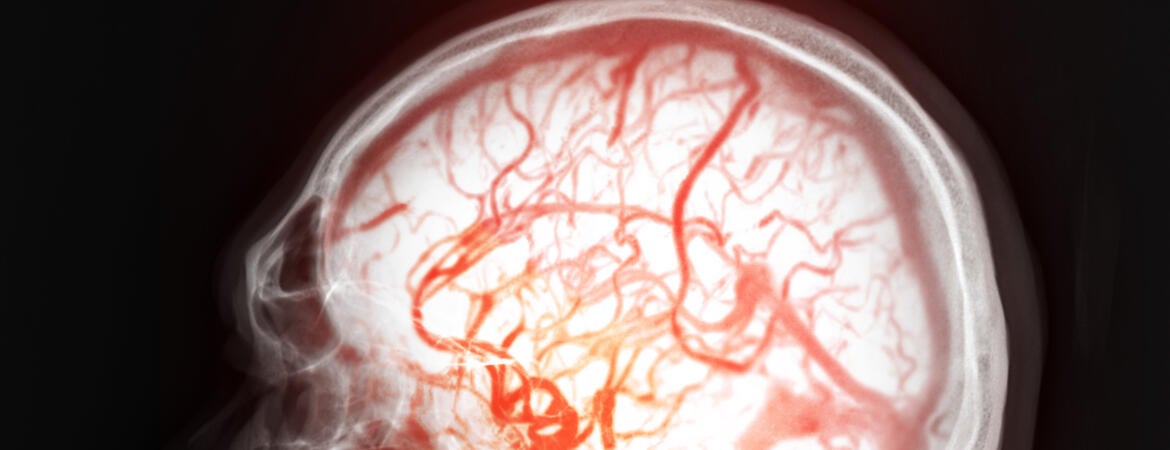
The communication network in the developing brain builds when neurons partner up to form contact points called synapses, allowing signals to pass form one cell to another. At the same time, a web of blood vessels builds the brain’s life support system, delivering oxygen and nutrients and controlling what can enter the brain.
The protein Adgrl2 acts as a molecular guide by helping cells recognize one another and form the right connections. In neurons, it helps organize synapses. In cells that line blood vessels in the brain (endothelial cells), it keeps the vessels stable and sealed.
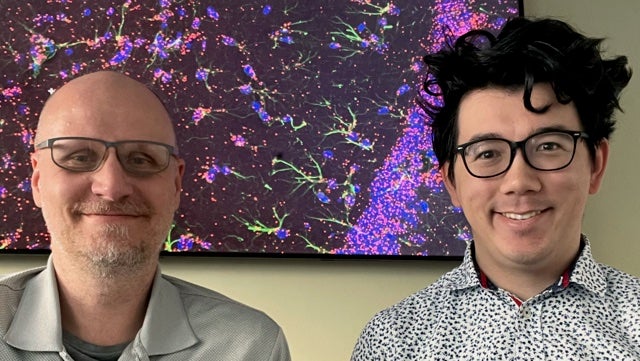
Garret R. Anderson at UC Riverside and his team led by neuroscience graduate student Alexander King, wondered how one protein could manage such different jobs in different cells. They report in the Journal of Neuroscience that when they removed Adgrl2 specifically from endothelial cells in mice, they found the brain’s blood vessels lost their integrity.
“Normally, brain blood vessels form a specialized unit known as the blood-brain barrier, which do not allow certain chemicals in the blood to come in contact with neurons in the brain,” said Anderson, an assistant professor of molecular, cell and systems biology. “Without Adgrl2, we found that the vessels became leaky and allowed these chemicals to get through. This shows Adgrl2 is essential for maintaining a healthy vascular system in the brain.”
The team found that although the gene for Adgrl2 is the same in neurons and blood vessel cells, the cells can edit the gene’s instructions before turning it into a protein.
“This process, called alternative splicing, allows different cell types to produce slightly different versions of Adgrl2,” Anderson said. “Neurons make one version; endothelial cells make another.”
Next, forcing endothelial cells to produce the neuronal version of Adgrl2, the researchers found the blood vessel cells formed synapse-like contacts with neurons.
“It was as if the cells were trying to join the brain’s communication network instead of maintaining the vascular system,” Anderson said. “The blood vessels became overly restrictive and the barrier that normally regulates what passes from the blood into the brain tightened, disrupting the balance between the blood and the brain. This can increase the risk of hydrocephalus, a condition where excess fluid builds up in the brain.”
The research was funded by grants from the Whitehall Foundation, and Regents Faculty Development Grant from the UCR Academic Senate.
Anderson was joined in the study by Alexander King, Catherine Garcia, Crisylle Blanton, Anna Chen, and Amna Ahmad of UCR; David Lukacsovich and Csaba Földy of the University of Zurich; and Takako Makita of the University of South Carolina.
The title of the paper is “Endothelial Adgrl2 expression and alternative splicing controls the cerebrovasculature.”
Header image credit: mr.suphachai praserdumrongchai/iStock/Getty Images Plus.