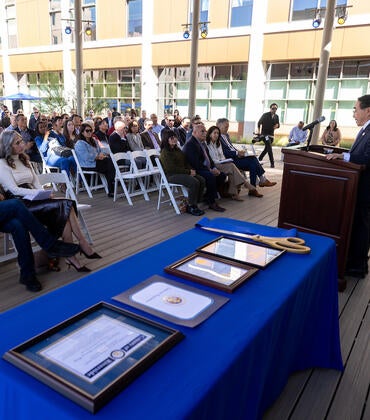
A decade after establishing the Campus Advocacy, Resources & Education (CARE) office at UC Riverside, the program is celebrating its 10th anniversary as a resource for relationship violence intervention and educational services.
Over the course of its history, the office has become a vital resource for counseling, programming, and activities for students, staff, and faculty. It is one out of nine departments under the Health, Well-being, & Safety division.
Founded in 2015, CARE offers a safe environment for individuals to receive confidential support for issues related to relationship violence, sexual harassment or assault, and stalking. CARE advocates provide survivors with emotional support, academic and housing accommodations, medical and financial resources, and reporting options.
Rosanna Cacace-Zakhir, director of Informal Complaint Resolution, deputy Title IX officer, and former CARE director, explained that CARE advocates are not therapists. They instead serve in roles similar to case managers, helping survivors navigate processes such as obtaining restraining orders or breaking a lease due to domestic violence. They may also accompany survivors to meetings and hearings during Title IX investigations.
Because each situation is unique, there is no set time limit for how long survivors can work with CARE advocates.
“We recognize that healing is not linear,” said Nikki Hutchinson, interim CARE director, assistant director of advocacy, and CARE advocate. “So, we do hold on to students longer than other departments because we use a trauma-informed approach to meet them where they’re at.”
One trauma-informed resource offered to survivors is Yoga as Healing, a six-week program held every quarter. Led by a certified yoga specialist, the sessions help individuals reconnect with their bodies and regulate their emotions.
CARE also facilitates programs and events throughout the year centered around healthy communication and violence prevention. Among the most popular are Bee Healthy with Your Honey Week and Sexual Assault Awareness and Prevention Month.
During Bee Healthy Week, students can attend workshops and activities that address topics related to dating dynamics and relationship boundaries.
“We started Bee Healthy with Your Honey because of Valentine’s Day, but it became very popular,” said Lisa Chu, former CARE assistant director of prevention. “We wanted to promote consent culture and healthier relationships, and it really pulls people in.”
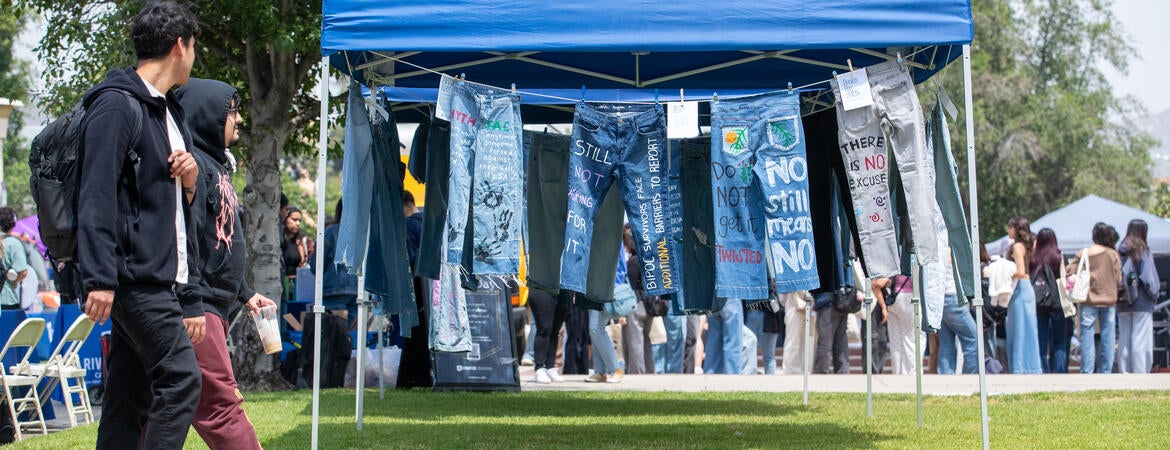
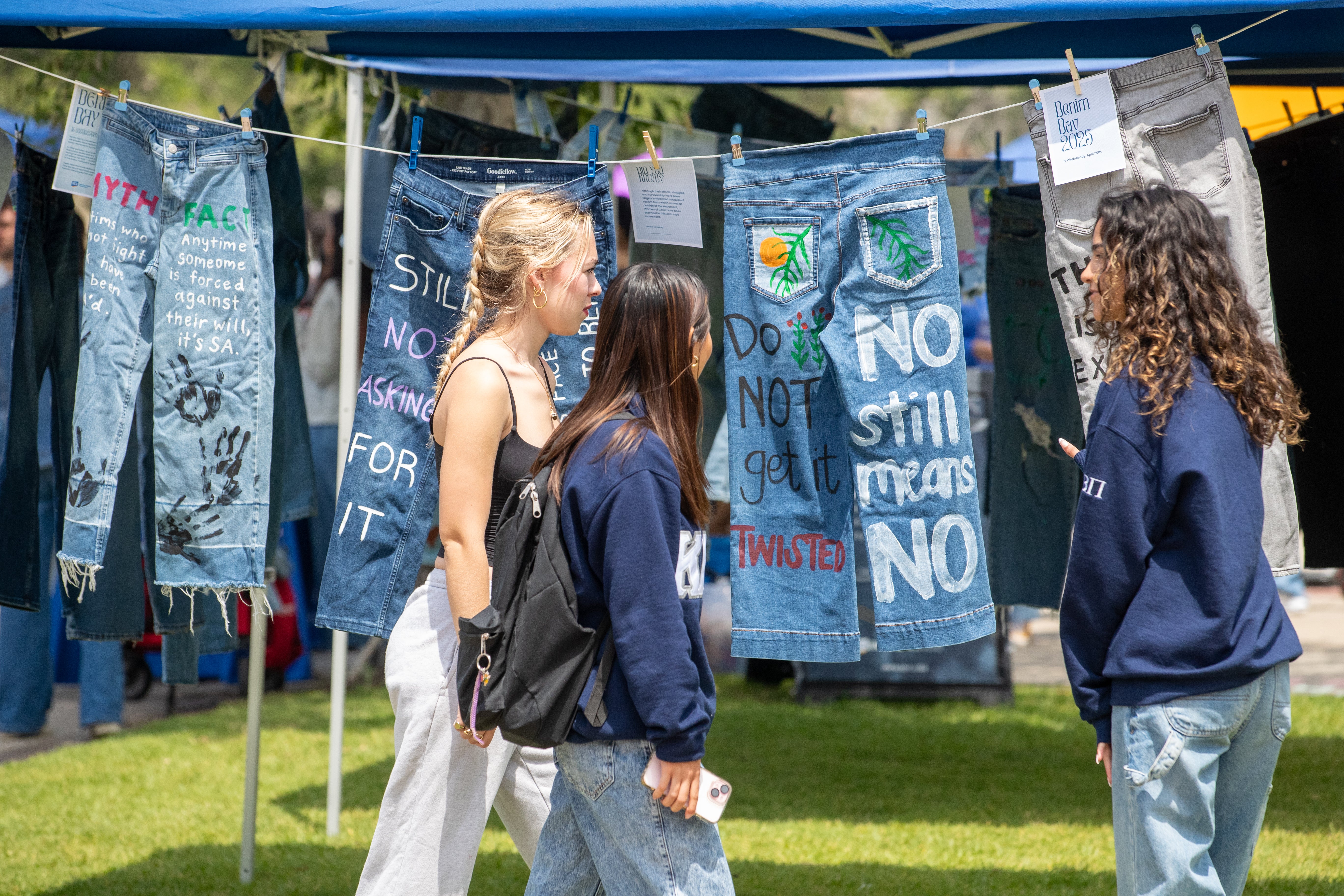
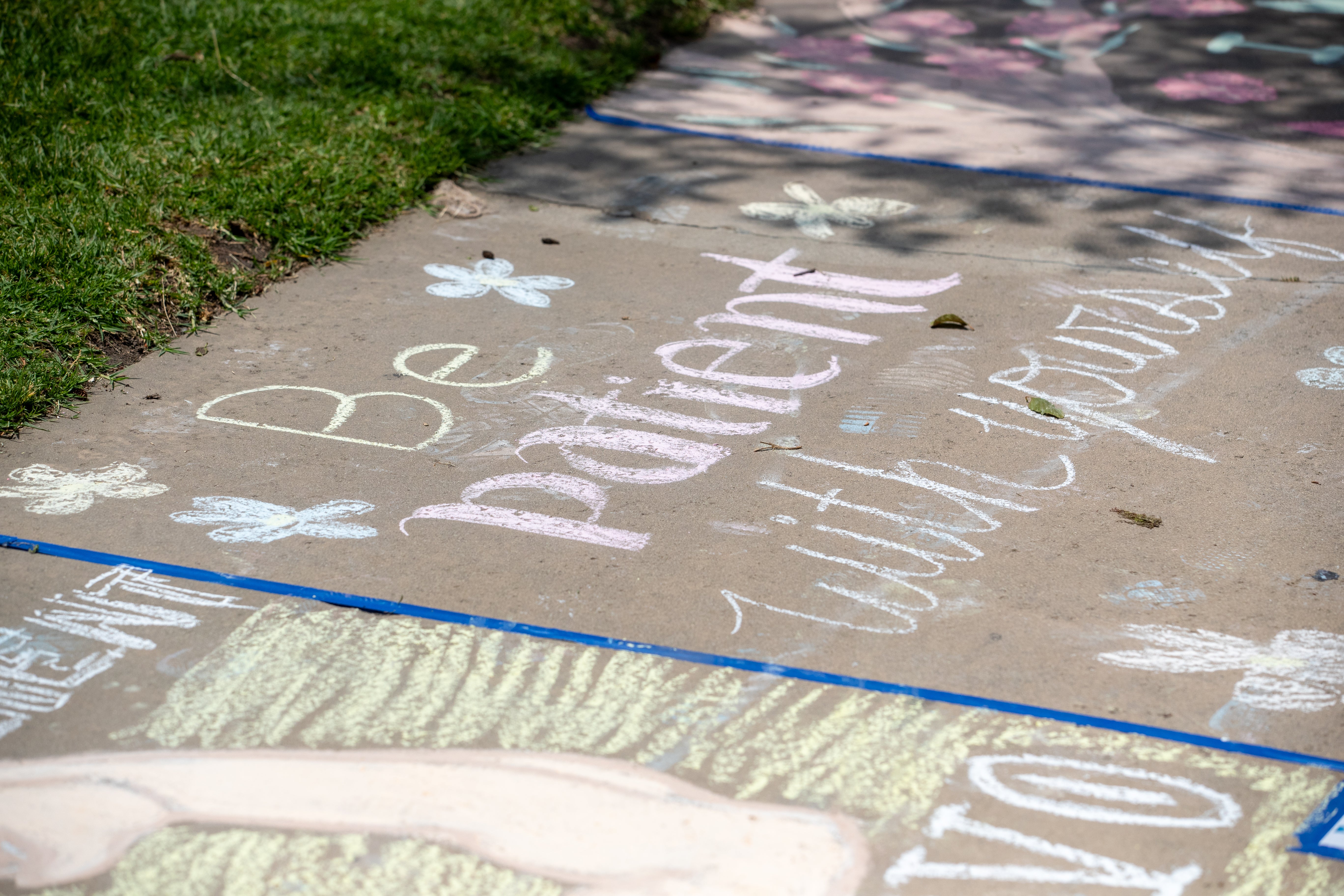
In April, during Sexual Assault Awareness and Prevention Month, CARE hosts Chalk Walk alongside Denim Day to encourage community engagement.
For Denim Day, students and campus organizations are invited to paint statements on jeans that challenge harmful stereotypes and myths surrounding sexual violence. Chalk Day shares supportive messages through vibrant chalk art. Both projects are displayed by the bell tower to foster awareness and solidarity.
Another way students can get involved is through CARE’s peer education programs. The Sexual Assault and Violence (SAVE) program provides undergraduate students with educational resources, while Brothers and Sisters Against Violence (BSAV) is tailored to fraternities and sororities. Through both programs, students can take on leadership opportunities by organizing events and facilitating presentations focused on sexual violence prevention.
“We recognize that this education is most impactful when it comes from their peers, so I think it’s a good example of the holistic support our office takes when it comes to advocacy and education prevention,” Chu said.
Melany Gil, an MPH student, has worked at the CARE office for three years, starting as a peer educator before becoming a student assistant.
“I love the CARE office, and I love what we do,” Gil said. “It’s nice to have a work environment that creates safe spaces and I can also support my peers, which is very fulfilling.”
Looking to the future, CARE wants to continue focusing on supporting survivors, promoting prevention education, and shifting the conversation around sexual violence.
“For a lot of people, it’s still really intimidating to come in for services, but we want to challenge the stigmas around accessing our resources,” Chu said. “Our advocates are great at what they do, and it’s wonderful to build relationships with students and support them throughout their healing journey.”
The CARE office is located at HUB 377. To learn more about CARE and upcoming events, visit the CARE website.