Alfred Hitchcock’s films and new teaching technology don’t seem to have much in common, but Richard Edwards sees a connection.
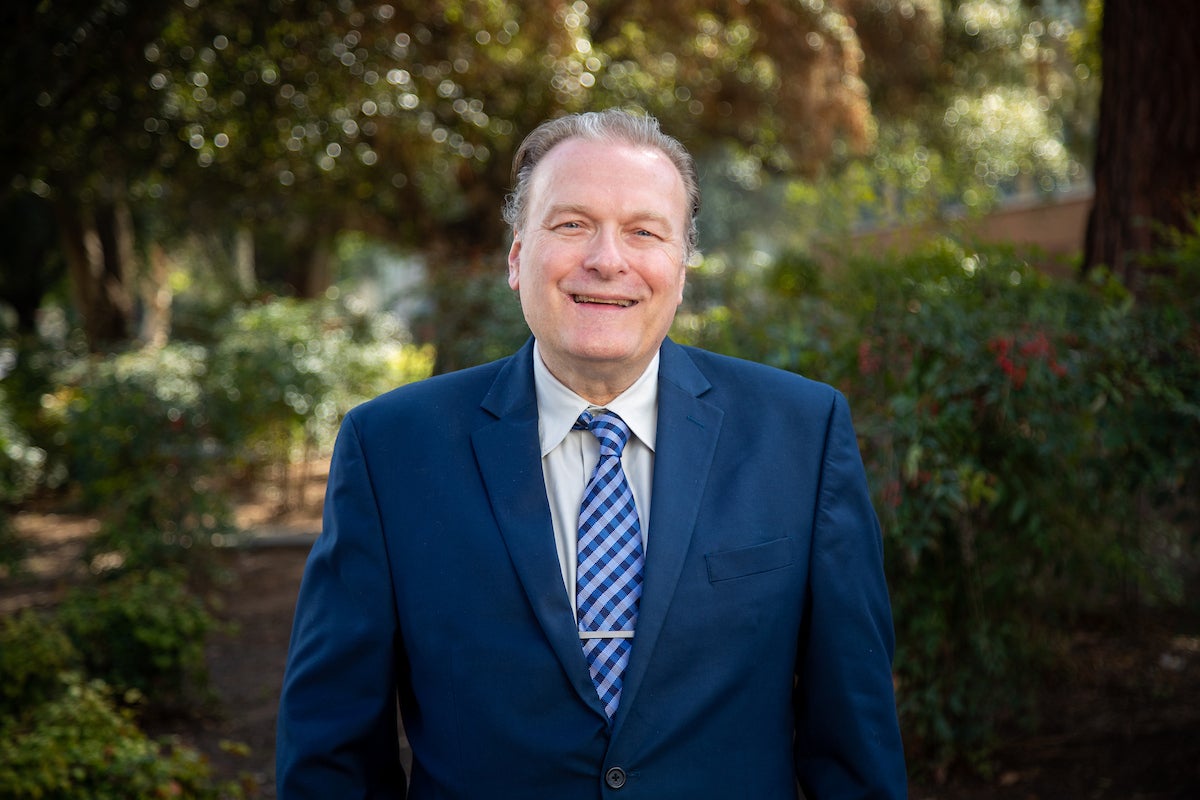
As director of the UC Riverside Exploration Center for Innovative Teaching & Engagement, or XCITE, Edwards helps introduce innovative technologies and techniques in teaching and learning. As a film scholar and a curator for an ongoing film series, Edwards is bringing Hitchcock’s films to new audiences.
Anyone interested in learning how to reach audiences with compelling storytelling can learn from Hitchcock, widely considered the master of suspense, he said.
“We all love a good story, and we love a story well told,” Edwards said. “When we’re in the hands of a master storyteller, we tend to follow them wherever they want to take us, whether that’s teaching or filmmaking.”
Just as Edwards looks for ways to apply new technology to learning, he noted that Hitchcock continually experimented with new formats such as the latest cameras, 3D, technicolor, and widescreen changes as they were introduced in his time.
“Hitchcock was a true innovator, and he would always play with new technologies,” he said.
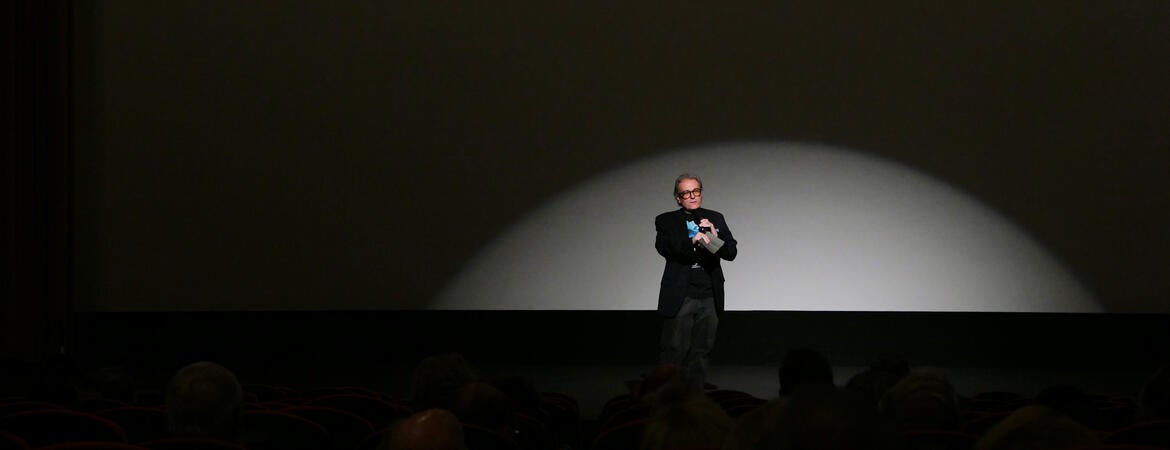
For the last three years, Edwards has helped organize and host a monthly screening of Hitchcock films at Camelot Theatres in Palm Springs in association with the Palm Springs Cultural Center. Edwards provides an introduction for each film and leads a discussion with the audience after. The Hitchcock Retrospective has been renewed for a fourth season beginning in September.
The retrospective series initially started out slowly but now it regularly attracts a large audience every month at the 400-seat theater, Edwards said.
“It’s really a testament to the work of Alfred Hitchcock that his films still work with contemporary audiences,” he said. “He really is a very unique filmmaker in that his films have not really dated much at all. They’re still fun to watch and they have a timeless quality to them.”
The film series offers movie buffs the opportunity to see Hitchcock’s work on a big screen, sometimes in standard 35 mm or widescreen Vistavision prints when possible.
“The one thing I’ve learned doing the Hitchcock retrospective at the Palm Springs Cultural Center is the jokes are funnier and the suspense is scarier when you’re watching it in community in a darkened theater with other people the way these films were intended,” he said.
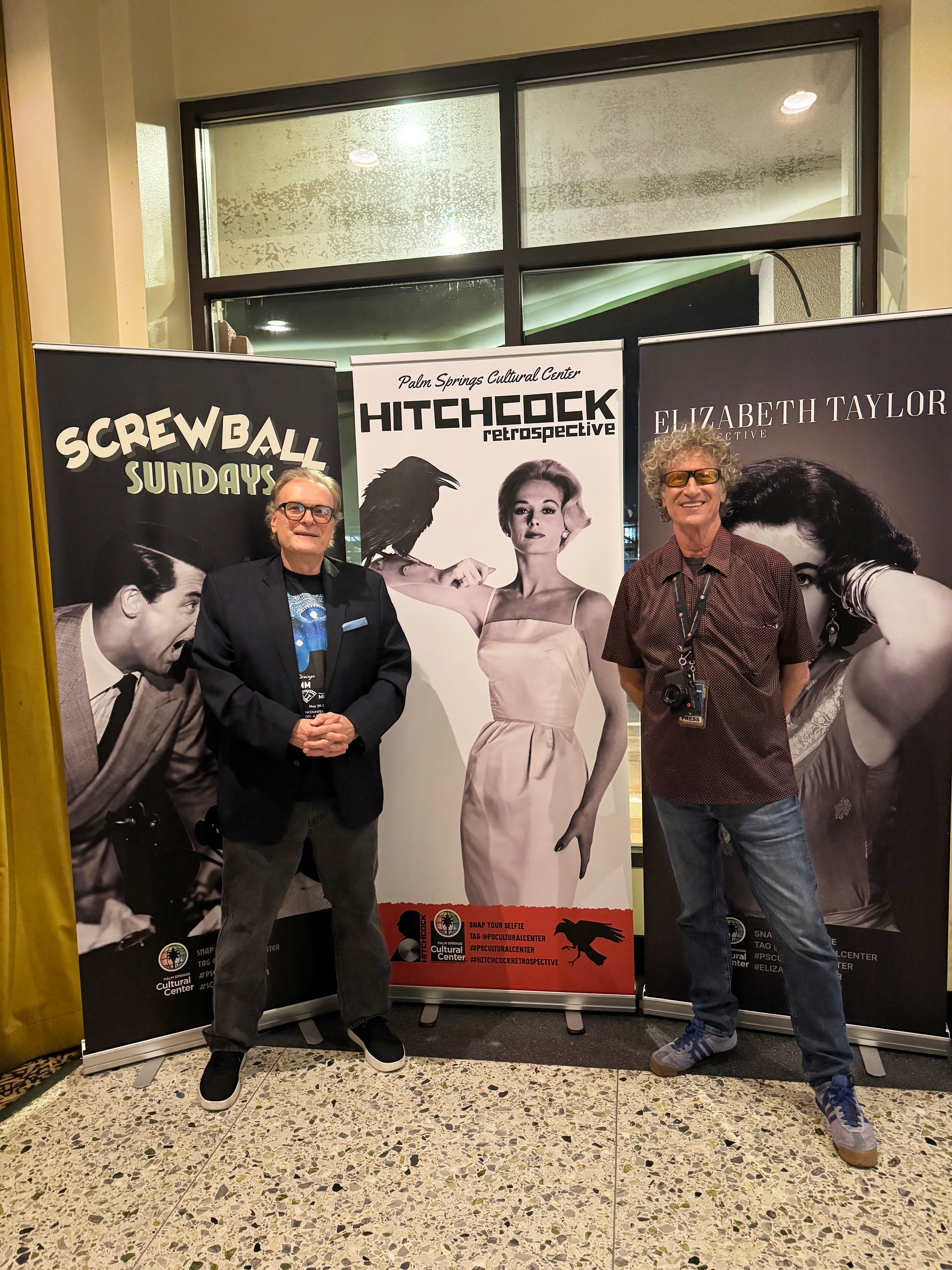
While his main role at UCR is overseeing XCITE and campus-wide teaching and learning initiatives, Edwards is also an associate adjunct professor in theater, film and digital production where he teaches occasionally. He will be teaching a course on contemporary film and artificial intelligence in winter 2027.
Edwards’ first major formative film experience was the release of “Star Wars” in the summer of 1977, which he saw multiple times.
“I got obsessed with ‘Star Wars’ and that’s where my love of films really started,” he said.
But it was as a freshman at Wesleyan College in an introduction to film class that Edwards began thinking about film as a major. The class screened Hitchcock’s “Strangers on a Train.” The movie remains one of his favorites and where he began to fully appreciate the artistry and skill of Hitchcock.
Edwards followed that path as a transfer student at the University of Chicago, where film scholar Gerald Mast took notice of the film essays he wrote.
He then pursued film school and went to the University of Southern California’s School of Cinematic Arts where he was a teaching assistant to Drew Casper, the school’s first Alma and Alfred Hitchcock Professor for the Study of American Film.
Casper taught a course on Hitchcock and on the last day of class Patricia Hitchcock, Alfred Hitchcock’s daughter, would attend the lecture and give students wristwatches with sketches of the filmmaker’s side profile on the dial. Edwards still has two of the watches she gave him.

While he was a teaching assistant, USC held a Hitchcock year-long centennial celebration in honor of the director’s 100th birthday in 1999 and screened all 53 of Hitchcock’s feature films at USC’s Norris Theater. Edwards said was lucky to attend that series and watch Hitchcock’s evolution as a director.
Edwards noticed how Hitchcock’s films still felt fresh to young audiences because he dealt with universal deep human issues such as psychosis and neuroses.
“They had an authenticity of dealing with the dark side of the human condition and that still holds up in almost all of his films,” he said.
Edwards, who also specializes in film noir, was first called on to bring his expertise on Hitchcock to a Turner Classic Movies “50 Years of Hitchcock” retrospective in 2017 when he was teaching at Ball State University.
That retrospective gave him an opportunity to blend his two interests by creating an online course and other multimedia resources that explored Hitchcock’s films and career. Edwards was later interviewed and featured on the DVD extras for a special edition of “North by Northwest.”
That background made Edwards a natural fit for the Palm Springs film series, which he began with author and documentarian Steven Smith as a co-host. For the 2026-27 season, author and film scholar Vanessa Ament will join Edwards as co-host.
The new season will include a mix of cult classics and people pleasers. For instance, the theater will screen well-known films like “Psycho” and “Vertigo” as well as harder to find titles such as “Stage Fright” and “Young and Innocent.” The lineup will also feature a silent film from early in his career, 1927’s “The Lodger.”
Edwards has seen most of Hitchcock multiple times – with “North by Northwest” the most at 25 – but he tries to see them with fresh eyes each viewing.
“I let the movie just guide me and so I can always enjoy an ending, even if I theoretically know how it ends,” he said.
Header image by Jimmy Steinfeldt
A Hitchcock primer: Three films to start with
Hitchcock’s film spans decades with many popular hits to choose from. For those unfamiliar with his work Edwards provided three recommendations, choosing one each from the 1940s, 1950s, and 1960s.
“Rear Window.” Edwards describes this 1954 classic starring James Stewart and Grace Kelly as the best introduction to Hitchcock. “It’s just compulsively watchable,’” he said. “Nobody dislikes ‘Rear Window.’”
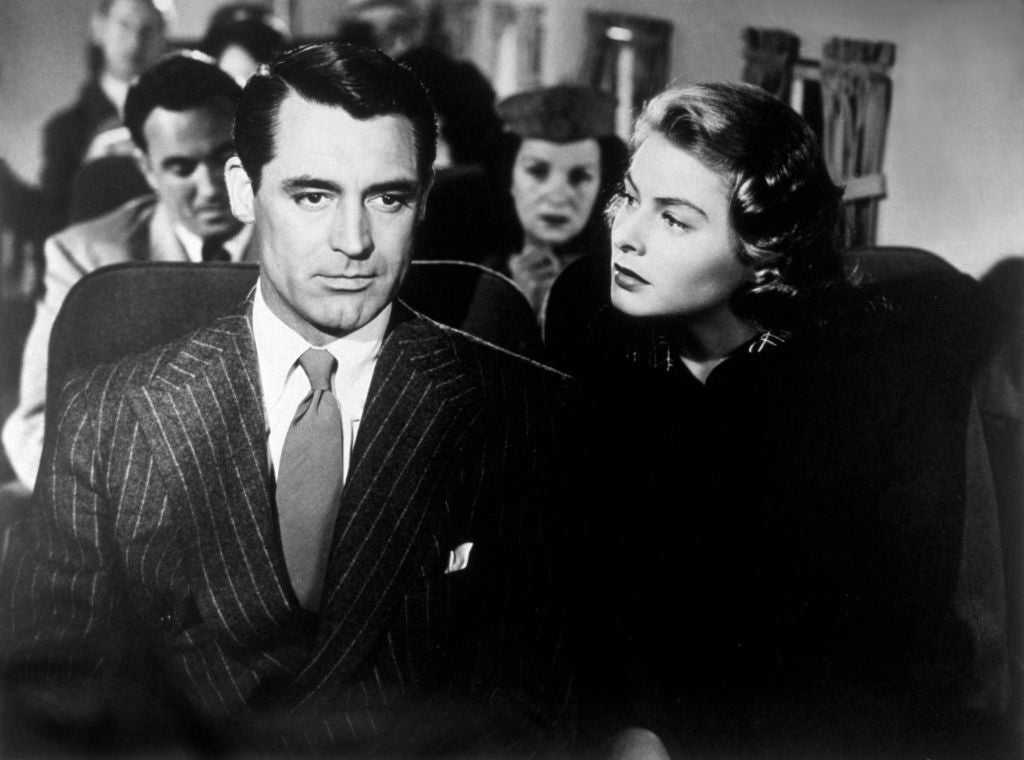
“Notorious.” Edwards said this 1946 thriller features “Cary Grant and Ingrid Bergman at the top of their game with Claude Rains as the villain. You can’t get better in 1940s cinema.”
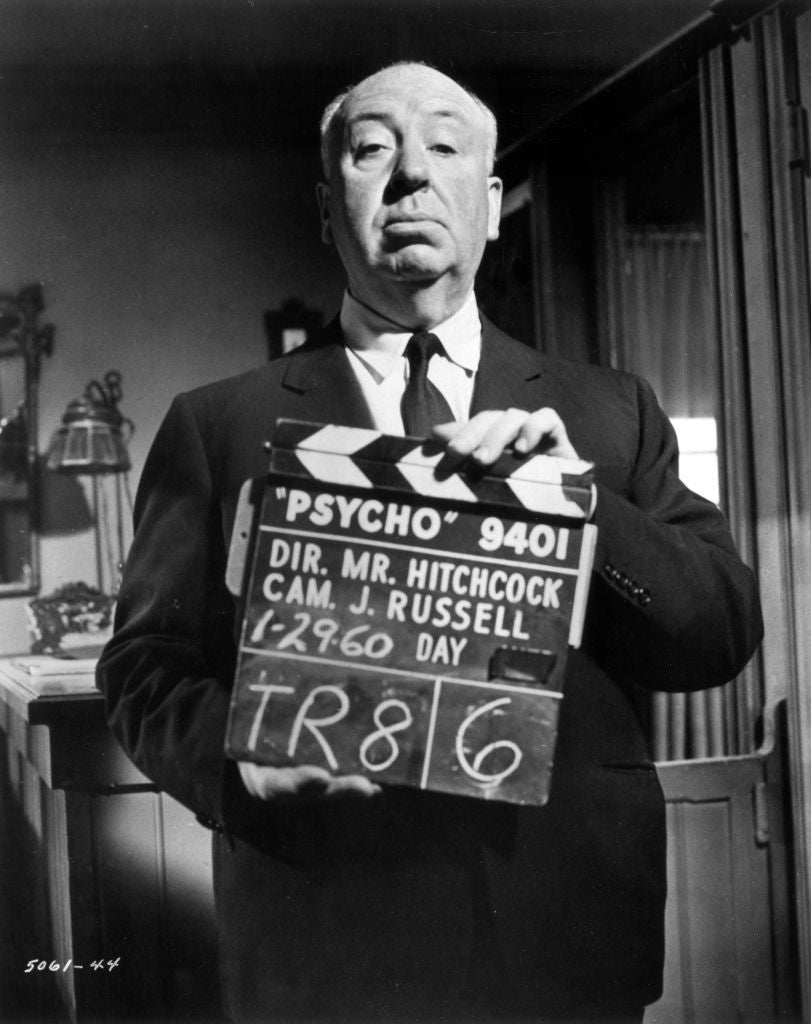
“Psycho.” One of his most influential and enduring classics, it made $175 million on a $1 million budget in 1960. “If you really want to see how everything gets put together, you’ve got to watch Psycho because he really goes to the next level,” Edwards said.
“You start with him at his most secure and glamorous in ‘Rear Window,’ then you see him at his storytelling best in ‘Notorious,’ and then you see him at the pinnacle of his career,” he said. “Everything just hits on ‘Psycho.’”
The Hitchcock Film Retrospective at the Camelot Theatre in Palm Springs returns Sept. 11 at 7 p.m. with 1951's "Strangers on a Train." Tickets will be available after Labor Day. Check the Palm Springs Cultural Center's website for ticket information and scheduling of future screenings.