Ahead of Thursday's U.S.-China summit in Washington, D.C., a UC Riverside lecturer undertook Sino-American diplomacy on a more modest scale.
Gary Barnett toured China as a kind of musical ambassador for UCR from June 20 to July 16.
Barnett, who teaches music composition and musicianship, gave concerts and master classes across the country, fostering new relationships with Chinese conservatories and musicians.
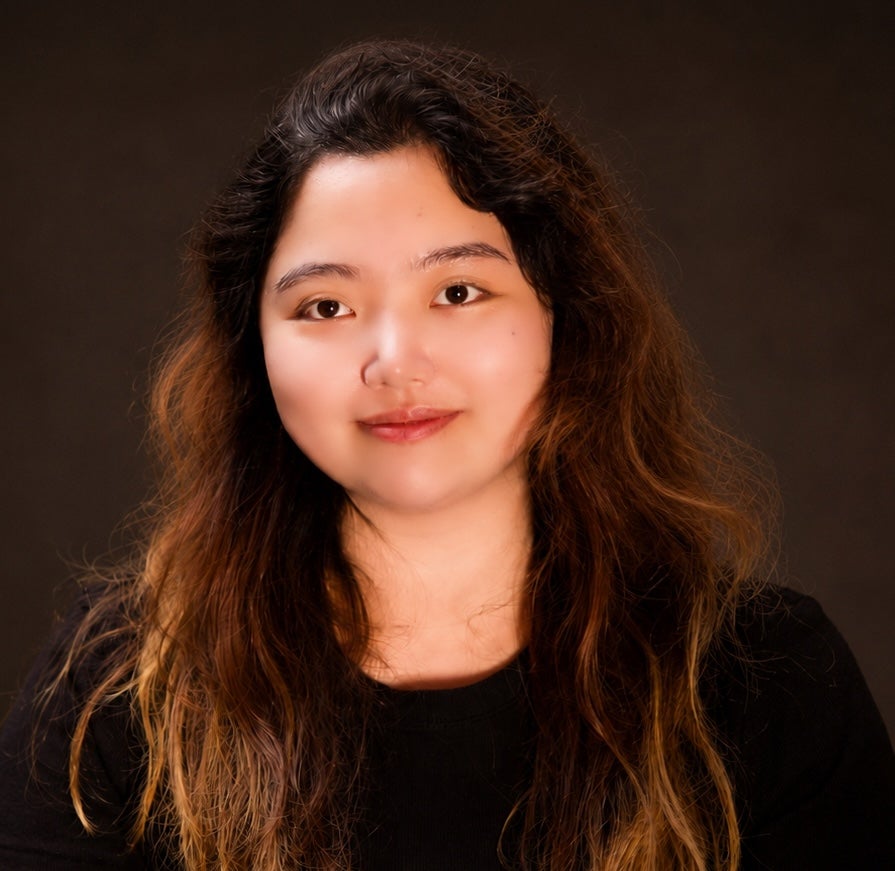
In addition, he premiered two works composed specifically for the trip: one by Monstar Cao, a doctoral candidate in music at UCR and award-winning composer, and another by Yibao Zhang, who earned a bachelor’s degree in music from UCR and is now working toward a master’s degree in music technology at Indiana University-Indianapolis.
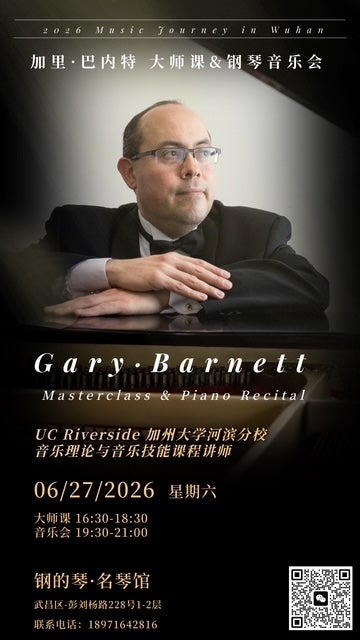
given by Gary Barnett. (Courtesy of Gary Barnett)
Barnett said the conservatories he visited in Wuhan and Xi’an enroll an enormous number of students. “From a recruitment standpoint, it’s a huge opportunity,” Barnett said. “I’d say 80 to 90 percent of the people I met — from deans to professors to students — had never heard of the University of California, Riverside. And there I was playing works by two accomplished, successful composers who’ve graduated from, or are currently working in, our music program.”
Barnett, who earned a doctorate in historical musicology from UCR and Doctor of Musical Arts from the University of Kansas, continued: “When I play their pieces and people see the effort we’re making to build connections with China, it makes a real difference. It’s a point of real Highlander pride.”
With Chinese-U.S. tensions increasing on everything from trade to Taiwan, academic diplomacy, which opens opportunities for cultural exchange, is one way the University of California has traditionally helped strengthen bonds between the nations.
Barnett said he was overwhelmed by the hospitality and gratitude he received at every one of his stops. “They gave me the red carpet,” he said. “Heads of associations and deans of schools came out to large, formal dinners held in my honor. The food is amazing.”
Dinners would start with a toast. “Through my translator, I would say something simple and straightforward — that I believe in great relations between our countries and look forward to future exchanges in the arts,” Barnett said. They would then take a ceremonial drink of baijiu, a liquor typically distilled from sorghum.
Barnett acknowledged that some students and teachers asked him about American politics but that the interactions were pleasant. “Teaching these students — some as young as middle school, some at the graduate level — let them see the reality of what an American is,” Barnett said.
Artistic connections tend to rise above politics in China, Cao said. “Chinese audiences are very welcoming toward this kind of artistic and musical exchange with Americans,” she said. “They want you to perform; they want you to share your musical knowledge.”
From Wuhan to Shenzhen
With their connections to musicians and conservatories in the country, Cao and Zhang helped plan Barnett’s itinerary. Hanson Huang, a student at the University of Denver and friend of Zhang’s, served as a translator for Barnett.
“The way things work in China isn’t like it is in the U.S., where I could just fire off a letter to a school and ask to be scheduled for a master class,” Barnett said. “So, it was through Yibao’s and Monstar’s networks that things came together.”
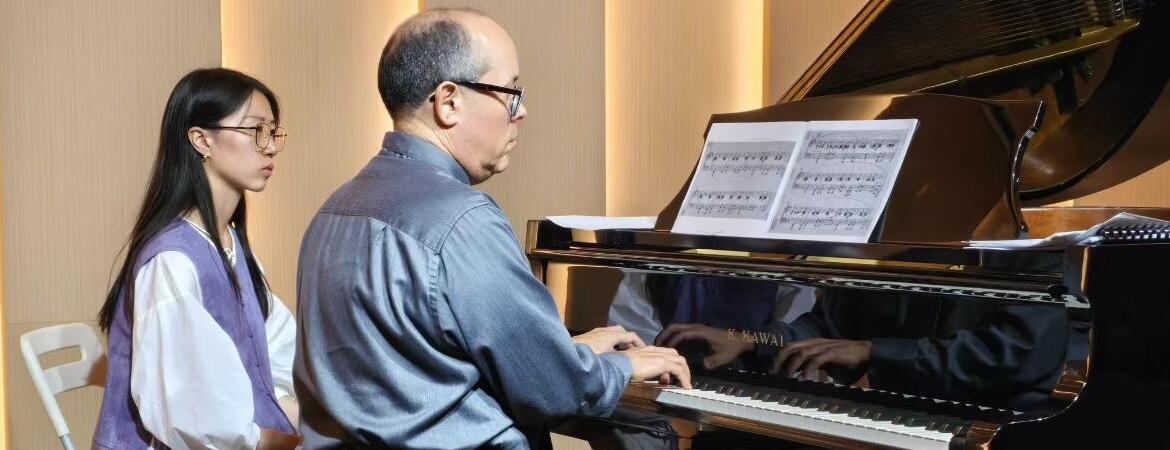
Barnett gave concerts and master classes at a piano gallery in Wuhan and a cultural center in Shenzhen, as well as a master class at the Xi’an Conservatory of Music.
At each concert, he would include a performance of Cao’s and Zhang’s compositions.
Cao calls her piece “Border Gate.” “It’s written in a minimalist style, with a simple musical idea that repeats throughout,” she said. “When I was composing it, I kept thinking about standing on Newport Beach, looking out at the ocean that connects America and Asia.”
Zhang’s is called “22,” a number significant to the composer for several reasons, including the fact that it’s the date of the month his cat was born and the number of days he recently spent with Huang, the friend, in the U.S. before Huang’s return to China. “The piece is a fun, light-hearted, spirited one built around that number,” Barnett said.
Cao has helped arrange for another member of the UCR music faculty, Professor Paulo Chagas, to be interviewed Sept. 28 at the House of Blues and Jazz in Shanghai at the end of the month. (The interview will be recorded and made available online.)
“This is part of my ongoing effort as a UCR music Ph.D. student to build connections between our department and music institutions and artistic communities in China through performances, master classes, educational exchange, and collaborative projects,” Cao said.
“For me, Dr. Barnett’s China visit was not intended as a one-time project, but part of a broader effort to create an ongoing network that can provide more international opportunities for UCR faculty and students.”
Those interested in collaborating with Cao on artistic or educational projects in East Asia can reach her by email.
Top: Gary Barnett performs during a concert in Wuhan with a page-turner sitting beside him. (Courtesy of Gary Barnett)