A research team including a UC Riverside astrophysicist and his former graduate student has received the 2025 Buchalter Cosmology Prize for a study that offers new insight into one of the universe’s earliest and most transformative eras — the epoch of cosmic reionization — and its possible role in generating magnetic fields that permeate intergalactic space.
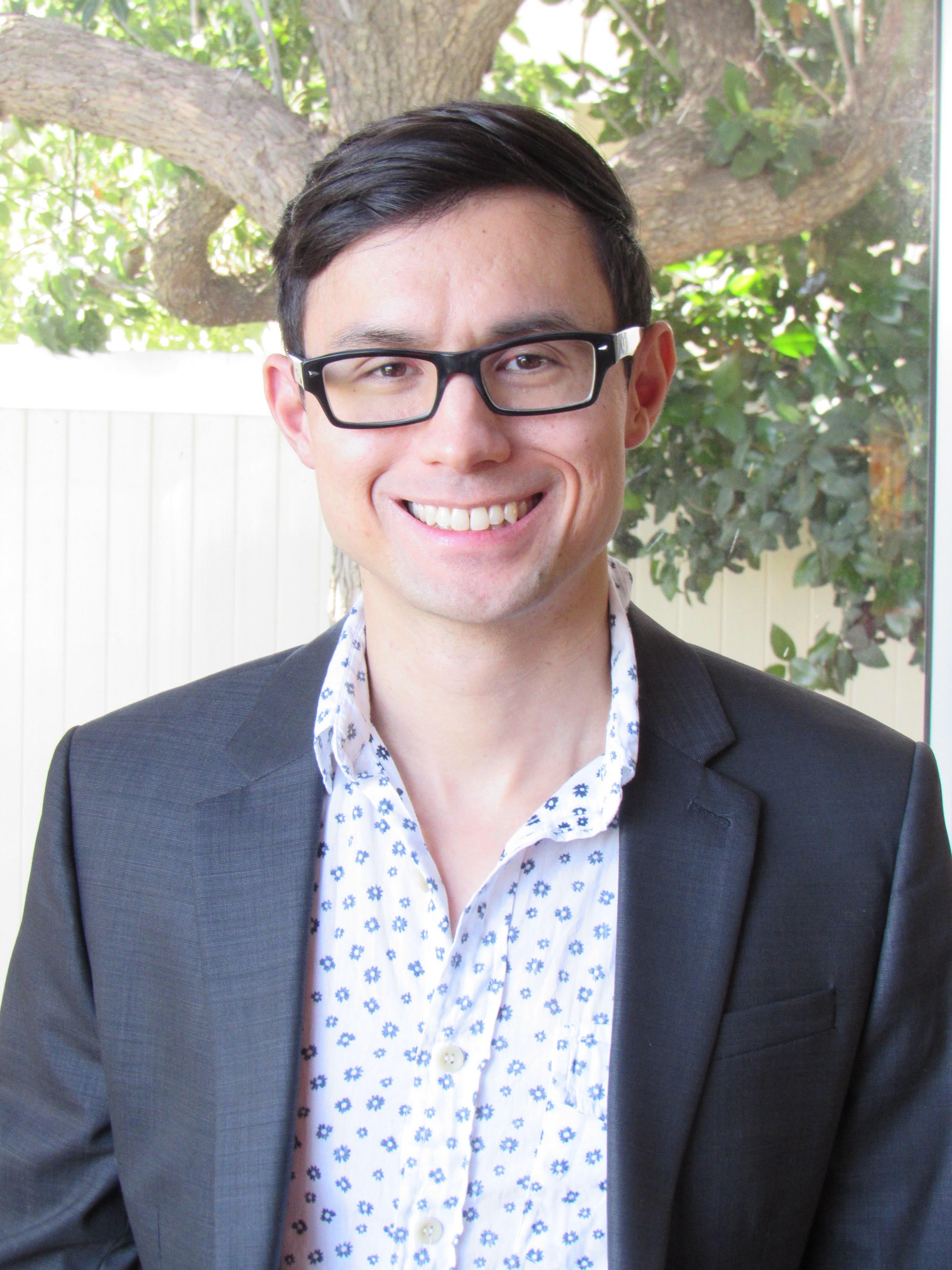
Anson D’Aloisio, an associate professor of physics and astronomy, is a senior author on the paper, titled “Kiloparsec-scale turbulence driven by reionization may grow intergalactic magnetic fields,” that won the first prize. Second and third prizes were also announced.
The Buchalter Cosmology Prize is an annual scientific award honoring transformative contributions to cosmology, the field of physics and astronomy dedicated to understanding the universe’s origin, structure, evolution, and fundamental constituents. The prize aims to encourage and support bold, original ideas, particularly those that challenge prevailing assumptions or open new avenues for exploring the cosmos.
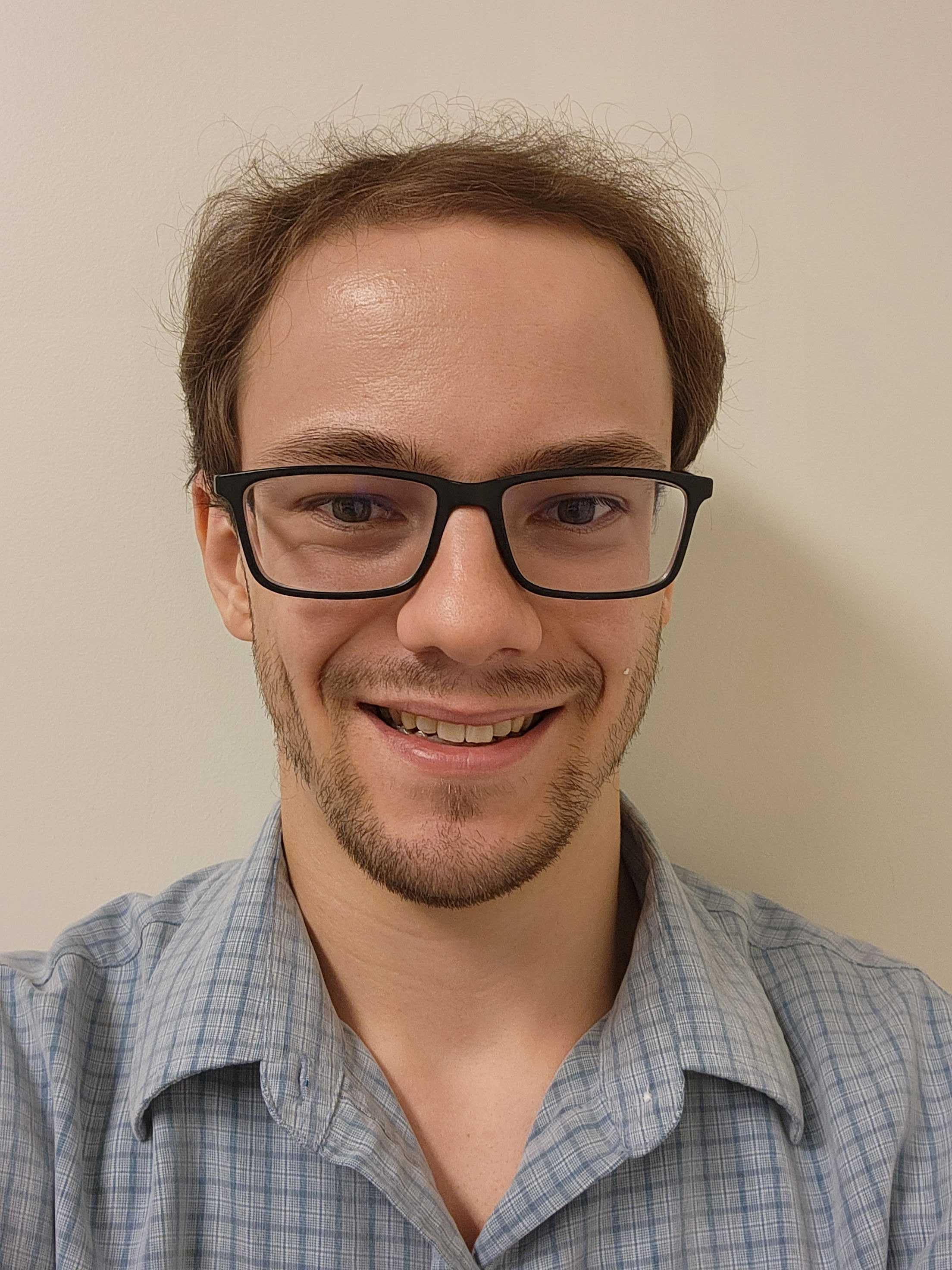
The research was led by Christopher Cain, who completed his doctoral degree in physics at UCR in 2023. Cain is currently a Beus Prize Postdoctoral Fellow at Arizona State University, where he continues his work in theoretical and computational astrophysics. The award was announced on January 8, 2026, during the meeting of the American Astronomical Society that took place in Phoenix, Arizona.
D’Aloisio explained that in the moments following the Big Bang, the universe existed as a hot, dense, nearly uniform mixture of particles — a state often described as a cosmic “soup.” There were no stars or galaxies, and hence there was no starlight. That began to change during the epoch of reionization, when the first galaxies formed and began emitting ultraviolet radiation.
“Reionization was a major transition period for the universe, brought on by the first light from galaxies,” D’Aloisio said. “As galaxies formed, their light reheated the gas filling the universe, fundamentally changing its physical state. This radiation spread outward over hundreds of millions of years, gradually filling the universe and transforming cold, neutral gas into a hot, ionized medium.”
In their paper, D’Aloisio and his team focused on what happens as this radiation propagates through space. The boundary separating heated gas from colder gas beyond the reach of galactic light is known as an ionization front. Using high-resolution supercomputer simulations, the team examined how these fronts interact with the intergalactic gas in unprecedented detail. The team found that the heating caused by reionization generates turbulence, producing swirling motions (vortices) in the gas between galaxies.
“This kind of motion wasn’t previously appreciated as a major outcome of reionization,” D’Aloisio said. “Our simulations show that the heating process is far more dynamic when you are able to resolve the small-scale structure of the gas.”
The discovery has implications for one of astrophysics’ enduring mysteries: the origin of intergalactic magnetic fields. Observations have shown that magnetic fields exist even in cosmic voids, far from galaxies, but their origin has remained unclear.
D’Aloisio said the study demonstrates that reionization-driven turbulence can power a well-known process called the turbulent dynamo, which amplifies weak magnetic fields over time. Unlike some proposed explanations, this mechanism relies on established physics rather than exotic new particles or forces.
“What makes this result especially compelling is that it can operate in the emptiest regions of the universe,” he said. “Reionization may naturally explain how magnetic fields grew to the strengths we observe today, even far from any galaxy.”
D’Aloisio said the prize highlights the impact of graduate research at UC Riverside. The paper builds upon work Cain completed when he was a doctoral student in D’Aloisio’s research group. “Chris’s contributions were central to the study’s success,” D’Aloisio said.
A UCR alum, D’Aloisio earned his bachelor’s degree in physics in 2005. He went on to complete his doctorate at Yale University, followed by postdoctoral appointments at the University of Texas at Austin and the University of Washington. He joined the UCR faculty in 2017.
D’Aloisio and Cain were joined in the study by Matthew McQuinn of the University of Washington, Evan Scannapieco of Arizona State University, and Hy Trac of Carnegie Mellon University. The $10,000 prize will be distributed evenly among the authors.