Cristina Gomez-Vidal, an assistant professor of society, environment, and health equity at UC Riverside, has been awarded a $100,000 grant to study how counties in Greater Los Angeles can improve the political representation and participation of residents in unincorporated communities.
The grant is from the John Randolph Haynes and Dora Haynes Foundation.
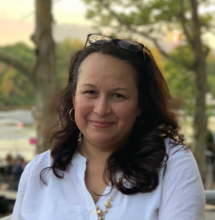
“Unlike city residents who have representation from a mayor or city councilmembers, unincorporated community residents rely predominantly on county government for services and decisions that shape their daily lives,” Gomez-Vidal said. “For residents in these communities that are often at the forefront of environmental and climate threats, strengthening their relationship with county government is crucial for ensuring that their homes, families and communities are safe and healthy.”
The project will document participatory platforms, such as municipal area councils and town councils, and work with community leaders and public officials to identify strategies to strengthen democratic governance and accountability for the nearly 2 million unincorporated community residents in the area, Gomez-Vidal said.
In 2024, voters passed a governance-reform measure in Los Angeles County that will increase the Board of Supervisors from five to nine and create an independently elected county executive. Gomez-Vidal said her project may provide insights that help inform future redistricting efforts in light of the measure’s passage, ensuring that the perspectives and needs of residents in unincorporated communities are better understood in governance reforms.
“I am grateful that the Haynes Foundation has chosen to invest in this project that seeks to strengthen political participation for those living in unincorporated communities,” she said. “Unincorporated communities are often left out of our social imagination, despite the fact that close to one third of the U.S. population live in these areas.”
Gomez-Vidal researches the intersection of governance systems and health disparities, emphasizing unincorporated communities across the nation. She employs a combination of quantitative, qualitative, and geospatial methods to examine how governance structures influence health outcomes, particularly in relation to environmental and climate-related challenges.