Manuela Martins-Green, an internationally recognized researcher at UC Riverside whose work focuses on wound healing, tissue engineering, and the cellular and molecular mechanisms of injury response, has been selected as the 2026 recipient of The Lifetime Achievement Award from the Wound Healing Society (WHS).
Founded in 1989, the nonprofit WHS aims to improve wound healing outcomes through research, education, and communication among scientists and wound care specialists.
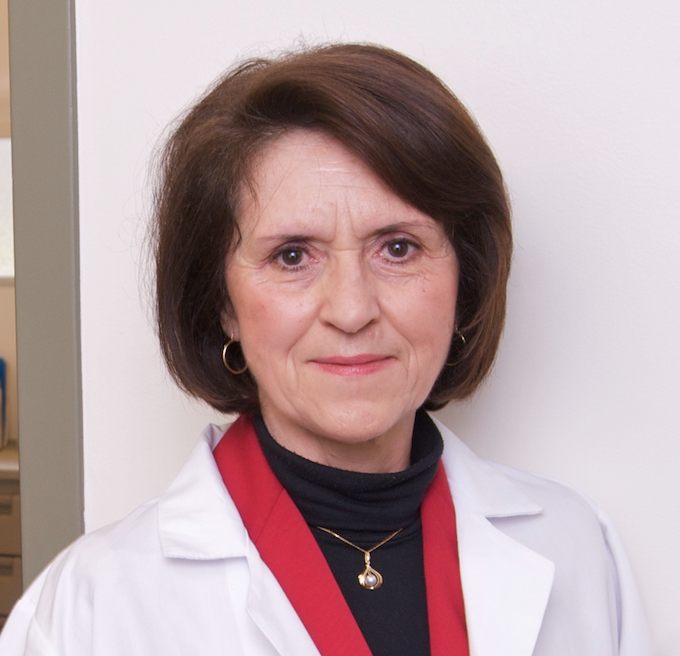
Given to an individual who has been recognized and nominated by their peers in the field, The Lifetime Achievement Award recognizes the work of a scientist who has provided leadership or made significant discovery in the field of wound healing and advanced wound care and research.
“Professor Martins-Green’s groundbreaking work in wound healing combines scientific excellence and innovation with compassion,” said Morris Maduro, divisional dean of life sciences in the College of Natural and Agricultural Sciences. “Her dedication has advanced both research and patient care, leaving a legacy that will inspire generations to come.”
Martins-Green will receive the award at a ceremony on April 10 during the annual meeting of the WHS in Charlotte, North Carolina. She said she is “deeply honored and grateful” to receive the award in recognition of her efforts to advance wound healing research and treatment.
“I accept this award with profound gratitude, and on behalf of the graduate students, postdocs, and undergraduates who have supported and enriched my journey,” she said. “I also accept this honor with heartfelt thanks to my children and husband for their unconditional love and steadfast support of my career.”
Martins-Green is a professor of cell biology in the Department of Molecular, Cell and Systems Biology. Her laboratory conducts pioneering research on chemokines — key signaling proteins that regulate wound healing, inflammation, and angiogenesis (the formation of new capillaries from existing blood vessels).
She developed an innovative animal model that closely replicates human disease and is now used in laboratories worldwide to investigate how chronic wounds develop. This model has enabled critical mechanistic insights and helped drive the development of therapies that are now advancing toward clinical application. Her current work includes an ongoing clinical trial in Europe focused on improving treatments for chronic wounds.
In addition, Martins-Green has led influential research on the harmful effects of tobacco smoke toxins on the body, work that has informed public policy and contributed to the passage of legislation. She has published over 150 peer-reviewed articles and holds two patents.
Martins-Green came to the United States from Portugal on a Fulbright Fellowship. She earned her bachelor’s degree in biology from the University of Lisbon, and a doctorate in zoology from UC Davis. She completed postdoctoral training at Lawrence Berkeley National Laboratory and later served as an adjunct professor at Rockefeller University before joining the UC Riverside faculty in 1993.
Over 32 years at UC Riverside, Martins-Green has taught Introductory Cell and Molecular Biology 36 times to classes of 300–570 students per section. She has mentored more than 56 undergraduate students, 18 doctoral students, and 12 postdoctoral fellows, many of whom have gone on to successful careers as faculty at top universities, physicians and scientists at major medical centers, and leaders in biotechnology.
She has served as chair of her department and as chair of the UC Riverside Academic Senate, written numerous highly cited reviews, edited special journal issues, and served on six editorial boards. Her honors include the Oliver Johnson Award for Distinguished Leadership, the UCR Chancellor’s Award for Excellence in Undergraduate Research, the Wound Healing Society Distinguished Service Award, and election as a fellow of the American Association for the Advancement of Science. Last year, she was elected a fellow of the WHS.
Colleagues and former students describe Martins-Green as an exceptional scientist and mentor whose influence extends beyond her laboratory. She is widely praised for teaching students how to think like scientists — asking fundamental questions, designing rigorous experiments, and communicating with clarity — while also supporting their personal growth. Her mentorship is often described as steady, transformative, and empowering. As one former trainee put it, “Dr. Martins-Green’s mentorship has been nothing short of life-changing.”