Georg Michels, a professor of history at UC Riverside, has won the 2026 Richard F. Gustafson Guggenheim Fellowship in Slavic Studies, one of only three named fellowships awarded by the John Simon Guggenheim Memorial Foundation.
“I am overjoyed and deeply honored to receive this award,” said Michels, a historian of early modern Russia and Ukraine. “It is a wonderful recognition of my scholarly career, and also of the relevance of 17th-century history for today’s world.”
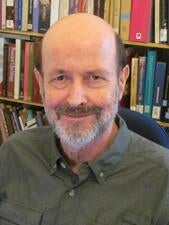
Michels was among the 223 humanists, scientists, artists, writers, and filmmakers appointed to the 101st class of Guggenheim Fellows. They were selected from a pool of nearly 5,000 applicants.
“Our new class of Guggenheim Fellows is representative of the world’s best thinkers, innovators, and creators in art, science, and scholarship,” Edward Hirsch, president of the Guggenheim Memorial Foundation, said in a news release.
Each fellow receives a stipend for independent research. Michels, who was awarded $70,000, plans to complete a manuscript for a book on the Ottoman Empire’s support for Ukrainian resistance against the Russian Empire in the mid to late 1600s.
“My research project demonstrates how a seemingly remote past continues to shape Ukrainian-Russian relations,” Michels said. “I provide a historical perspective on the current Ukrainian-Russian conflict, examining its 17th-century origins when the Kremlin tried, unsuccessfully, to push the Ottomans out of Ukraine.” He argues that Ukraine has sought independence by forming flexible alliances and resisted Russia’s claim to it repeatedly throughout history.
Eastern European historians have often portrayed Ottoman Muslims as religious enemies of Christians and a destabilizing, oppressive force.
However, Michels shows that in resisting Russian imperial expansion, Ukrainians, who overwhelmingly belonged to the Ukrainian Orthodox Church, sought protection from the Ottoman Empire, which helped preserve their political and religious independence. Michels’ research adds to revisionist Ottomanist scholarship arguing that the Ottoman Empire was in resurgence, not decline, in the 17th century.
Michels’ scholarship often examines how ordinary people resist powerful imperial institutions. He is the author of “At War with the Church: Religious Dissent in Seventeenth-Century Russia” (1999) and co-editor of “Russia’s Dissident Old Believers 1650–1950” (2009). His monograph “Habsburg Empire under Siege: Ottoman Expansion and Hungarian Revolt in the Age of Grand Vizier Ahmed Köprülü (1661–76)” (2021) was awarded several prizes, including the 2021 Hans Rosenberg Book Prize from the Central European History Society and the 2023 Susan Glantz Book Prize from the Hungarian Studies Association.
Michels earned his doctoral degree in early modern Russian and Ukrainian history at Harvard University. He currently holds a fellowship from the National Endowment of the Humanities (2025-26).
The Guggenheim Memorial Foundation was established in 1925 by Simon and Olga Guggenheim in memory of their son, John Simon, who died in 1922 of a bacterial infection shortly before leaving for college. Simon Guggenheim, who had served as a U.S. senator from Colorado, wrote in his initial letter of gift that the organization’s aim was to “add to the education, literary, artistic, and scientific power of this country, and also to provide for the cause of better international understanding.” To date, the foundation has awarded some $450 million to more than 19,000 fellows.
The Richard F. Gustafson Guggenheim Fellowship in Slavic Studies is named in honor of the late Barnard College professor of Russian, whose estate supports the grant.