UC Riverside’s R’Garden is marking a new beginning with a regular funding source that will provide stability and diversified programming.
Students voted overwhelmingly last month to approve a referendum in which they will pay $10 a quarter to support the campus garden starting this fall. The crucial vote came after a few years of uncertainty over its funding and management.
The garden also has a new leadership team who say the funding will allow them to continue the R’Garden’s mission of addressing food insecurity on campus while expanding educational and community programs.
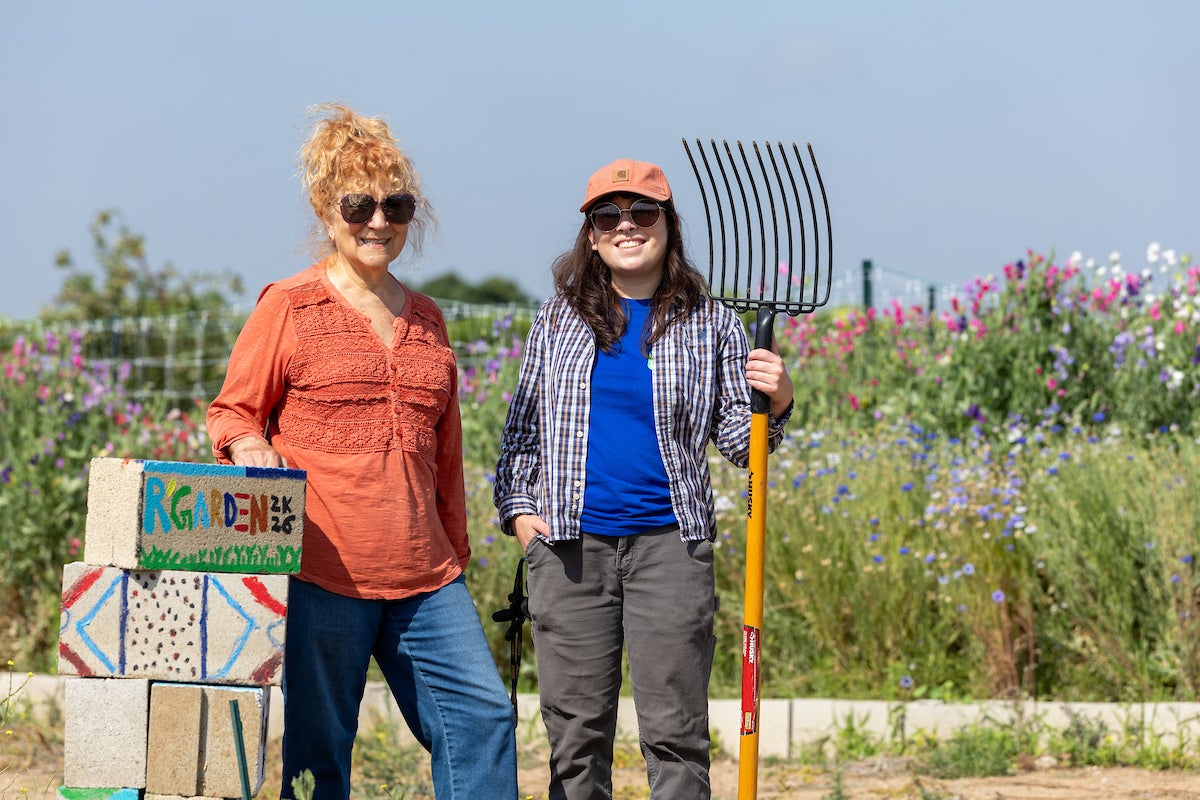
Crystal Brachetti, a UCR alumna who worked at the garden while she was a student, was named R’Garden manager in September. She is joined by Amy Litt, an associate professor in the Department of Botany and Plant Sciences, as the faculty director, a new position created to expand academic connections.
“The referendum passing is truly transformative,” Litt said. “It changes everything. We were operating on a shoestring budget this year. Not knowing what our future was going to be, we were unable to plan anything long term.”
Brachetti has been the only staff member overseeing and maintaining the garden in the past year along with two student interns. Two California Climate Action Corps fellows also provided full-time support.
The referendum provides funding for two additional staff positions — an agricultural technician and a student program coordinator — plus 10 student interns. The new budget also pays for field operation costs such as seeds, plants, and tools.
Brachetti noted that currently her workday ranges from creating fliers for an event to figuring out an irrigation timer to checking on a tractor. The added staff will allow her to focus on managing the garden while delegating some tasks, she said.
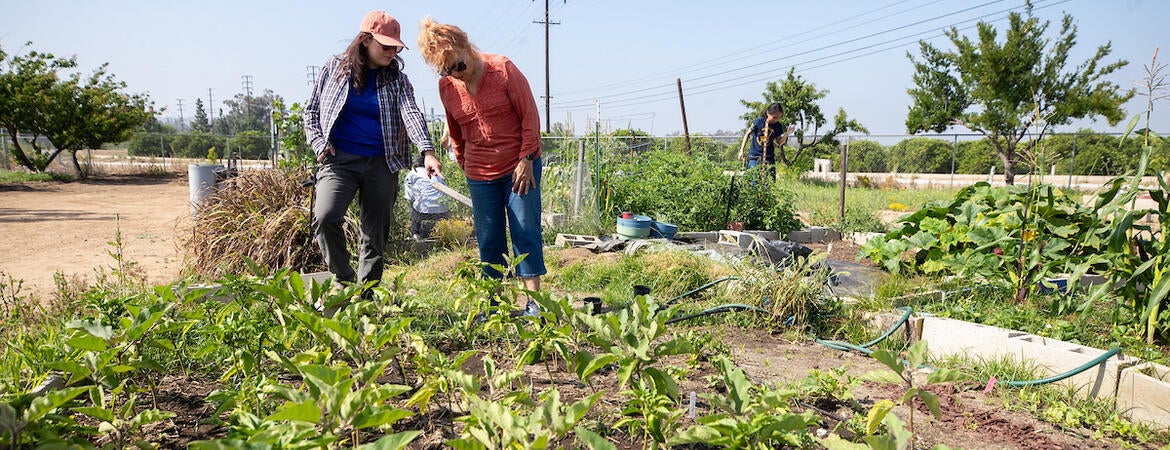
Established in 2012 and located behind Lot 30, the R’Garden consists of about three acres including a quarter-acre of row crops and 21 community plots, each about 10 by 10 feet in size.
While plants, produce, and flowers continue to bloom in the community plots maintained by individual growers, the row crop area, where produce such as broccoli, lettuce, tomatoes, cucumbers, watermelons, and cantaloupes have been grown in the past, was fallow last summer. That was due in part to poor soil conditions, unseasonable weather, and a lack of workers to adequately weed the garden. In the meantime, the UCR Botanic Gardens allowed the garden to harvest fruit from its orchard.
A major goal for this summer and fall is to enrich the soil in the row crop area and replant fruits and vegetables to provide to students through R’Pantry, Brachetti said.
Having a dedicated agricultural technician who can hop on a tractor, make the plant beds, walk the rows, and evaluate the crops will make a huge difference, she said.
“Farming is 90% observation once the plants are already in the ground,” she said.
The R’Garden was a formative experience for Brachetti who began working there in 2016 when she was a third-year student majoring in gender studies.
“When I walked into the R’Garden for the first time I felt like I was home,” she said. “I felt like this reminds me of my grandma’s backyard.”
It provided an opportunity to connect with agriculture, tending to the crops and enjoying the results in the fruits and vegetables she grew and ate. She’s seen that same experience with students now who after a day of lectures and labs “just put their hands in the soil and are excited they get to see their pumpkin plant growing.”
“There’s not a lot of places on campus where you can do that,” Brachetti said.
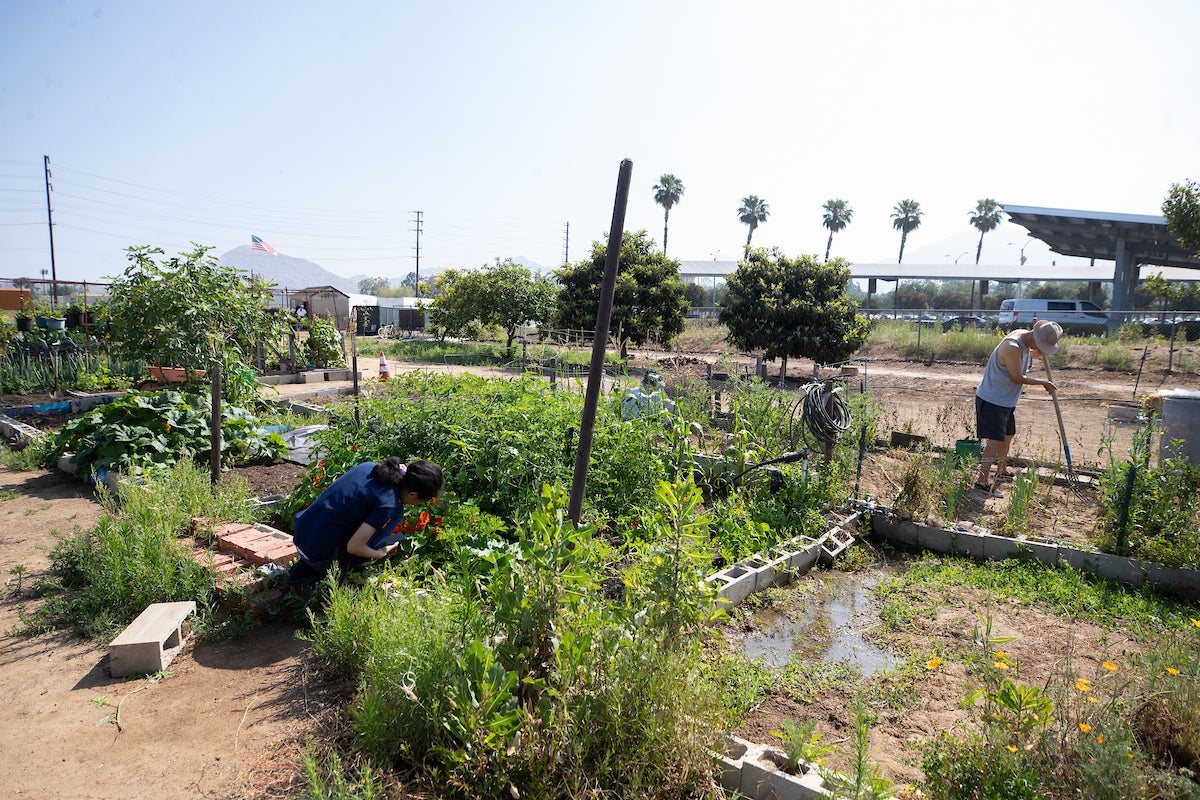
Opportunities for students to learn and grow remain an important part of the garden’s mission as is expanding ways for people to experience it through community gatherings and potlucks. It recently hosted an Earth Day festival and plans to bring back its popular pumpkin patch and harvest festival this fall.
Recently, a grass turf area featuring the Coachella bermudagrass variety developed by UCR professor Jim Baird was planted in between the crop rows and community garden. It created an open gathering space with bales of hay to sit on.
The garden also includes a pollinated hedgerow of native species including lavender, sage, and buckwheat. A new demonstration garden is planned that will include small plots of important crops like cotton, peanuts, and wheat where students can see how they grow.
Previously part of the Basic Needs department, the R’Garden, is now under the College of Natural and Agricultural Sciences, which lends itself to many collaborative opportunities including a planned agriculture major that will be introduced in 2027.
Brachetti and Litt said they see possibilities for collaborations from across the campus in a variety of disciplines. For example, an engineering class recently inquired about using drones to monitor soil health.
Students will have an important voice in the R’Garden’s future with a new student advisory board to be formed this fall.
“Now that we are officially funded by undergraduate fees these undergraduates are our main stakeholders,” Litt said. “We want to hear from them what they want the R’Garden to be and what they want to see.”
Nina Mistry Haywood, a fourth-year public policy and economics student, co-sponsored the referendum and helped campaign for it. A fellow with the UCOP Bonnie Reiss Climate Action Program, she recently worked with a group of students on a project painting and cleaning up a shed at the garden.
Student clubs and organizations she approached were all enthusiastic in backing the referendum, she said. It ended up passing with 3,268 yes votes and 813 no votes while 652 abstained.
“I attribute that to the passion students on this campus have for the R’Garden,” Mistry Haywood said.