When Christophe Katrib first screened his short documentary, “This Dissonance,” in 2024 he was unsure of the reception it would receive.
Two years later, the five-and-half-minute film has been screened at film festivals around the country and world and won numerous accolades. Yet its continued success is bittersweet for Katrib, an assistant professor of teaching in the UC Riverside Department of Theatre, Film, and Digital Production.
“The fact that it’s still relevant is heartbreaking because that violent reality lasting so long is not something to be celebrated,” he said.
Katrib describes the film as an experimental, poetic documentary reflecting the experiences of Palestinian and Lebanese people who have lost tens of thousands of their fellow citizens over the last few years. Katrib, who is Lebanese, said the recent violence brought back his own experience of living through constant drone, bomb, and missile attacks in Lebanon during a 34-day war with Israel in 2006.
The film has been featured at film festivals in Vancouver, Berlin, Budapest, London, and Paris, among others. It won the Best Experimental Short award at the University Film and Video Association and New Orleans Film Festival, and Best Short Documentary Film at the Beirut Shorts International Film Festival in November 2025.
The latter win qualified the film to be submitted to the Academy Awards as a short documentary film. Katrib just entered the film for consideration.
When the recent violence began in 2023, Katrib felt a responsibility as an artist and filmmaker to speak up and shed light on the subject but was initially unsure how to do so, overwhelmed by the scale of the violence and the profound grief it caused.
A trip to New York in the summer of 2024 visiting a nonprofit called Mono No Aware that supports analog filmmakers inspired him to create and submit “This Dissonance” for its biennial cinema arts festival that December.
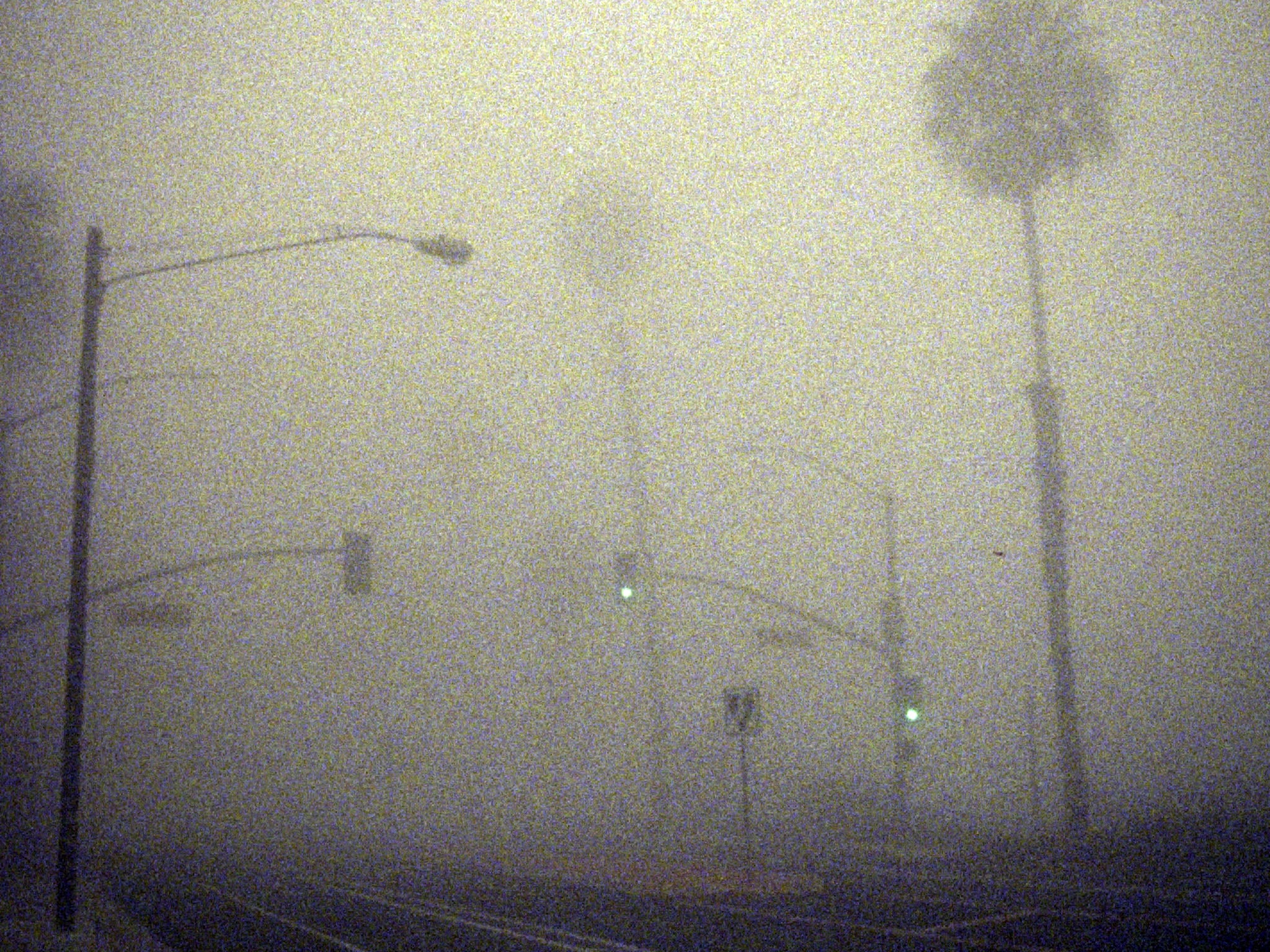
The film uses footage of American landscapes Katrib had shot over the years reminiscent of those in Lebanon and Palestine, contrasted with audio recorded in different places to create the dissonance Katrib took as the title. Two spoken word voices are heard, one from Palestinian visual artist Areej Kaoud and the other from Mahmoud Darwish, a renowned Palestinian author and poet. The final voices are those of screams of Lebanese civilians as their neighborhood was bombed.
At its first screening at Mono No Award in New York, Katrib created an expanded cinema experience that combined the film with live elements including him reciting a poem in the dark to the sound of Israeli drones to introduce the film and then ending with two more performances by violinist and composer Layale Chaker, and writer and poet Ghinwa Jawhari, both fellow Lebanese based in New York City.
Katrib said he found the positive reaction to that performance surprising and motivating.
“It showed that the film I made was impactful, something that speaks to people and needed to exist longer than this festival, that it needed to go around to be seen, to create conversations,” he said.
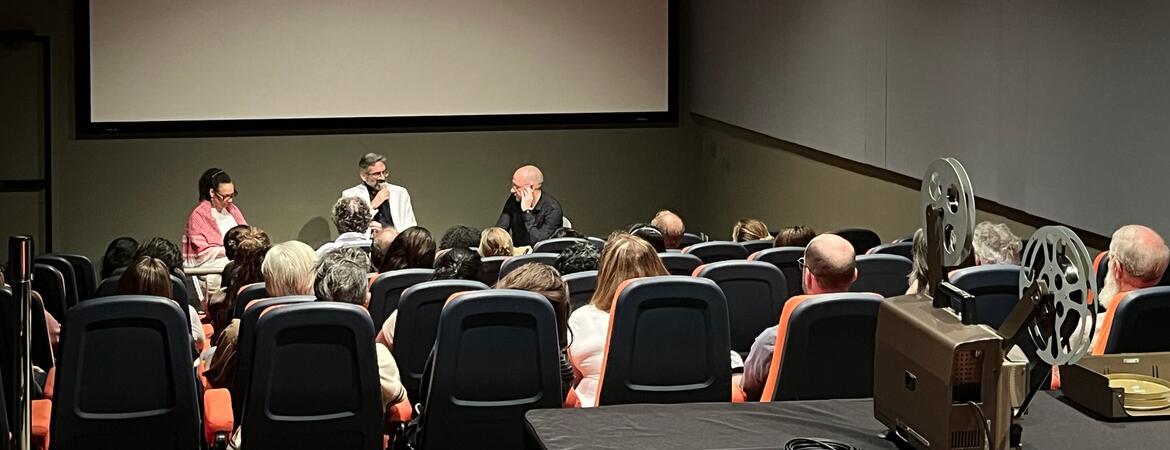
Taking part in question-and-answer sessions has been an important part of the screenings for Katrib and why he’s tried to attend as many as he can. He wasn’t able to attend the Beirut Shorts festival but did watch with heavy emotions as his sister spoke on his behalf.
Katrib said he’s also been touched by the support from his fellow faculty members at UCR, some who have screened the film for students and invited him for discussions in their classes.
Another outcome of the film that Katrib has seen among students is the response to someone telling a personal story that only they can, an important lesson he tries to impart as a filmmaker and instructor.
“It’s a case study of how to empower students to tell their own stories of their own communities,” he said.