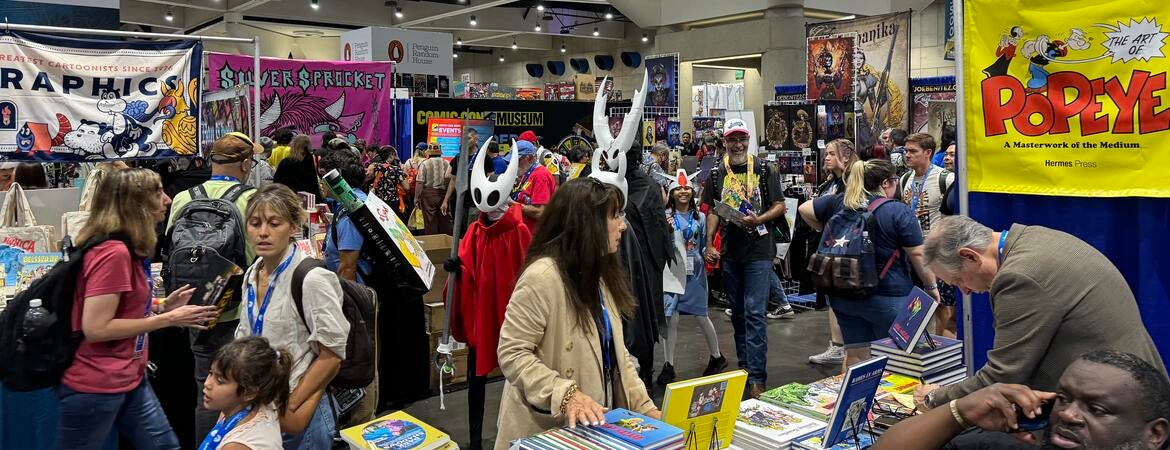
The first clue that Monica Carson and David Lo have arrived at San Diego Comic-Con isn’t the elaborate costumes. It’s the conversations they strike up with fellow fans.
The couple — biomedical scientists in the UC Riverside School of Medicine — will stop to admire an independent artist’s work, duck into a panel discussion on banned books or science fiction, and mingle among fans who recognize the same obscure references. A pin, a T-shirt, or a decades-old comic-book character is an invitation to connect.
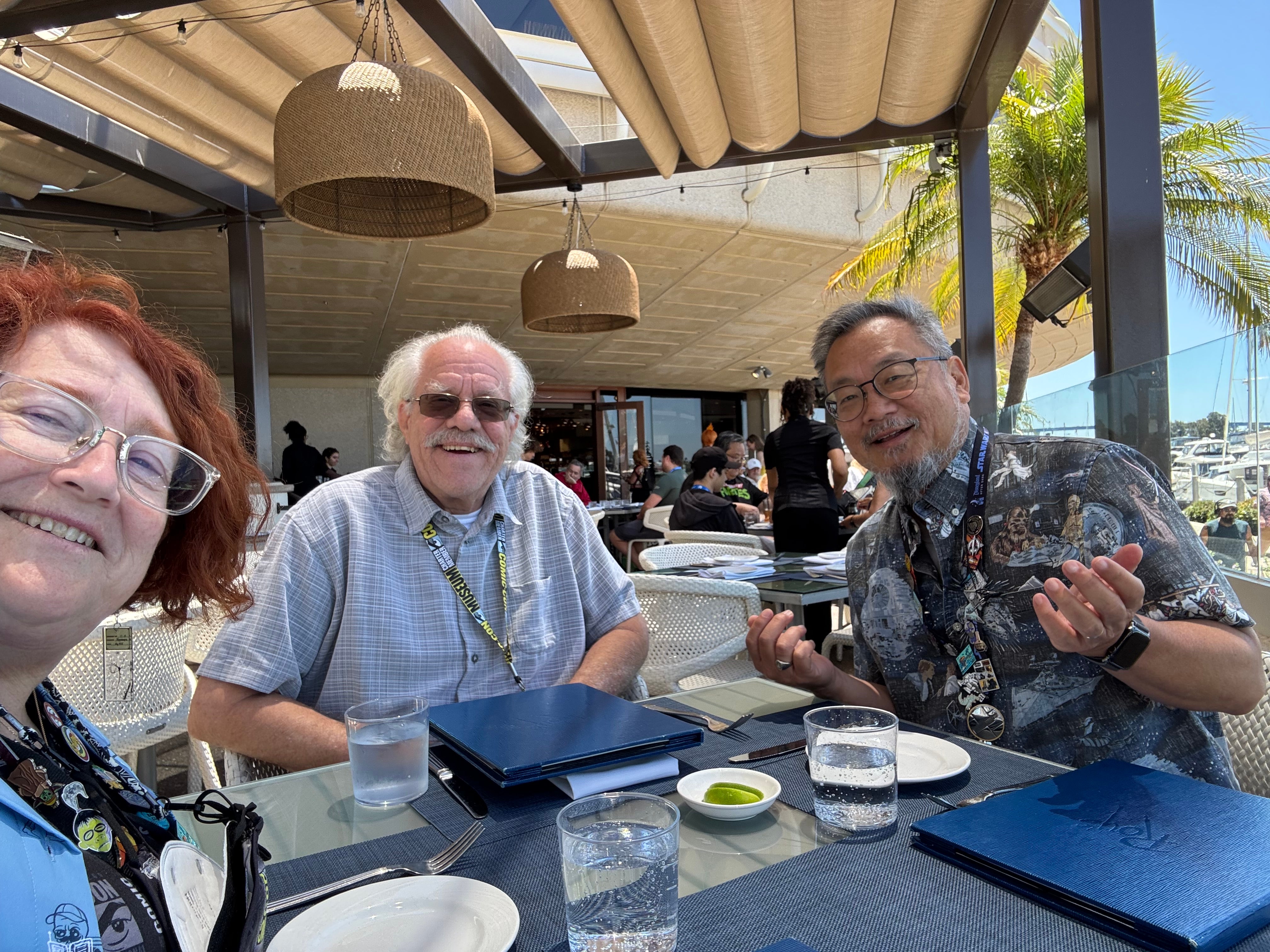
“It feels like you’re with your tribe,” Carson said.
For Carson and Lo, Comic-Con is more than a celebration of superheroes, blockbuster films, and celebrity appearances. After attending for about 15 years, the annual convention, which will be held July 23-26 this year, has become a gathering place where they find community, creativity, and ideas that align with how they see the world.
Married for nearly four and a half decades, Carson and Lo have long shared a fascination with science fiction, comics, and the possibilities that emerge when imagination meets discovery.
It was their daughter, Katherine, who introduced them to Comic-Con. She began volunteering at the convention as a teenager and eventually worked her way into Talent Relations, helping escort actors, filmmakers, and other special guests. As her responsibilities grew, she occasionally received guest badges, giving her parents their first opportunity to attend.
Lo attended his first Comic-Con in 2010, when Katherine helped him get tickets. Carson joined him for Preview Night before leaving the next day for an academic conference where she was presenting. Lo stayed for the rest of the convention, sending her photos along the way.
After that, they kept coming back.
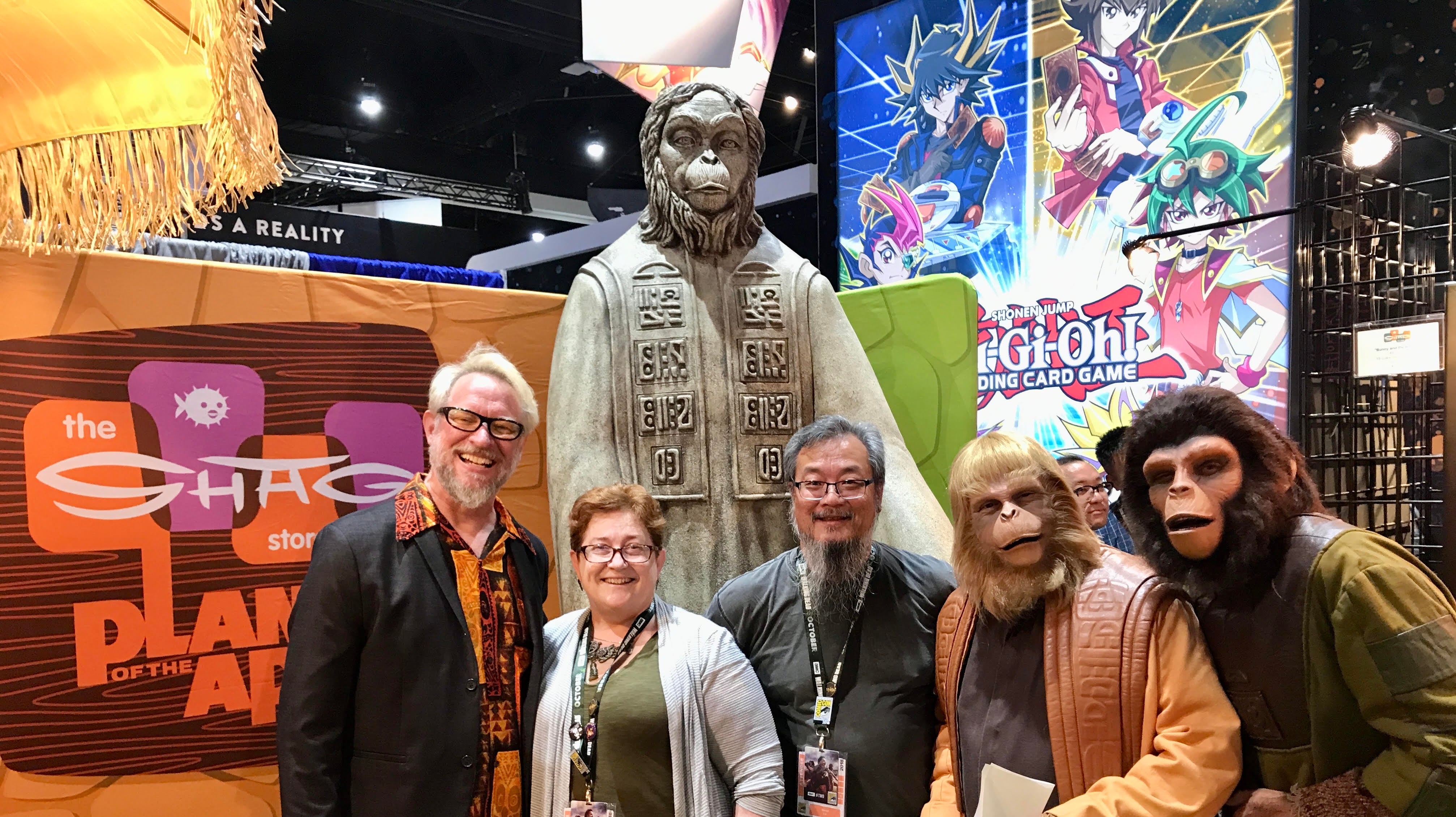
Long before Comic-Con became their annual tradition, science fiction had already been part of their lives. Comics, manga (Japanese comic books and graphic novels), and speculative stories became shared interests and eventually part of their family culture.
“We raised our kids by sci-fi values,” Carson said, emphasizing how those stories shaped their family’s curiosity and creativity.
A few years ago, the couple discovered they had each loved the same science fiction story as children— “And he built a crooked house” by Robert Heinlein — without realizing it.
“We’ve been married for 44 years, and I never knew he had read it,” Carson said.
That sense of discovery is part of what keeps Comic-Con meaningful for them.
While they enjoy major panels, Carson and Lo are equally drawn to smaller discussions about banned books, comics and culture, Afrofuturism, Indigenous storytelling, Asian representation in comics, and the creative process behind world-building. They also spend time exploring Artist Alley, meeting independent creators, and seeing what artists and writers are developing outside the mainstream spotlight.
For Lo, some of the most memorable moments happen when fans recognize something others might miss.
“Every once in a while, somebody’s wearing a costume from the manga series Sailor Moon or some old science fiction story or comic that only people who know, know what that’s about,” he said. “It’s like, ‘Oh, yeah, I know what you’re doing.’”
Their professional lives add another dimension to how they experience the convention.
As scientists, Carson and Lo look beyond the spectacle of science fiction to the biology, technology, and ethical questions beneath the stories. Whether the subject is pandemics, genetic engineering, artificial intelligence, alien life, or cybernetics, it allows them to explore possibilities and consequences.
“Science fiction is speculative fiction,” Lo said. “You know when you’re buying into the science part of it, and you know when you’re doing the suspension of disbelief, because you love a good story.”
For Carson, that exploration is the appeal.
“In a safe setting like Comic-Con, you get to really play with it technologically, ethically, and intellectually,” she said. “You get to think: What if we tried that? And what are the unintended consequences?”
That connection between imagination and discovery is one reason they believe Comic-Con attracts scientists and engineers.
“The best science research is creative,” Lo said. “You have to have an imagination to look for answers and solve puzzles.”
Over the years, Lo’s relationship with Comic-Con has evolved from fan to creator. Through his work publishing medical comics and developing a graphic novel, he earned professional status with Comic-Con, allowing him to attend without relying on the convention’s competitive ticket lottery.
His goal for the future is simple: to see his own graphic novel displayed at Comic-Con on a publisher’s table.
The couple has never fully embraced elaborate cosplay, not because they lack enthusiasm, but because July in San Diego presents its own challenge.
“It’s hot,” Carson said. “And faculty life leaves us little time to create elaborate costumes.”
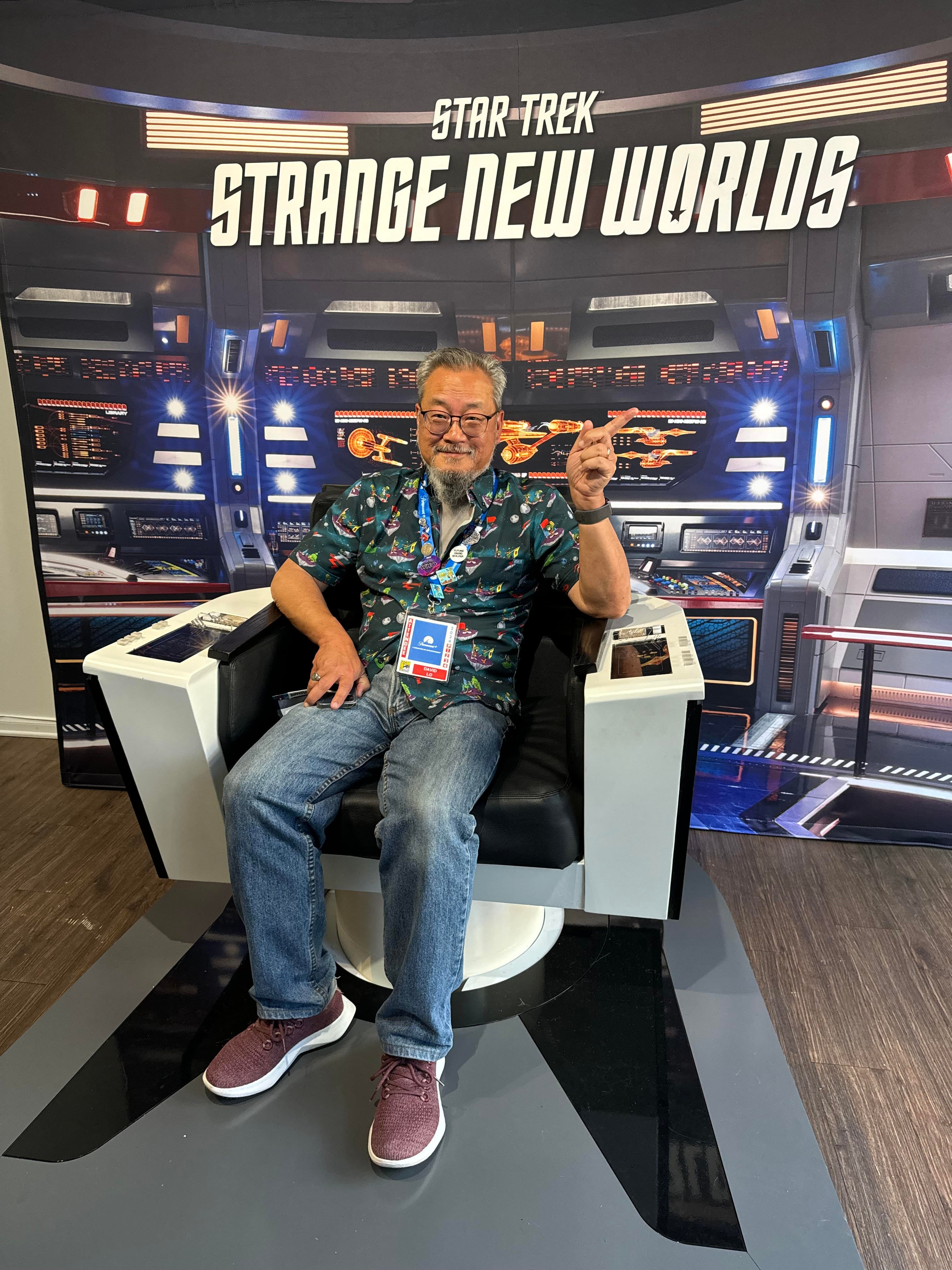
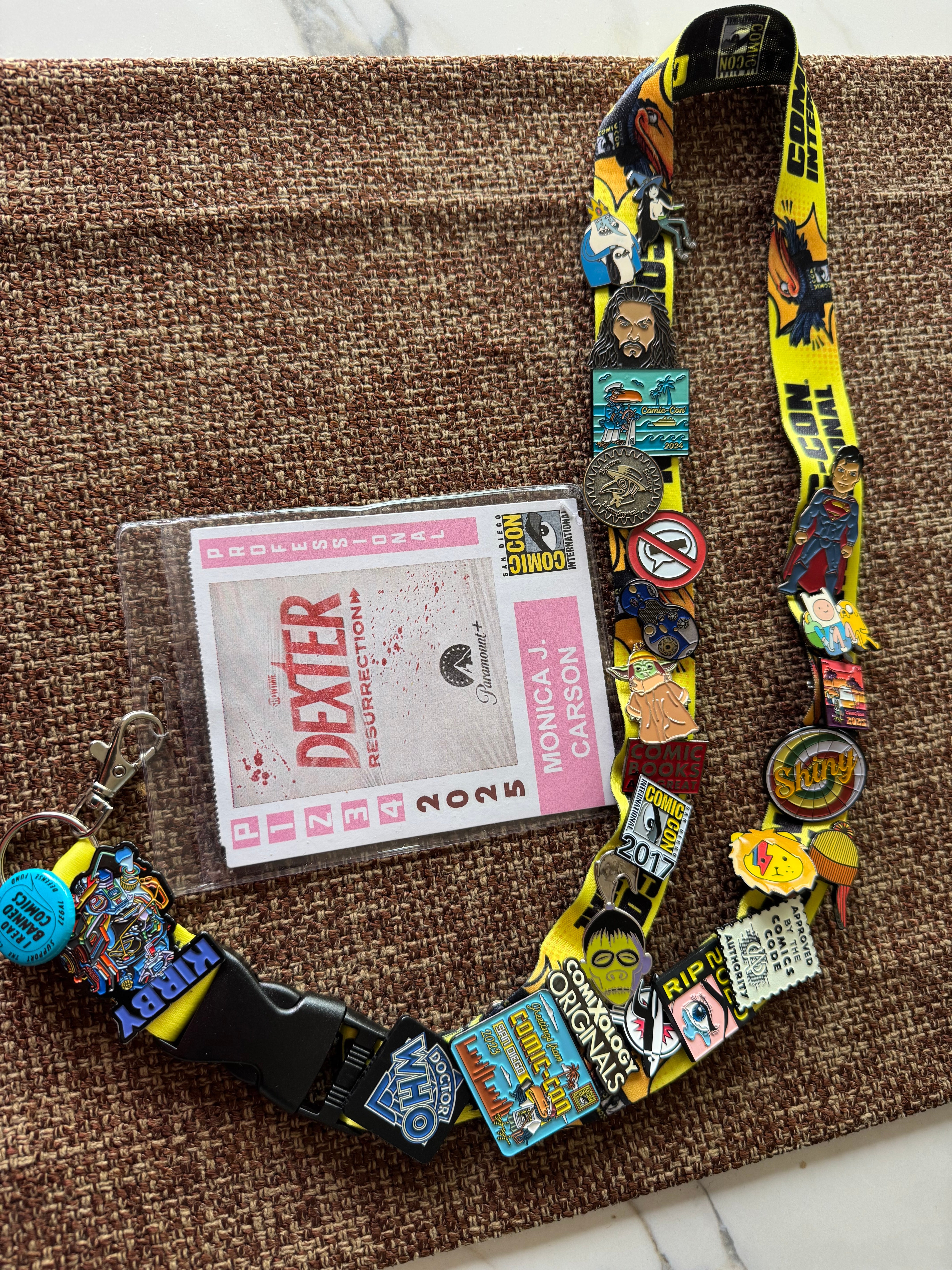
Instead, they participate, as they will in this year’s Comic-Con starting later this month, through smaller expressions of fandom. Lo wears a different comics or science fiction shirt each day, and both collect pins that become conversation starters.
Some of their favorite memories are not necessarily the biggest moments. They are the unexpected encounters: meeting creators like Fon Davis whose work shaped their imaginations, reconnecting with people they only see once a year, discovering a panel they never expected to attend, or sharing enthusiasm with someone who loves the same story.
“For us, Comic-Con has become a place where science, storytelling, and community intersect,” Carson said. “It is where curiosity is celebrated, imagination is taken seriously, and we discover new ideas together.”