Four UC Riverside faculty members have been awarded prestigious National Science Foundation CAREER Awards to support their research.
The program targets early career faculty who demonstrate the potential to serve as academic role models and advance their organization’s mission. Research conducted with these funds should build the foundation for a lifetime of leadership in integrating education and research.
UCR’s 2025 CAREER Award recipients and the funded projects are listed alphabetically below.
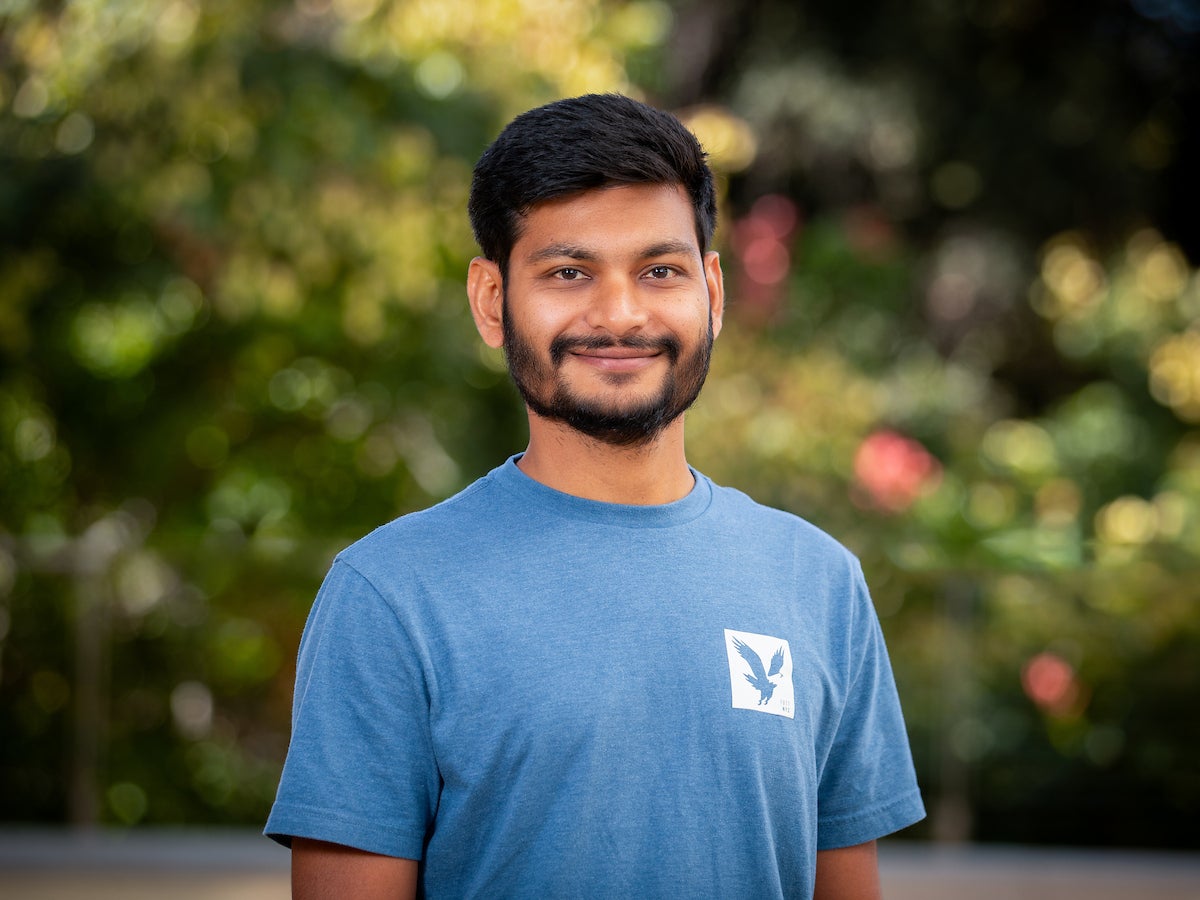
Amey Bhangale, an assistant professor of in the Computer Science and Engineering Department, is unlocking new ways of tackling complex decision-making problems. His work focuses on designing efficient approximation algorithms for constraint satisfaction problems, which arise in fields from chip design to scheduling. Drawing from deep mathematical theories in algebra and combinatorics, Bhangale aims to define the precise limits of such algorithms. His outreach includes inspiring young students to pursue mathematics and training the next generation of computational scientists through hands-on research experiences.
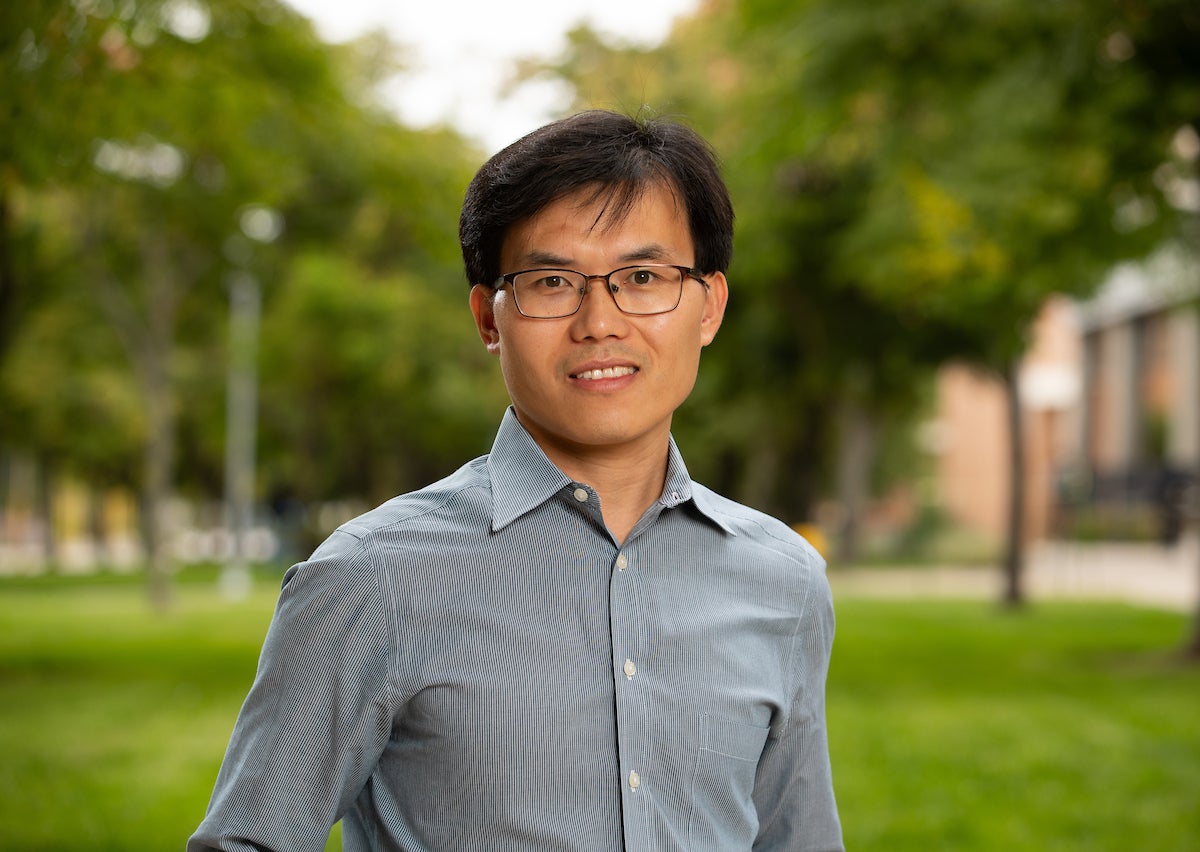
Yaofa Li, an assistant professor in the Department of Mechanical Engineering, is working to improve future cooling technologies used in electronics devices. Modern electronics generate intense heat, and while ultra-thin liquid films can cool them efficiently, scientists still don’t fully understand how heat and fluid move at these microscopic scales. Li’s project will directly observe how tiny coolant films flow, change shape, and transfer heat—down to millionths of a meter—using advanced imaging and temperature-sensing tools. The insights will be shared through hands-on teaching labs and public science education.
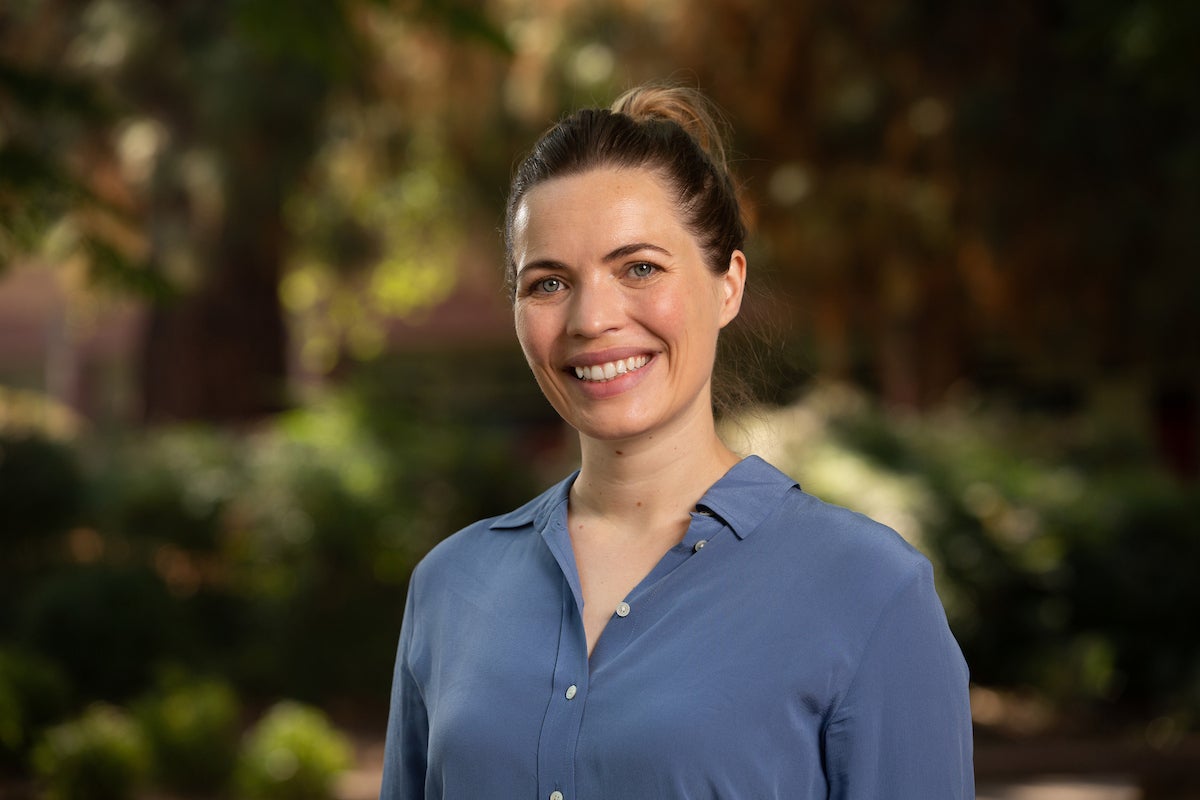
Kate Ostevik, an evolutionary biologist and assistant professor in the Department of Evolution, Ecology and Organismal Biology, is investigating how new species form by studying wild sunflowers, asking whether specific regions of DNA help populations adapt to new environments and stop interbreeding. Preventing interbreeding is important because it allows populations to keep traits that help them survive in different habitats. Alongside the research, the project trains students who will help uncover qualities in sunflowers that could support more sustainable agriculture and global food security.
Silas Richelson, an associate professor in the Computer Science and Engineering Department, will investigate how randomness can be reduced in computing without sacrificing accuracy. His research explores the use of expander graphs and XOR codes to create powerful new error-correcting codes—critical tools that ensure reliable data transmission in digital communication. By probing unanswered questions about the structure and performance of XOR codes, Richelson aims to push modern coding theory forward while developing publicly available educational resources to support students, researchers, and enthusiasts in the field.