
Some scientists do impactful research while others are more focused on teaching. Because he’s outstanding at both, UC Riverside synthetic chemist Timothy Su is the recipient of a competitive award worth $100,000.
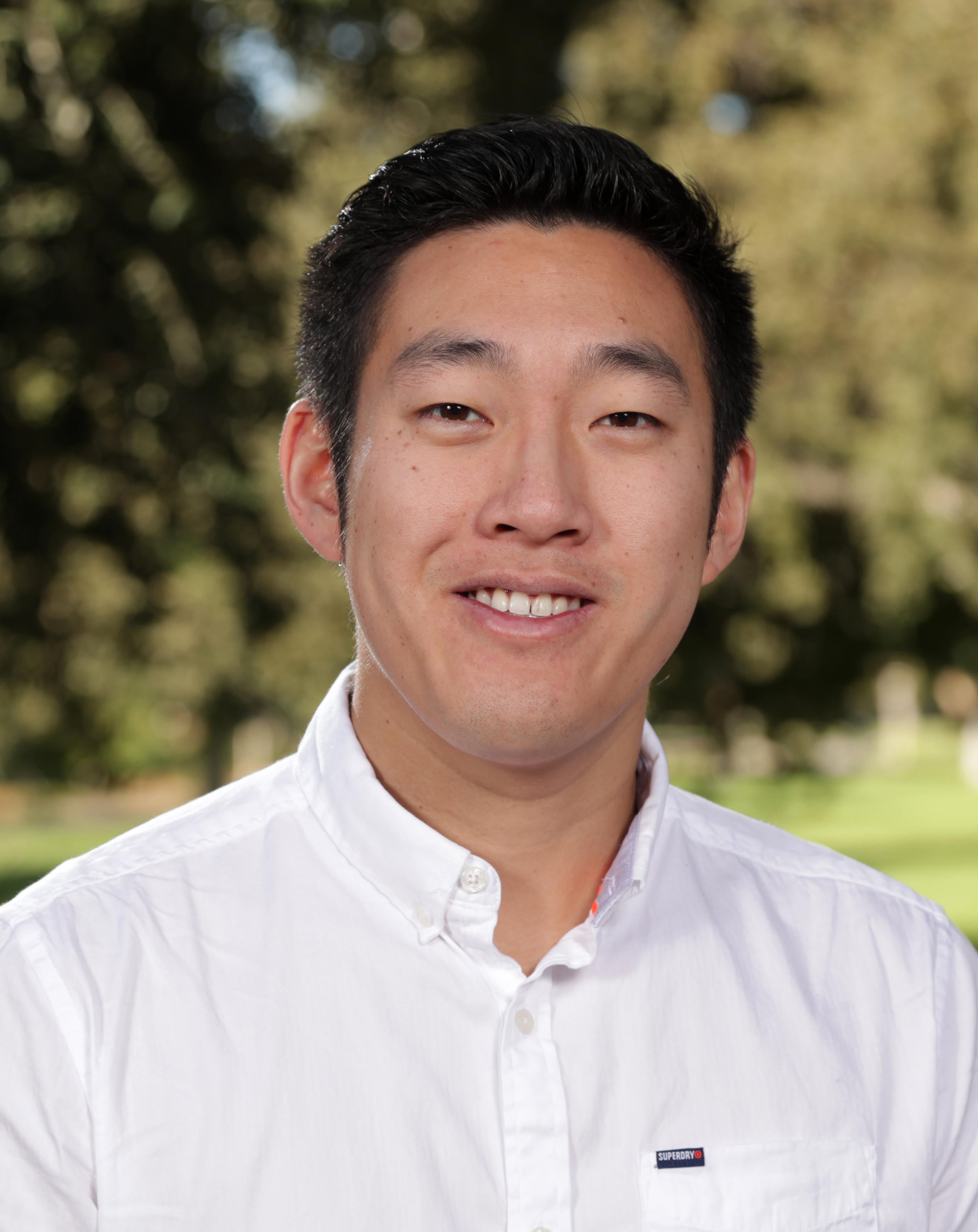
The Camille and Henry Dreyfus Foundation, which grants the Teacher-Scholar award, was established in 1946 to advance fields related to chemistry and chemical engineering. One of the ways the foundation achieves this goal is through a number of awards, including this one, that recognize excellence in teaching as well as research and scholarship.
As this year’s recipient, Su is only the third UCR faculty member to receive the Camille Dreyfus Teacher-Scholar Award since it was founded in 1970.
An assistant professor in UCR’s chemistry department, His lab focuses on the electronic behavior of single molecules — matter at the tiniest length scales.
“Because we’re synthetic chemists, we know how to make molecules from scratch. This uniquely allows us to investigate how the identity and connectivity of atoms control electrical transport in these ultra-tiny molecular wires,” Su said. “This research may lead to electronic devices that are smaller yet more powerful and more energy efficient than our current technologies.”
Whereas many chemists are focused on using carbon for next-generation electronics, Su says his lab is looking at the rest of the periodic table. His team explores the ways other elements can give rise to totally new ideas with respect to quantum transport, where electrons follow the rules of quantum mechanics and behave as waves rather than classical particles.
Su’s understanding of behavior clearly extends beyond molecules, to his students. He thought that allowing students to use their social media might generate excitement for learning about chemistry. And he was right.
About half of his students take part in a voluntary extra credit program that turns a chemistry textbook into a series of TikTok videos. And amongst those participants, there’s been an 8 to 10 percentage point improvement in test scores year after year.
“Students found this activity made chemical concepts more relatable, and it helped them retain these core concepts,” Su said.
Su says he is honored to win the Dreyfus Foundation award, as it puts him in good company.
“Winning this award is deeply validating, as a lot of people I admire in my field have been recipients of it. Above all, this honor recognizes the incredible work of the members of my research group at UC Riverside, whose creativity and determination have enabled us to advance this exciting new field,” he said.
He is also excited about the unrestricted nature of the funding tied to the award, which will allow his lab to pursue high-risk, transformative ideas about using chemical synthesis as a means to control the flow of electrical charge in unprecedented molecular architectures. Traditional grants and awards might not allow for the kind of experimentation that these funds will.
“What kinds of cool new discoveries can we make about how the universe operates at such tiny scales? That’s what I’m really excited about.”