Four UC Riverside faculty members have been awarded prestigious National Science Foundation CAREER Awards to support their research.
The program targets early-career faculty who demonstrate the potential to serve as academic role models and advance their organization’s mission. Research conducted with these funds should build the foundation for a lifetime of leadership in integrating education and research.
UCR’s 2026 CAREER Award recipients and their funded projects are listed alphabetically below.
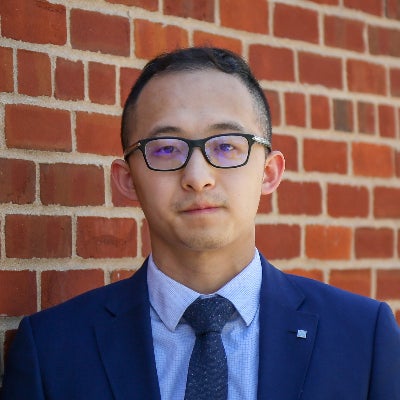
Mingyu Cai, an assistant professor of mechanical engineering, will receive a $573,377 grant to develop safer and more reliable ways for people to remotely control robots in dangerous or difficult environments.
This project’s focus is teleoperation, in which a person guides a robot from a distance. Cai will develop methods that help robots better understand what their human operators want them to do, anticipate movement, and provide assistance while staying within clearly defined safety limits. The goal is to make robotic systems more predictable and easier to trust, even when they encounter unfamiliar or rapidly changing conditions.
Upon completion, the project could improve remotely operated robots used in healthcare, manufacturing, disaster response, nuclear settings, and exploration in space and the ocean, while reducing the workload on human operators. The project will also provide research and training opportunities for undergraduate and graduate students, introduce K-12 students to robotics through hands-on activities, and bring researchers together with national laboratories and industry partners to advance standards for safe robotic systems.
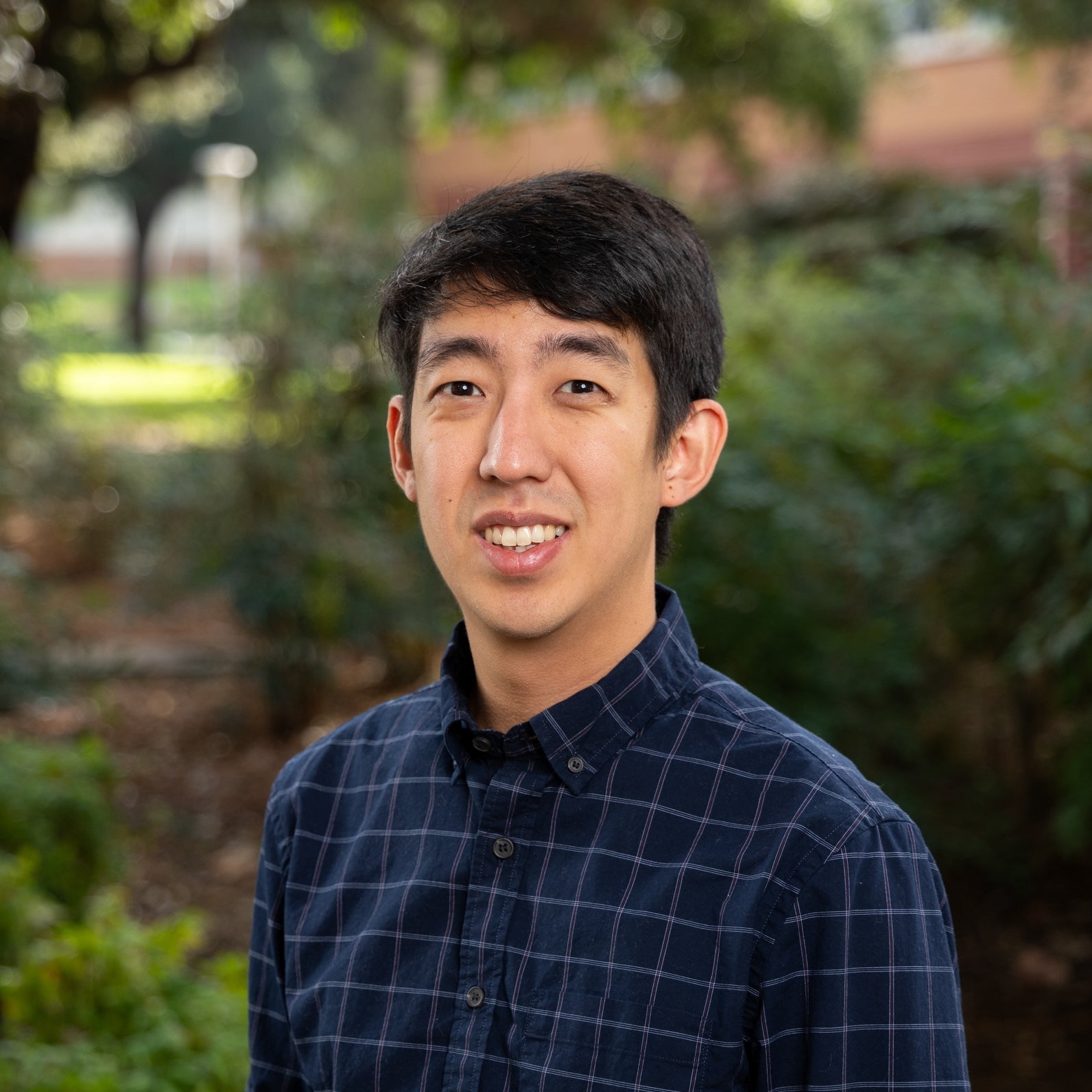
Andrew Joe, an assistant professor of physics and astronomy, will receive a grant of $833,285 to study how electrons interact in ultra-thin two-dimensional (2D) materials.
Many interesting phases of matter emerge when electrons strongly interact with one another. These so-called “correlated states” are challenging to understand due to their complex nature. The project focuses on a new method to understand correlated states in 2D materials using specialized nano-fabrication techniques to create artificial patterns on a supporting surface. The research advances our understanding of correlated states, enabling future technologies in quantum information sciences and energy-efficient electronics. The project also trains students in quantum science and provides research and educational opportunities for students and teachers in the local community.
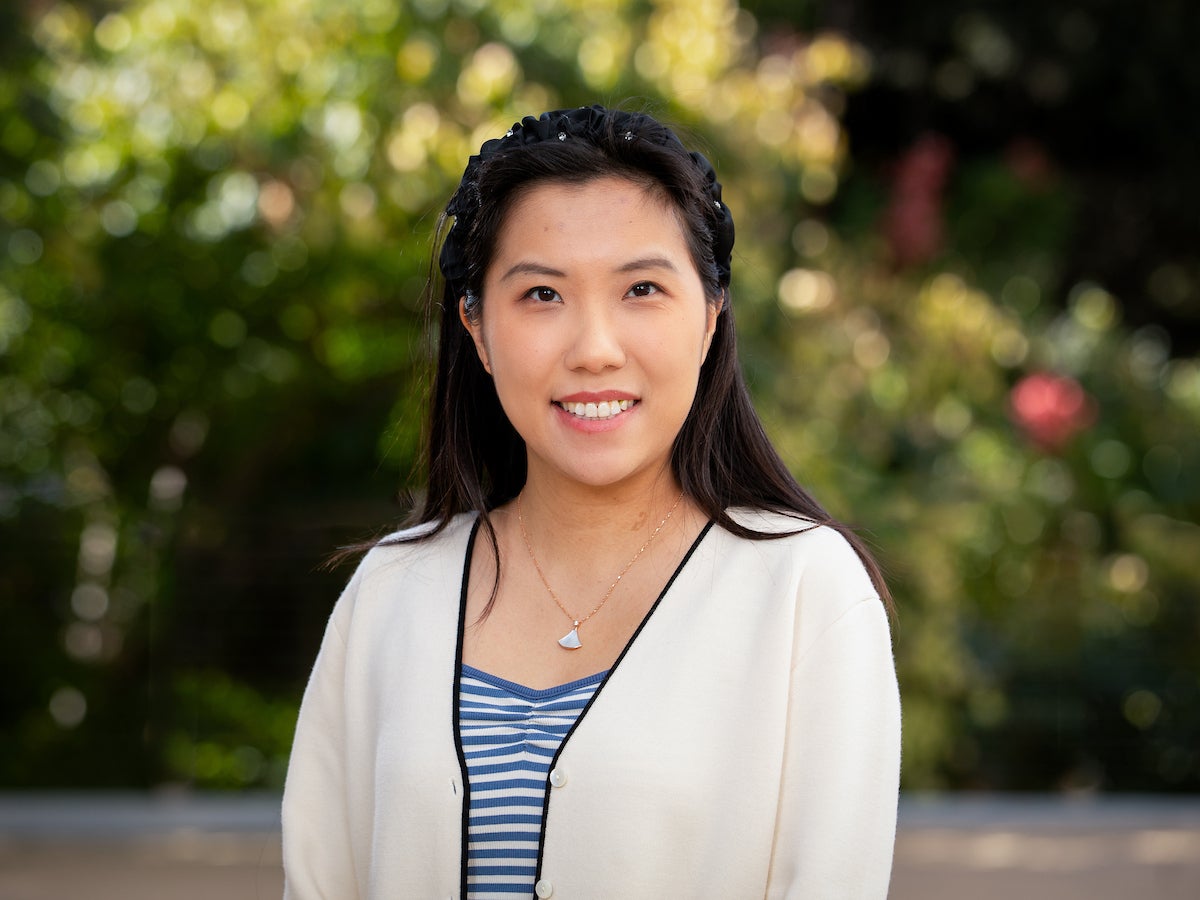
Ruoqian Lin, an assistant professor of mechanical engineering, will receive a $660,000 grant to develop a new type of battery that could help store electricity for power grids and data centers without relying on scarce or costly minerals.
The project focuses on fluoride-ion batteries, which can be made with widely available elements such as fluorine, calcium, magnesium, and copper instead of lithium, cobalt, and nickel. Lin will study what happens inside these batteries as charged fluoride particles move between components, including how they interact with surrounding materials and form thin layers on battery electrodes. Understanding these processes could help researchers design batteries that charge and discharge more reliably and last longer.
The research could ultimately provide another option for storing large amounts of electricity as demand grows from artificial intelligence data centers and other sources. The project will also create research and educational opportunities for students and teachers, including a National Lab Day for college students, a nanoscience workshop for high school educators, and a hands-on laboratory program for middle school students.
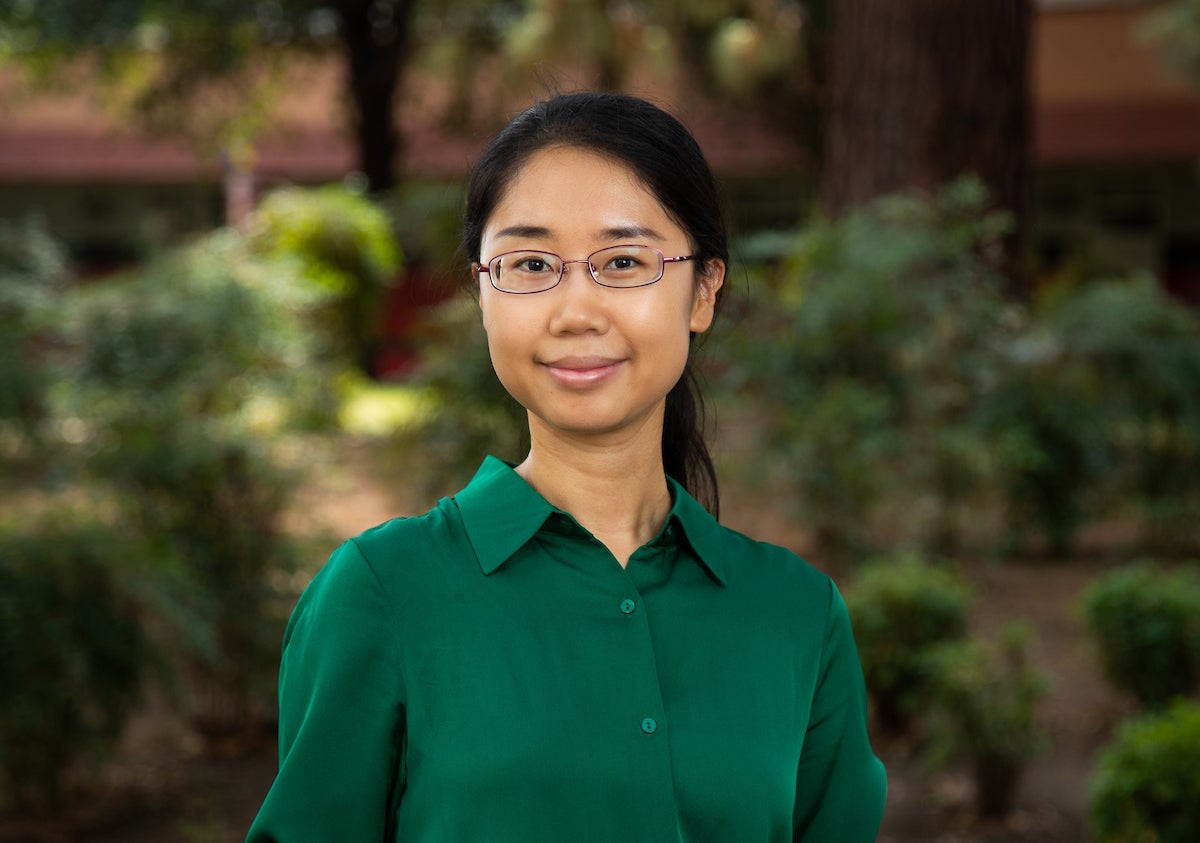
Qian Zhang, an assistant professor of computer science and engineering, will receive a $558,329 grant to develop new ways to ensure artificial intelligence systems work reliably across different computers and specialized devices.
AI models are often created on one type of computer but later run on many others, including powerful data center servers and those powering self-driving vehicles, medical equipment, and factory automation systems. Before they can run on new hardware, the models must be adapted by software that translates and optimizes them for each device. This process may introduce hidden errors that are difficult to detect as the software continues running without any obvious warning.
Zhang’s project will develop new methods for finding these problems before AI systems are deployed. Her research will create software that automatically tests AI models under a wide range of conditions to identify situations where they might produce incorrect results. It will also compare how the same AI model performs on different types of computer hardware to uncover inconsistencies that might otherwise go unnoticed. The goal is to make AI systems more dependable wherever they run, helping improve the reliability of technologies used in healthcare, transportation, manufacturing, and other fields.