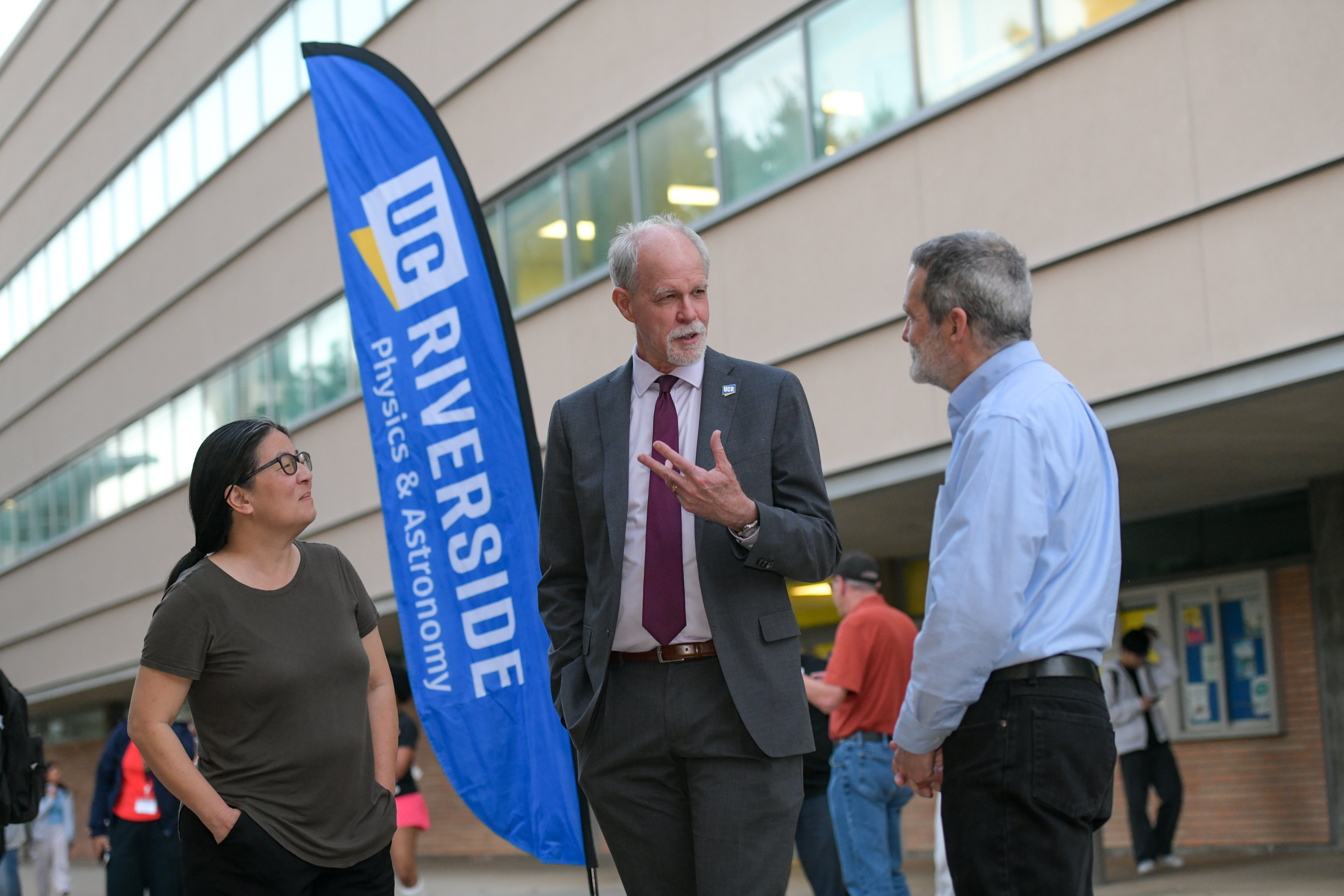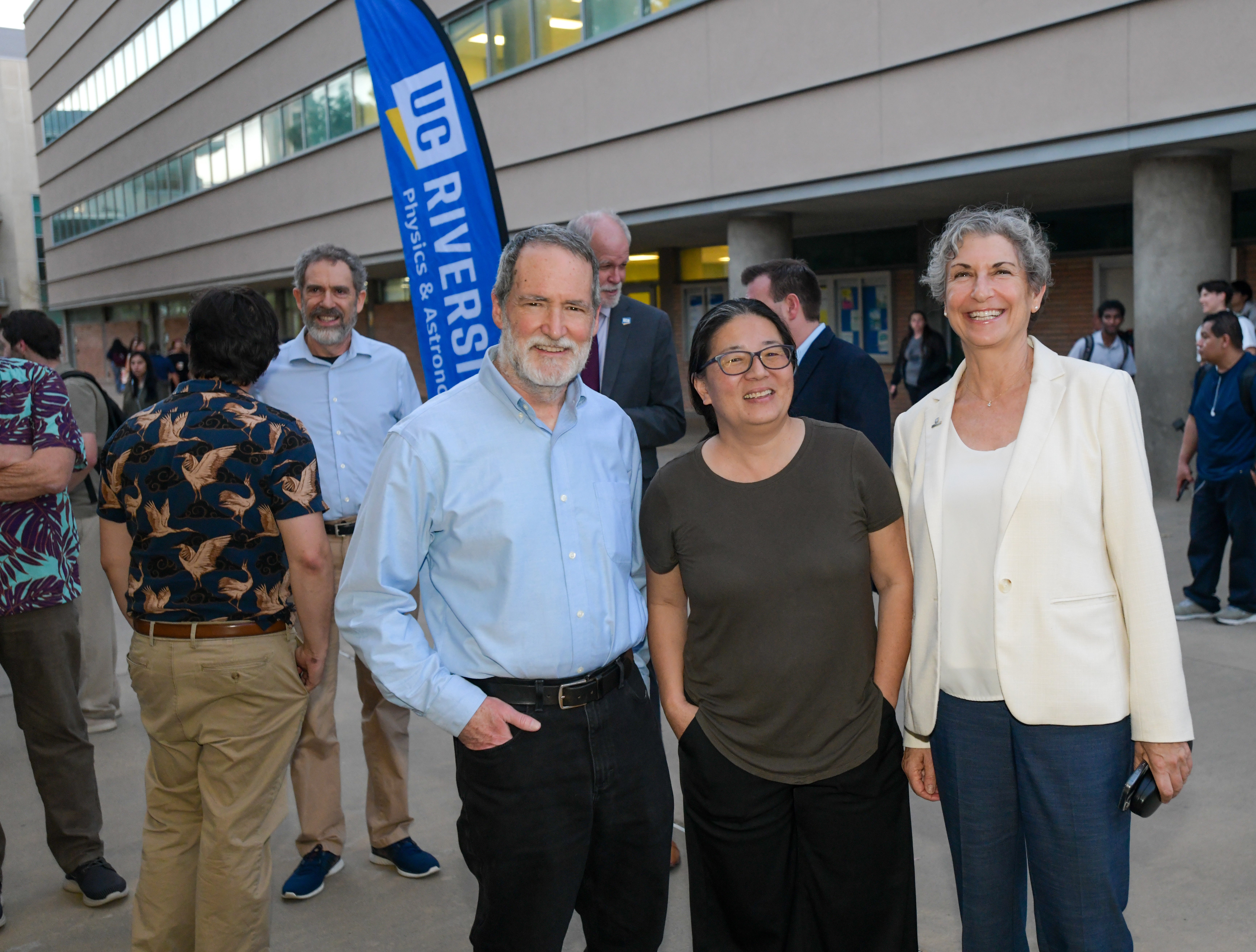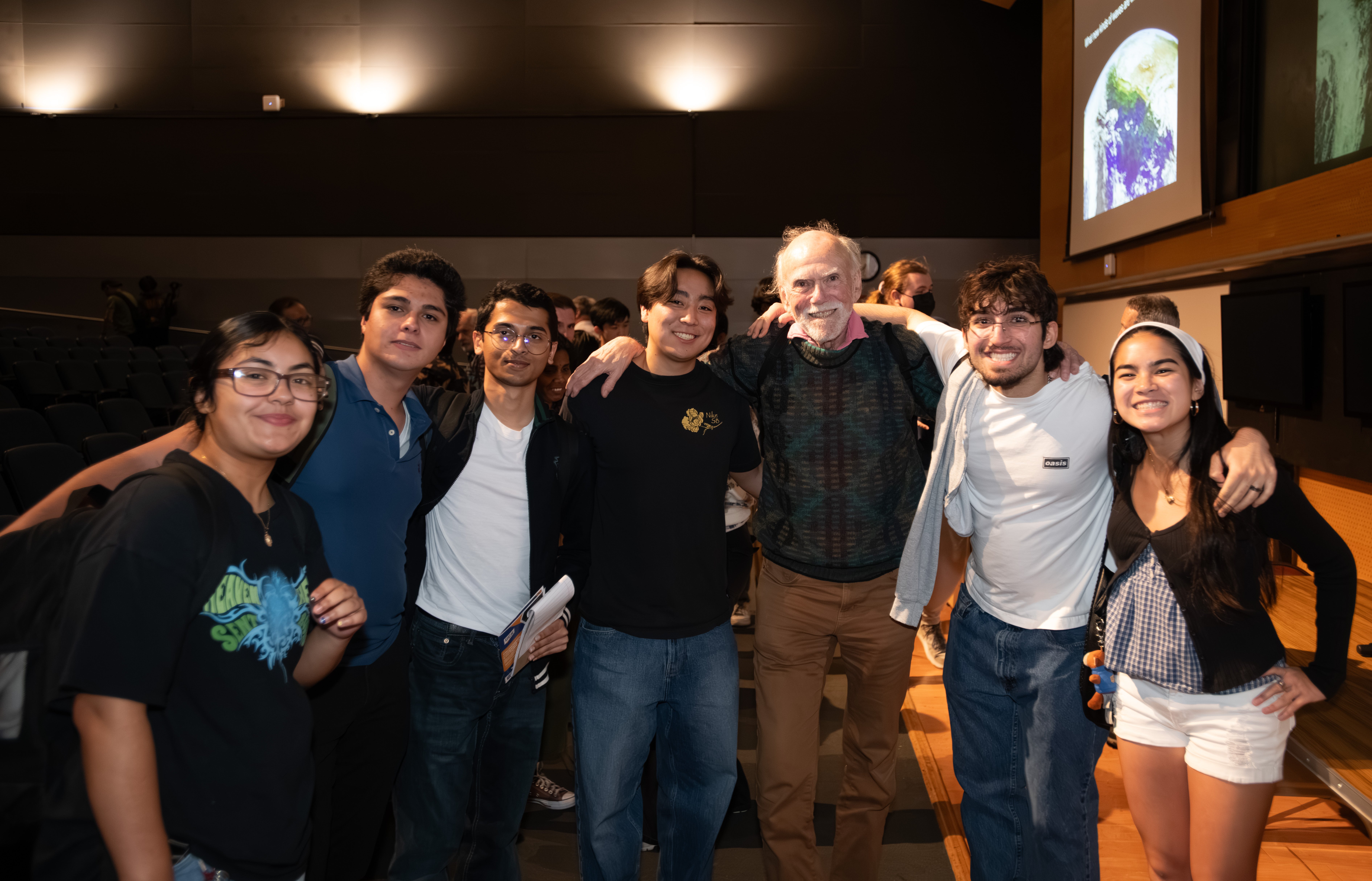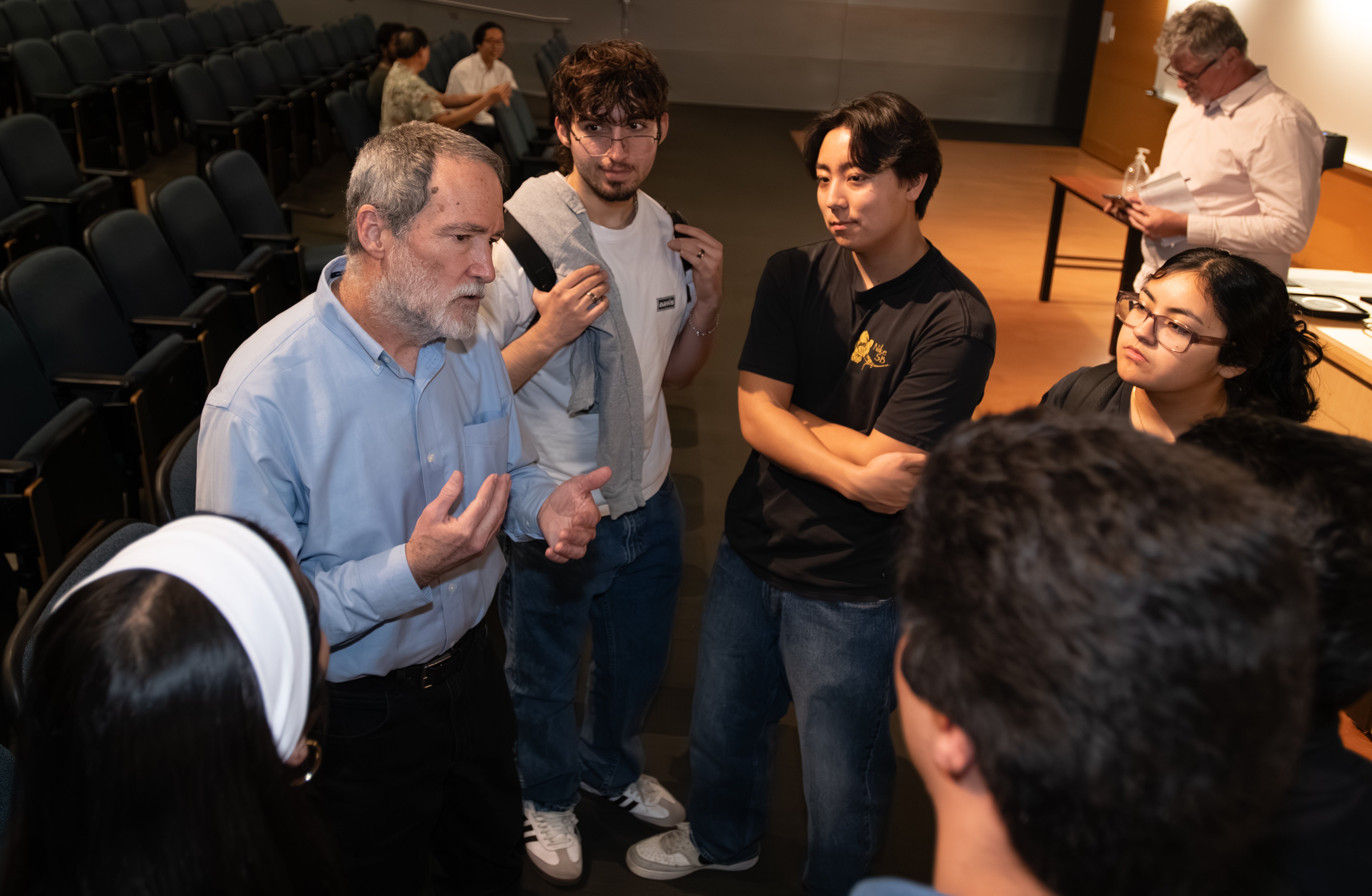
For the first time in its 42-year history, the Far West regional meeting of the American Physical Society’s Division of Gravitational Physics was held at UC Riverside. Known also as the 42nd Jim Isenberg Pacific Coast Gravity Meeting, the conference took place on February 27 and 28 on campus.
“The fact that UCR was invited to host this meeting is a recognition of the university’s growing profile in gravitational-wave research and its newly launched Center for Experimental Cosmology and Instrumentation, or CECI,” said Jonathan Richardson, an assistant professor of physics and astronomy and the lead meeting organizer. “When researchers across disciplines and generations come together to share ideas, we move closer to understanding the fundamental fabric of the universe.”
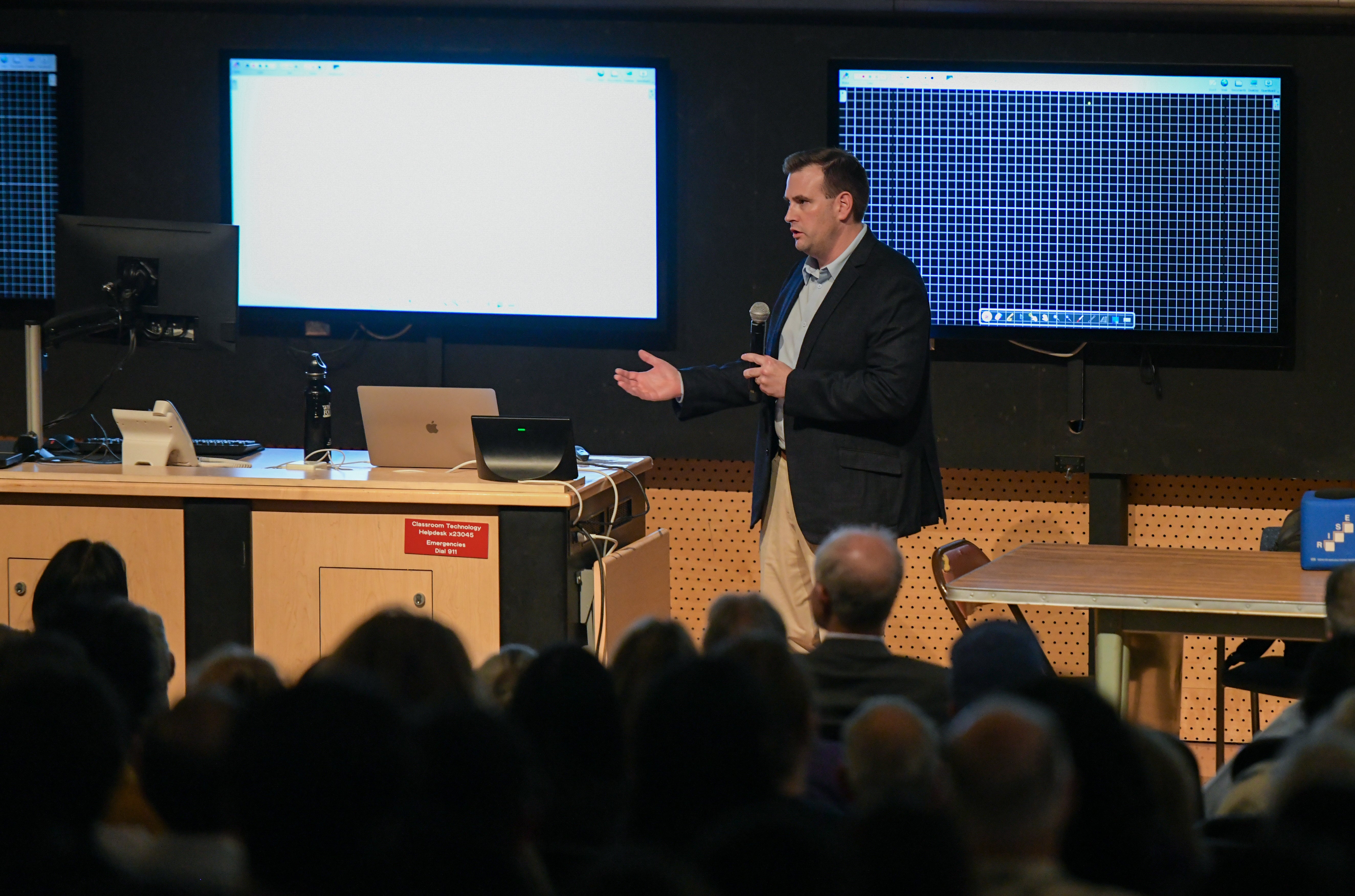
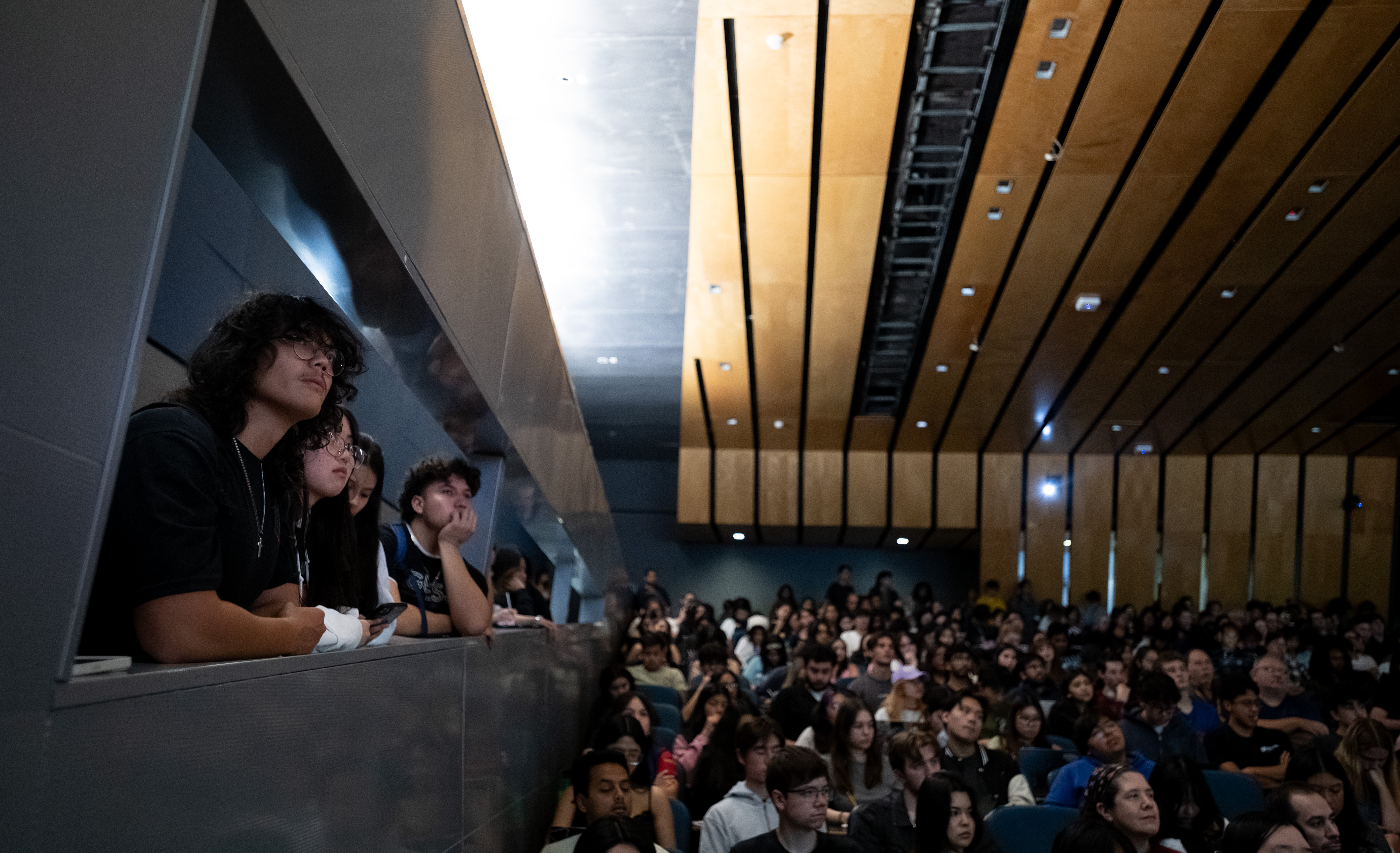
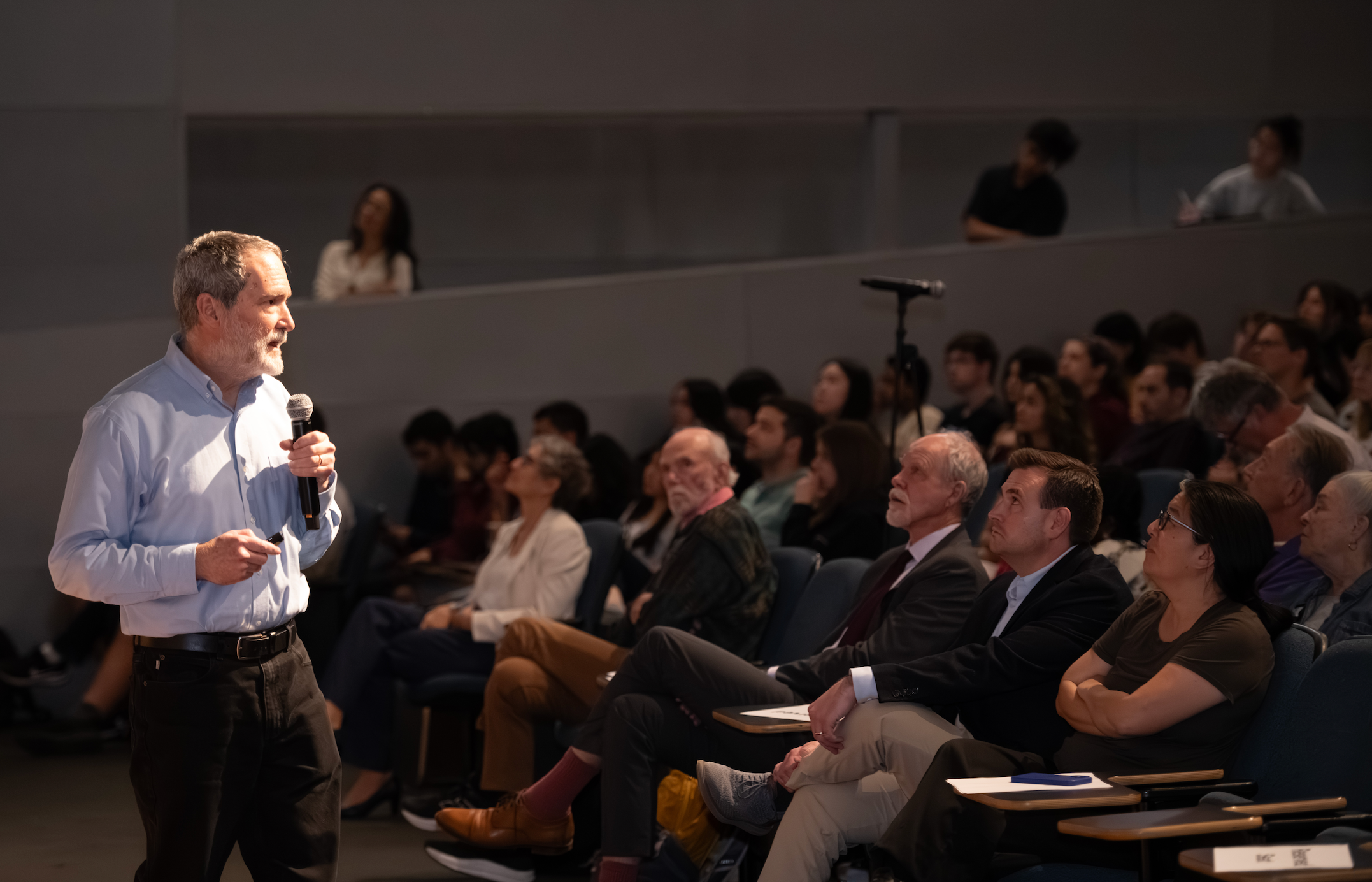
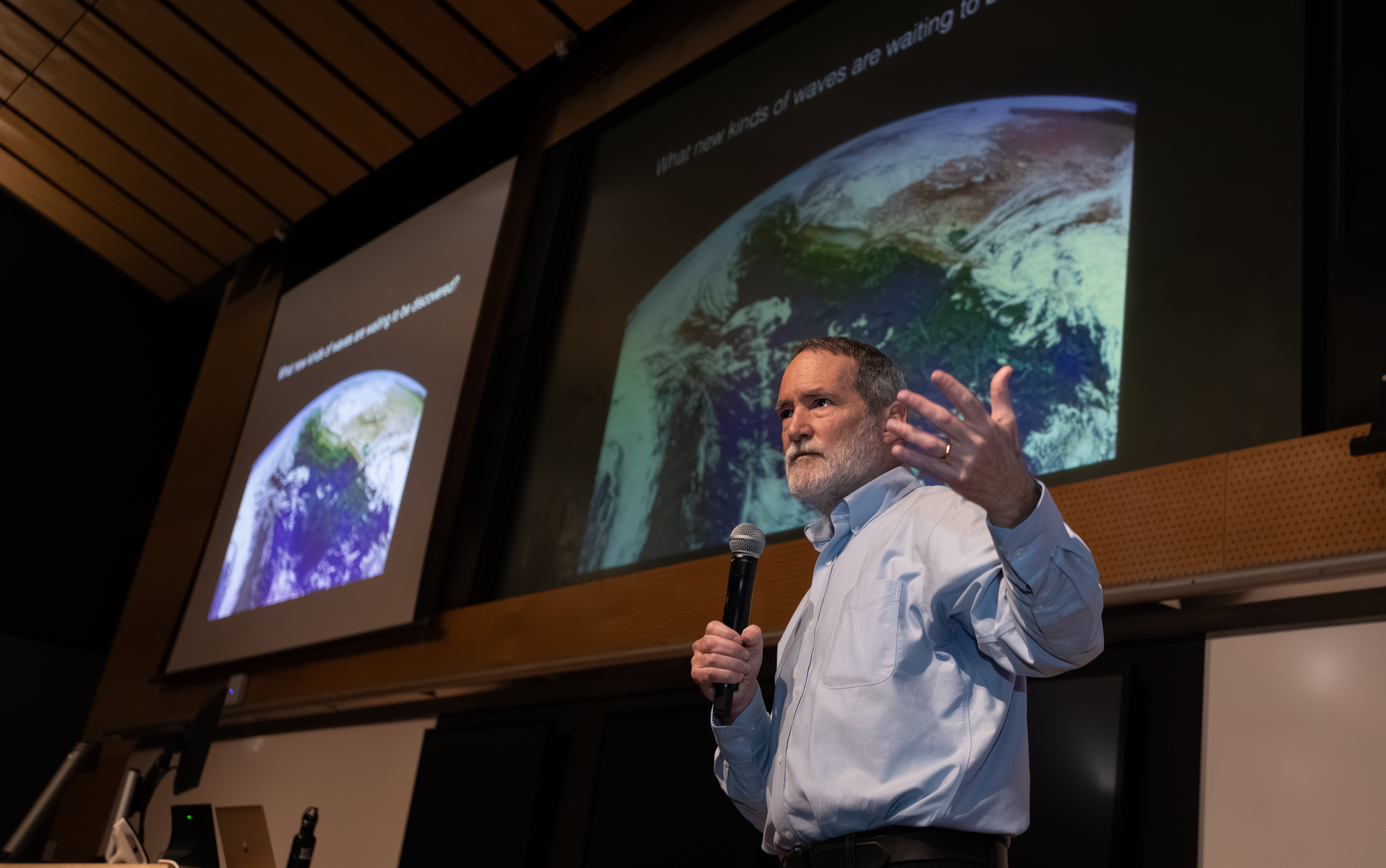
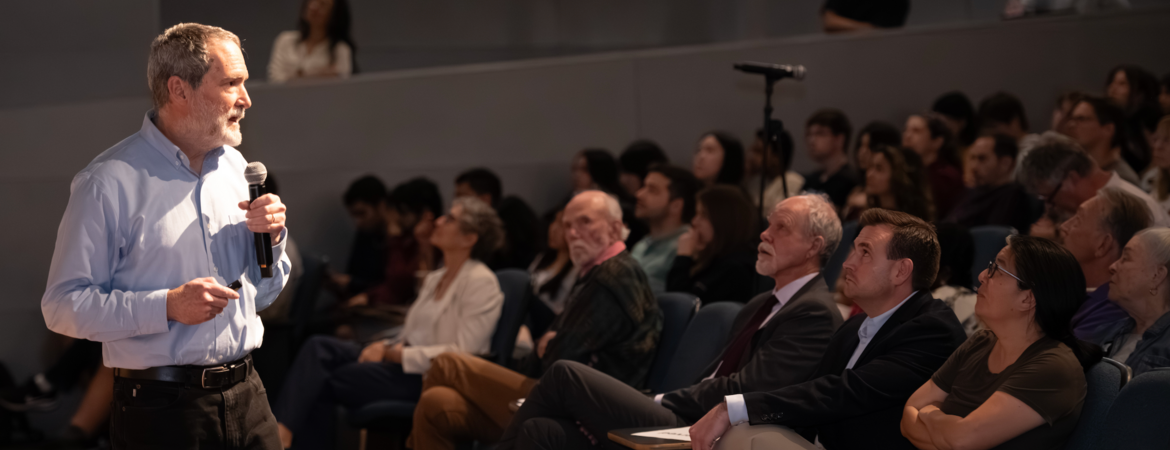
The meeting opened on February 26 with a public lecture by Brad Marston, a professor of physics at Brown University and president of the American Physical Society — the world’s largest professional organization for physicists — to a standing-room-only audience. Opening remarks were delivered by UCR Provost Elizabeth Watkins; Peter Atkinson, dean of the College of Natural and Agricultural Sciences; and Nobel Laureate Barry Barish. Barish, a distinguished professor of physics and astronomy at UCR, also serves as CECI’s director.
In his lecture, titled “Waves are everywhere: how oscillations shape technology, earth, and the universe,” Marston discussed how waves connect phenomena across vast ranges of scale, how they have transformed technology and science, and how emerging topological waves may point toward discoveries still to come.