UC Riverside is focusing on educating riders and providing incentives to improve safety in the use of e-scooters and other personal wheeled devices.
The influx of scooters, skateboards, and other mobility devices on campus has been an ongoing issue since they’ve grown in use and popularity among students in recent years.
The campus has rules in place prohibiting the use of electric scooters on pedestrian pathways and sidewalks. It has also promoted safety by establishing speed limits and encouraging the use of helmets.
The Health, Well-being and Safety, or HWS, division is ramping up those efforts to educate more riders with safety events, increased campus signage, social media campaigns, and peer education.
“We’re not just teaching students how to ride safely—we’re building the infrastructure of a safer future,” said Denise Woods, vice chancellor for Health, Well-being and Safety.
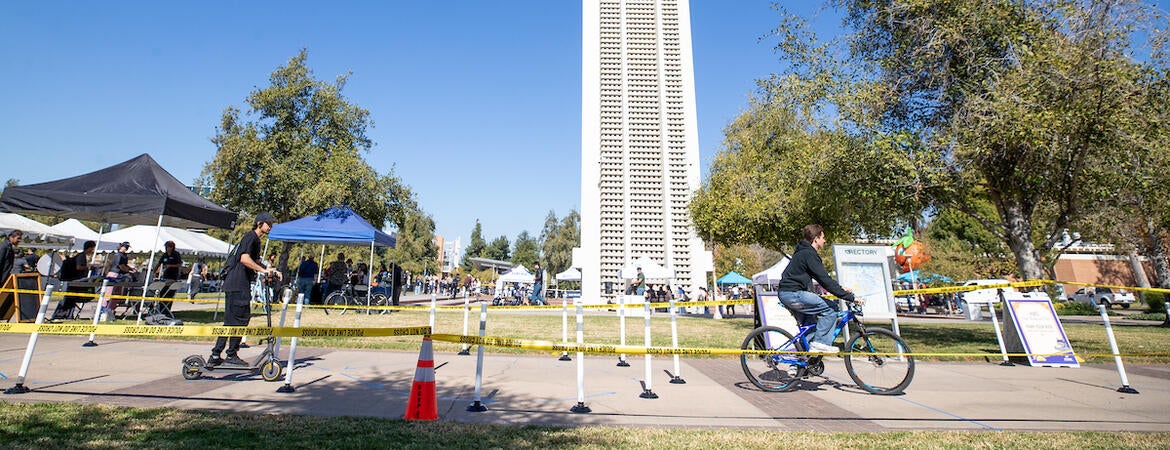
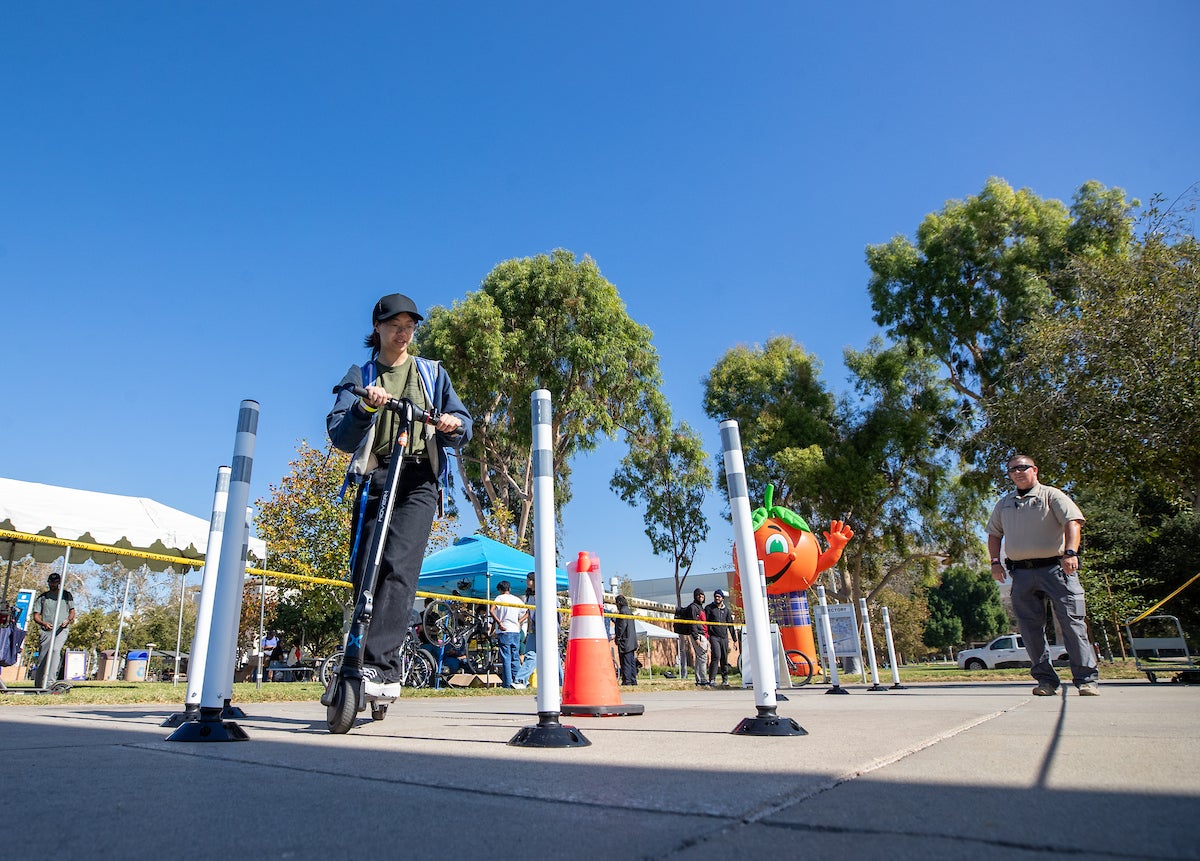
A recent example of that was the HWS Resource Fair on Nov. 4, which included free food, information tables on a variety of campus resources, and a safety obstacle course where riders navigated their devices with a chance to win helmets.
The Micromobility Safety Committee has been meeting regularly for the past few years to align education, enforcement, and infrastructure planning around responsible ridership. The committee includes representatives from Health, Well-being and Safety; Transportation and Parking Services, or TAPS; the UCR Police Department; and Planning, Design and Construction.
The committee has developed a multi-year educational campaign called “Ride Smart, Ride Safe.” UCR recently received a $90,000 contribution from Honda to support the program.
“We are actually incentivizing and celebrating students who we see observing the rules such as wearing helmets and moving along properly,” said Kritika Gupta, an institutional research analyst and project investigator with Health, Well-being and Safety.
UCR police detectives and staff members from the Well, the university’s student health promotion and educational program, will flag down riders and provide gift cards to reward safe riding habits.
The safety campaign includes more designated parking and dismount zones on campus.
Some locations are no longer allowing wheeled devices inside. The HUB began the policy last year citing the wear and tear to vinyl floors and carpets from wheeled devices. In conjunction with those policies, more racks that fit scooters, skateboards, and bicycles were installed near the HUB.
The UCR Library followed suit this fall, stating that the policy will help keep the spaces safe and clean.
Last year, the campus experienced a rise in wheeled device thefts, driven by a growing number of bikes and scooters, inadequate securing by owners and lack of registration, which makes it harder for police to recover, according to police.
Both the HUB and the library offer “Loan-a-Lock” programs. This year, Health, Well-being, and Safety provided additional locks so that students can borrow a lock to secure their scooters and other devices while they’re using library spaces or at the HUB.
The division will be analyzing data from the “Loan-A-Lock” program to see what type of usage they’re getting, Gupta said.
In addition to the lock program, the division is working to reduce thefts by encouraging owners to register their devices through TAPS. UCR police is offering tips on what type of locks to use, safe storage of devices, and how to file reports if stolen.
The Micromobility Safety Committee is mapping areas of campus that are hotspots for thefts and accidents and will be expanding signage to provide students with safety tips in those areas, Gupta said.